



Voice of moderation can ease US-China conflict









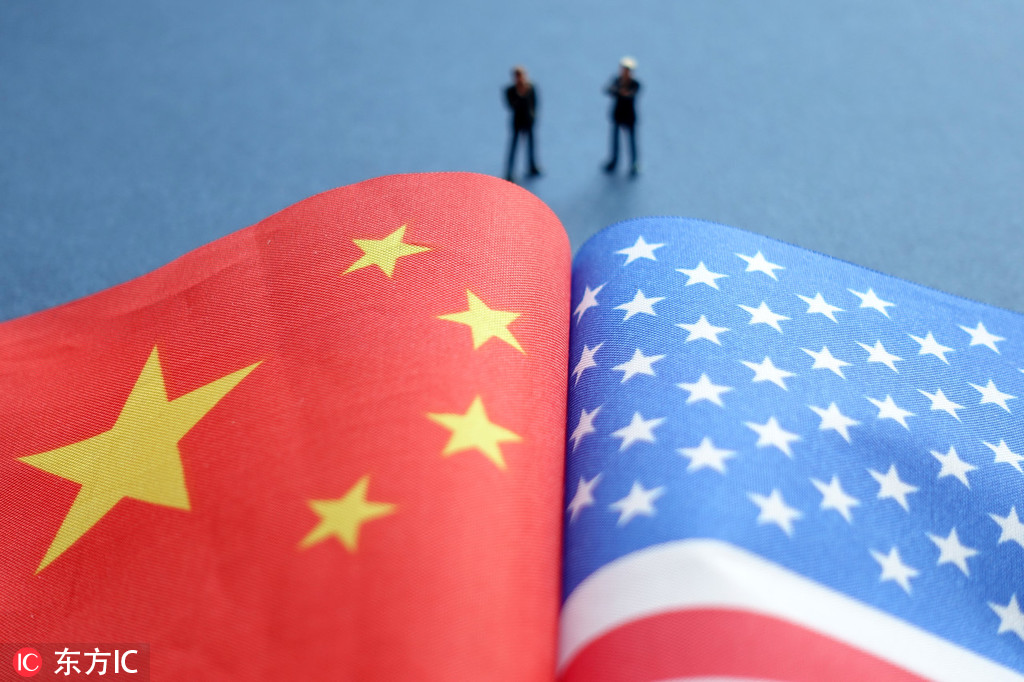
The evolving dynamics between the United States and China have sparked a tectonic shift in geopolitics, and the world order is undergoing major change, with implications for all countries.
China has climbed out of poverty to become a prosperous middle-income country, but it still lags behind the US in economic and military power. Moreover, China has structural economic, political and social problems to manage.
The US remains the world's largest economy and retains a huge competitive edge over other economies. However, it is becoming more inward-looking and now favors bilateral trade agreements and tariffs over multilateralism.
Looking ahead, China possesses enormous potential to catch up with the US. It is this potential that the US is concerned about.
Therefore, the US has begun to consider economic and technological measures, among other means, to slow China's development.
Why does the US regard China as a strategic rival and threat? It is obvious that the US is not reassured by China's repeated declarations that its development will be peaceful. To the US, China is a large, powerful, opaque and nondemocratic country with the potential to challenge US supremacy. There is a fundamental difference in values.
China should continue to dispel the anxieties of the US and the international community over its behavior as a rising global power, through its words and deeds.
China could contribute to strengthening the international system that has benefited it and the world. China could work with regional partners to ensure that Belt and Road projects are clean, green, transparent, financially sustainable and inclusive. More could also be done to address concerns about involuntary technology transfers and any unequal playing field in China between foreign and Chinese companies.
An all-out conflict between the US and China would be disastrous. Even an economic and technological war would have untold adverse consequences. Such unbridled contests where allies are pressured to choose sides would be highly destabilizing for the global multilateral system.
The best way to prevent further conflict is to forge a common cause for the two powers to build a better world. This may seem like an arduous task now, but it must be done. Our common cause should be to get the US and China to play a "positive sum game", and not a zero sum game.
A voice of moderation is needed. This voice would not be a new grouping, but simply the concerted voice of those who want to avert a catastrophic clash between the US and China. Only by speaking in unison will the global powers take heed.
There are three key features of this voice. First, it should embody the shared values of strategic rationality, peace and stability, growth and prosperity and an interdependent, open, inclusive and rules-based multilateral order.
Second, it should transform shared values into action. Trade agreements like the Comprehensive and Progressive Agreement for Trans-Pacific Partnership and the Regional Comprehensive Economic Partnership are excellent examples of what countries can achieve together. The CPTPP is a trade agreement among 11 countries - Australia, Brunei, Canada, Chile, Japan, Malaysia, Mexico, New Zealand, Peru, Singapore and Vietnam. The RCEP is a trade agreement among 10 member states of the Association of Southeast Asian Nations and its six free trade agreement partners. We should also collaborate to reform and strengthen the multilateral trading system.
Finally, the voice of moderation should be a strong Asian voice. Asia must build up trust among its countries and regions, chart its own way forward and forge a common cause.
This is not a call for "Asia First" or an Asia only for Asians. On the contrary, for Asia to prosper, it must be part of the world, and countries outside Asia that have a stake here, such as the US, must also continue to be deeply engaged with it.
Asia should band more closely together and find its own common cause before urging China and the US to similarly find their common cause. If Asia can do so, it will remove much of the suspicions of China's long-term intentions as a global power.
There are two possible futures for the world today. One path leads to deglobalization and decoupling. The other leads to detente and development. Our leaders need to reach a new equilibrium that benefits all our peoples.
The author is emeritus senior minister and former prime minister of Singapore. He is also the chairman of the Lee Kuan Yew School of Public Policy at National University of Singapore. The views do not necessarily reflect those of China Daily.










