



US-DPRK deadlock still hard to break









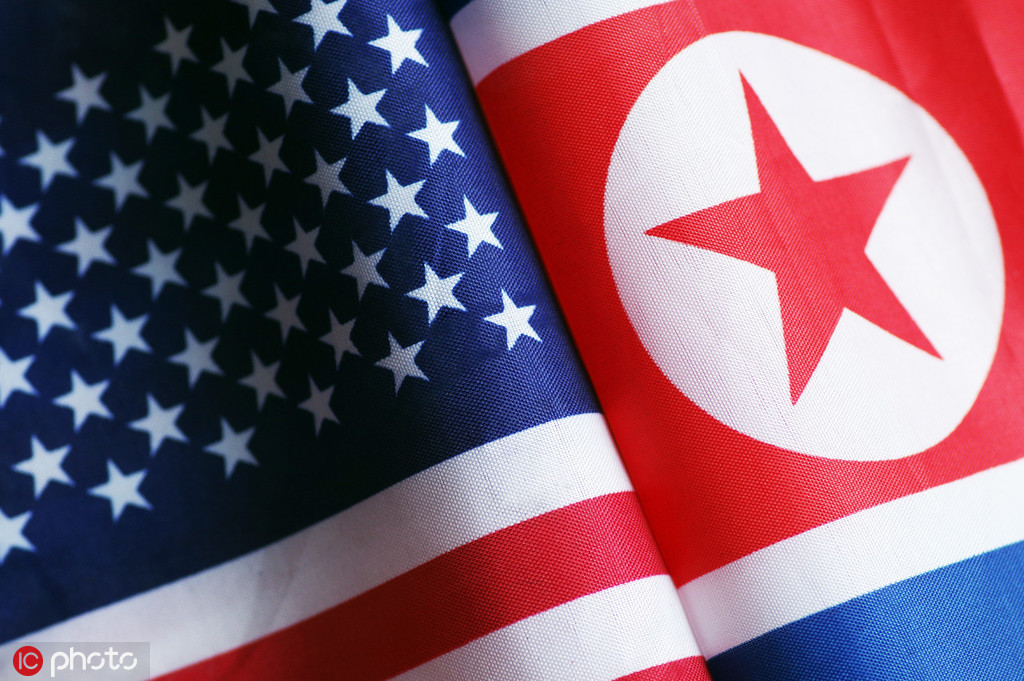
Editor's note: Although working-level talks with the Democratic People's Republic of Korea broke down in Stockholm on Oct 5, the United States accepted Sweden's invitation to return to talks in two weeks. However, the DPRK says the US is not talking in good faith and it is reluctant to continue negotiations. Two experts share their views with China Daily's Pan Yixuan on the outlook for US-DPRK talks. Excerpts follow:
Pyongyang wants talks but ball is in Washington's court
It is unclear whether the DPRK will talk with the US in two weeks because the DPRK says it sees no possibility that Washington will come up with any concrete alternative ideas in such a short time and Kim Myong-gil, the DPRK delegation negotiator to the Stockholm talks, warned that terrible things might happen if the US is not well prepared for the talks.
But Pyongyang is still willing to negotiate. The DPRK wants the talks to continue because it needs the US to meet its requirements for a security guarantee and the lifting of sanctions to enable its economic development.
These requirements are reasonable, and Pyongyang can hardly give ground on these basic concerns.
But it has concluded that Washington is not seriously considering meeting these requirements, and that it is only trying to persuade Pyongyang to completely give up its missile and nuclear tests and facilities.
Pyongyang has pushed hard for the US to seriously consider its requirements through frequent missile tests, underscoring the deadline it has given the US that it has to the end of the year to change its approach.
With the US and the Republic of Korea trying to persuade it to give up its nuclear weapons, it is an opportunity for Pyongyang to negotiate for beneficial conditions. Otherwise, the uncertainties will increase. If Washington releases positive signals, Pyongyang will attend the talks.
The DPRK took action to stop its nuclear tests and invited an international observation group to verify this, so the ball is in Washington's court. Only if the US meets Pyongyang's requirements will denuclearization of the Korean Peninsula move forward.
Wang Sheng, a professor at the Department of International Politics, Jilin University
US wants no quarrel but also no progress
Although the US-DPRK nuclear talks started with a high-profile summit in Singapore last year, the two countries have made no progress in reaching a consensus on how to denuclearize the Korean Peninsula. They have reiterated that the other country should do more to show sincerity.
In consideration of the process, Washington and Pyongyang are continuing to talk but they remain far from a deal.
Last year, Pyongyang's test of an intercontinental ballistic missile drew Washington's attention as it crossed the United States' security bottom line, which led to the contact between Washington and Pyongyang.
However, the US administration is now in a predicament because of the stiff internal opposition from the public, opposition and the hardliners within the administration to an agreement on any of Pyongyang's requests.
Washington has toned down the talks and expects long-term negotiations to bear fruit, which means it does not want to fall out with Pyongyang. As long as Pyongyang remains willing to talk, whether with results or not, the White House will try to keep Pyongyang at the negotiation table as long as possible.
In addition to making US-DPRK nuclear talks a diplomatic achievement which "avoids a war", the US administration is also attempting to put off a final agreement until the last minute to raise the possibility that Pyongyang could compromise more according to the US schedule. It is difficult for the White House to be affected by Pyongyang's deadline countdown and missile tests.
But Pyongyang will hardly abandon its nuclear missiles which were what brought the US to the negotiation table. The White House cannot count on keeping Pyongyang waiting forever with summit diplomacy and a positive tone, it will need to come up with some concrete moves.
Yang Mian, a professor at the Institute of International Relations, Communication University of China





