



Safety key to securing public's trust in unmanned vehicles









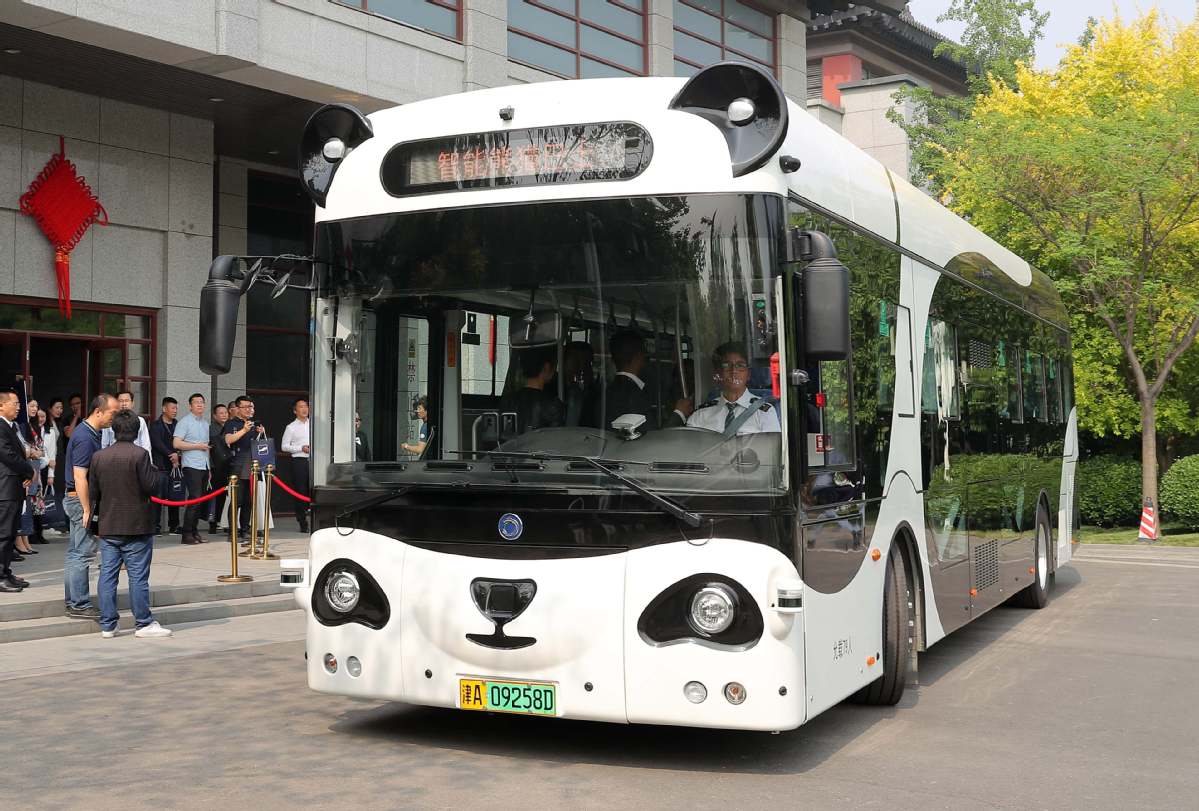
BAIDU, HAYLION TECHNOLOGIES, and DeepBlue Technology have obtained the world's first commercial licenses for unmanned vehicles. China Daily writer Wang Yiqing comments:
On Sept 22, the National Intelligent Connected Vehicle (Wuhan) Pilot Testing Zone was officially opened in Wuhan, Hubei province, and the issuing of the commercial licenses by Wuhan's transport department enables the three companies to not only test unmanned vehicles on the road, but also explore commercial operations.
In recent years, several domestic enterprises have devoted themselves to the research and development of unmanned vehicles and made remarkable progress thanks to the rapid development of 5G, big data and cloud computing in China.
Li Deyi, an artificial intelligence expert and academician of the Chinese Academy of Engineering, told the media that unmanned driving has now exited the stage of scientific exploration and entered the period of product development.
But although the research and development of unmanned vehicles has progressed very quickly, there are still doubts about their safety. In March 2018, a woman died after being hit by Uber's test vehicle and there have been several other accidents during the test driving of unmanned vehicles. As a result, the public holds a cautious attitude to the large-scale commercialization of autonomous vehicles.
Li suggested that exploration of the commercialization of unmanned vehicles could focus on four specific application scenarios: autonomous parking, fixed-point transportation, rapid transit buses and unmanned taxis within limited areas. These application scenarios would be a good way to explore the commercialization of unmanned vehicles and help improve their safety.
The mass production of unmanned vehicles is expected to be realized by 2035, and it is crucial for China to take the lead in the development of artificial intelligence so it can be a world leader in this area.
Although there is still a long way to go for the commercialization of unmanned vehicles, in the next stage domestic unmanned vehicle developers should not only make efforts to improve the technology but also enhance the safety performance of unmanned vehicles in order to dispel public doubts and gain the public's trust.





