



World anticipates next economic move









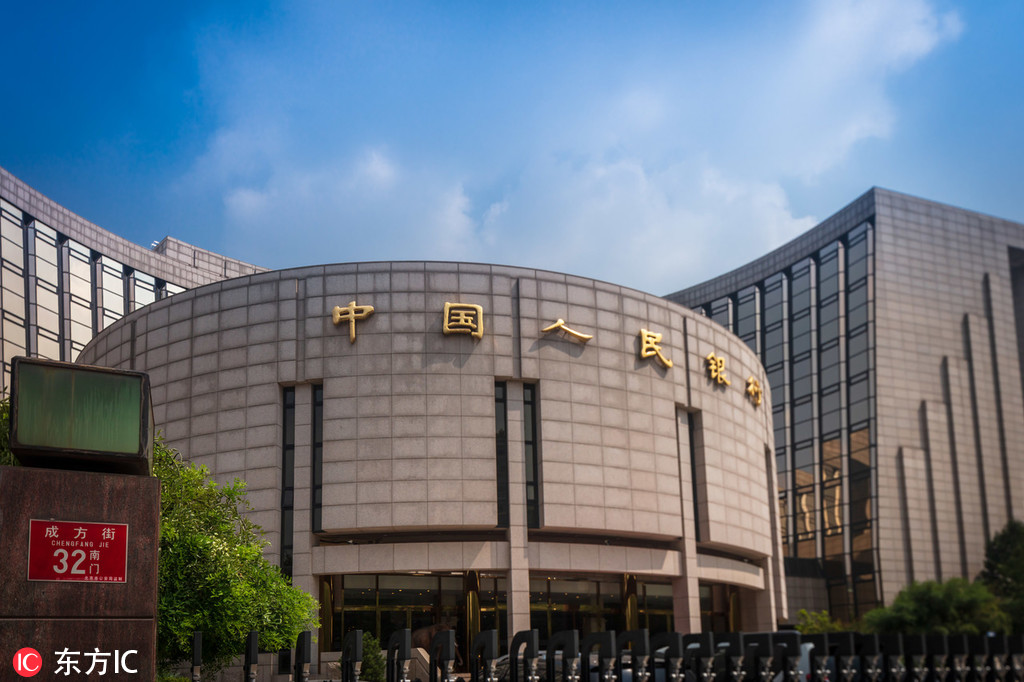
Whether or not China will enact further accommodative monetary policies to maintain growth momentum is a question that has drawn the market's attention, as other major economies have stepped back into a policy-easing cycle in response to negative factors clouding the global outlook.
Choosing policies that support growth has become the priority for global leaders, and Chinese policymakers are expected to follow suit in their own way, providing assurances that the economy is on firm footing while striking a macroeconomic balance for long-term stability, analysts said.
The aim of supportive policies in China is to prevent a slowdown in growth, rather than boosting growth to a strong level, according to the latest research from Goldman Sachs, which added that policymakers are "highly flexible" in reacting to global conditions.
Its research was released before the economic data for August is posted on Monday.
Economists had predicted a rebound of growth in August from July's moderate performance. They foresaw strengthened industrial output growth, stabilized fixed-asset investment and accelerated retail sales, as some earlier supportive measures had begun to take effect.
"China's macroeconomic policy tools are adequate," Sheng Songcheng, former head of the statistics and analysis department at the People's Bank of China, the country's central bank, told China Daily on Sunday. "Proactive fiscal policy will play a major role, while prudent monetary policy will be used to coordinate the fiscal policy."
After the market-oriented reform of the loan prime rate mechanism, or LPR, the central bank has more tools to guide the real lending rate, including adjusting the medium-term lending facility interest rate that is still at a relatively high level.
The monetary easing measures by other major central banks have provided more room for China's monetary policy adjustments, Sheng said.
"However, the adjustments of interest rates should also take into account both internal and external balances, such as the impacts on domestic asset prices," he said.
The European Central Bank launched an aggressive stimulus package on Thursday — the first cut of its deposit rate in more than three years to a record low of 0.5 percent, plus a restart of a bond-buying plan, or quantitative easing program. The bank said the moves were a response to the slower global growth and the continued shortfall of inflation domestically.
This stimulus provoked criticism by investors, who worry it could trigger more market volatility. All eyes will be on the United States and the Federal Reserve's policymaking meeting on Wednesday. There is broad consensus among economists that it may announce another rate cut, following its earlier quarter-point rate cut, which was the first in 11 years, at its July meeting.
For China, one of the most important challenges ahead is the trade dispute with the United States. Rising risk aversion globally and a reshuffling of supply chains may also affect foreign investment in China, said Alicia Garcia Herrero, Asia-Pacific Chief Economist of Paris-based Natixis Bank.
"China's growth model, despite foreseeable headwinds, has been evolving constantly, including further opening up in attracting international capital and deepening financial market reforms," she said. "We expect China to adapt to current challenges and stabilize growth with corresponding policy supports."
Stephen Schwartz, senior director of the sovereigns at Fitch (Hong Kong), said, "In the face of the external headwinds, we believe the Chinese authorities will stop short of the type of credit-led stimulus policies that could exacerbate medium-term financial and economic imbalances."
A blanket reduction in banks' reserve requirement ratio, effective on Monday, will pump 800 billion yuan ($113.07 billion) into the economy, and will lead to more bank lending to the corporate sector, especially to support small and private businesses, China's central bank said.











