



Many ethnic groups, one nationality









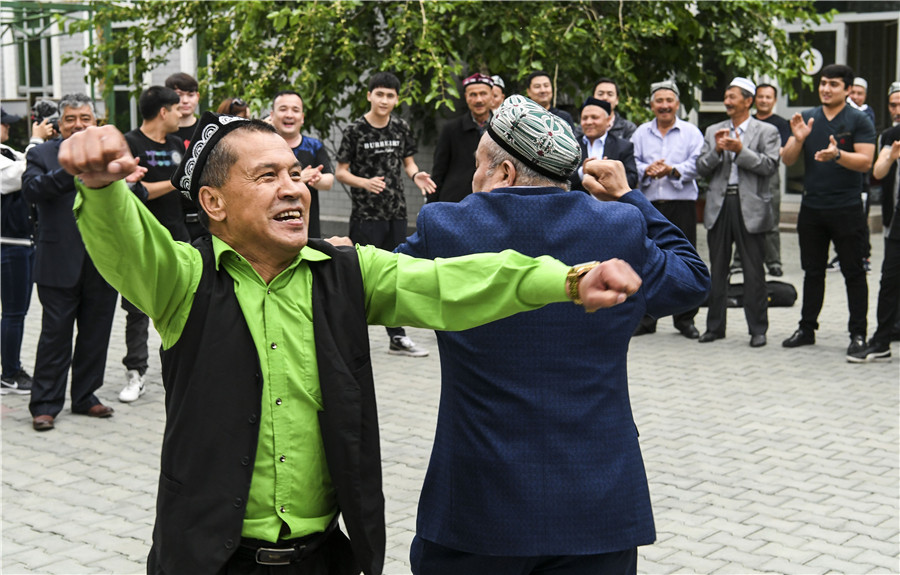
The Xinjiang Uygur autonomous region has been home to many ethnic groups since ancient times. Exchanges, contacts and integration among these ethnic groups and between them and other peoples have continued since time immemorial.
Its unique geography allowed southern Xinjiang to prosper as an oasis-and agriculture-based economy, while northern Xinjiang derived its economic sustenance from livestock rearing and trade, which complemented each other.
Located at the center of the Eurasian continent, Xinjiang was an important hub on the ancient Silk Road. The frequent exchanges of goods, and the intermingling among different peoples and cultures in the region helped not only connect East Asia with the Middle East and Europe, but also promote a cohesive culture. In the process, some new ethnic groups such as Uygur, Kazakh, Uzbek and Kyrgyz were formed or relocated to the region, while some moved to other regions or merged with others.
Thanks to the dynamic balance among different ethnic groups, Xinjiang has developed peacefully over millenniums, and maintained a stable and inclusive social environment. Which facilitated the peaceful and harmonious coexistence of different ethnic groups.
All the ethnic groups, including those that have disappeared or relocated from Xinjiang made invaluable contributions to the Silk Road, and created a unique society and culture. And due to the intensive exchanges among Xinjiang's ethnics groups, and between Xinjiang and the rest of China, Xinjiang residents have strengthened their identity as members of the Chinese nation and developed a strong sense of community.
Foreign powers have invaded and bullied China since the First Opium War (1839-42). All ethnic groups in northwestern China, including Xinjiang, had united with the rest of China in fighting against these invaders.
The close connections among the different ethnic groups in Xinjiang and their shared identity as Chinese citizens have formed over millenniums. Now, they are all inalienable parts of a community with a shared future. The experience of fighting together against the common enemies has further improved their sense of community, and increased their sense of responsibility as members of the Chinese nation. These historical legacies help realize good governance in Xinjiang today.
The authors are researchers in China's border regions at the Chinese Academy of Social Sciences.





