



15 higher vocational schools graduate to university status









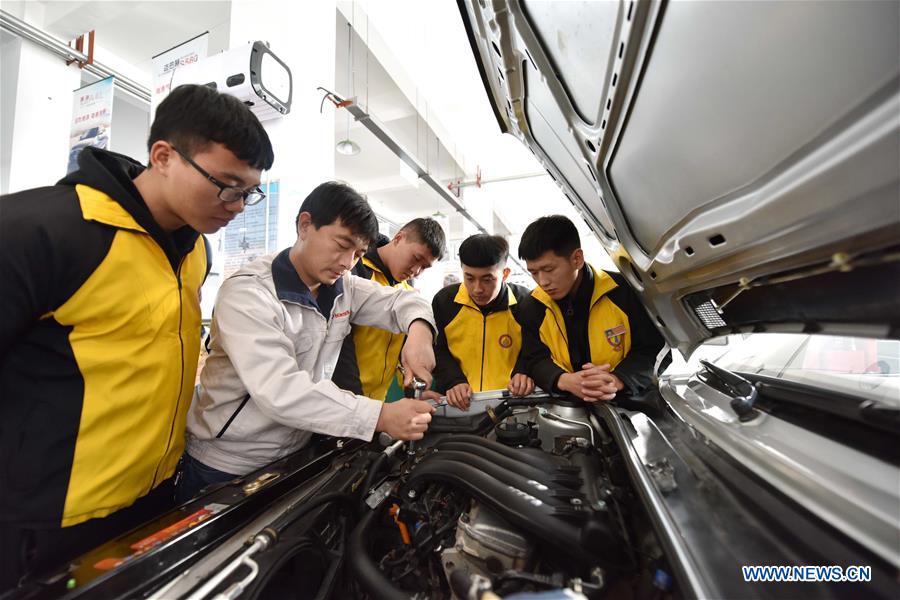
Educational institutions to start offering bachelor's degrees in the fall semester
Fifteen higher vocational schools have been upgraded to universities for the first time in China amid efforts to improve skills in the work force and expand employment.
The new universities, in 10 provinces, will be able to enroll students for bachelor's degrees in the new semester after the Ministry of Education recently approved their name changes.
Shandong Vocational School of Foreign Affairs has become Shandong Vocational University of Foreign Affairs, with the other new universities dropping school from their name including Shandong Vocational and Technical University of International Studies, Nanchang Vocational University and Guangdong Business and Technology University, the ministry said.
Sun Chengwu, president of Shandong Vocational University of Foreign Affairs, said it plans to enroll around 1,700 students in bachelor's degree programs spanning 10 majors in time for the new school year beginning in September.
The upgrading of the institutions from vocational schools to universities, which Sun said was a first for China, showed the government was attaching greater importance to vocational education, which was more focused on cultivating professional skills and helping students find jobs than on academic research.
Most time in vocational schools is spent preparing students for the job market, including teaching them practical skills and helping them find internships at different companies, he said.
"We have an employment rate of more than 97 percent," Sun said. "The students at our school have at least three job offers before they graduate, and they can make, on average, more than 4,000 yuan ($578) for their first job, no less than those students with bachelor's degrees in the province."
Upgrading the school to a university means it will be able to attract more talented students, who will have even better employment prospects, he said.
Tian Dequan, president of Shandong Vocational and Technical University of International Studies, said it plans to enroll 7,000 students for the new semester, 1,700 of whom will study for bachelor's degrees in 10 majors.
By upgrading to a university, the school will be able to attract more enterprises willing to cooperate in talent cultivation, he said, and more parents, who tend to look down on vocational schools, will be willing to send their children to the school so they can focus on learning the skills required for their future jobs, he said.
China has vowed to cultivate more quality laborers and skilled workers by reforming its vocational education system, according to a plan issued in February by the State Council, the country's Cabinet.
Under a trial system implemented this year, graduates of vocational schools and universities that mainly offer undergraduate programs in applied areas will be awarded an academic certificate and a vocational skills certificate.
In five to 10 years, operators of China's vocational education institutions, which are now mostly government-run, will be diversified, with more involvement from the nongovernment sector, according to the plan.
The Ministry of Education plans to increase enrollment in vocational schools by 1.15 million this year to help cultivate professional skills and boost employment, said Wang Jiping, head of the ministry's department of vocational and adult education.
The effort will favor high-quality vocational schools, disciplines in high demand and poverty-stricken areas, he said.
Vocational school graduates should enjoy the same treatment as their university counterparts in seeking employment, promotion and moving to cities, he said, adding that this would help more highly skilled young people realize their full potential.
As a key human resource in China's economic development, vocational schools contribute more than 70 percent of the new workers in manufacturing and emerging industries each year, he added.
The employment rate of graduates from higher vocational schools has surpassed that of university graduates for the past two years, according to a report based on a survey of 303,000 graduates from 30 provincial-level regions released by MyCOS, an education consulting and research institute in Beijing.
The employment rate for higher vocational school graduates reached 92 percent in 2018, 1 percentage point higher than that of college graduates, the report found. The employment rate of higher vocational school graduates was half a percentage point higher than that of college graduates in 2017.





- IP protection for new fields to improve
- Draft rules define premade dishes in consumer interest
- Self-powering pacemaker could last a lifetime
- China intensifies crackdown on misuse of personal data
- China issues new rules classifying online content harmful to minors
- Chinese vice-premier urges efforts to consolidate poverty alleviation achievements














