



Xinjiang policy in the best interest of local ethnicities









That the United Nations ambassadors of 37 countries, mostly developing ones, released a letter on Friday defending China's policy in its Xinjiang Uygur autonomous region is in striking contrast with the text signed by envoys from some developed countries denouncing China's actions in Xinjiang.
Countries such as Russia, Saudi Arabia, Nigeria, Algeria, Myanmar, the Philippines and others know what the most urgent concern is when it comes to the question of Xinjiang. They can put themselves in China's shoes to understand why it is of utmost importance for China to root out separatism, terrorism and religious extremism.
The envoys from developed countries, on the other hand, are not taking a long-term perspective of what China has done or is doing in Xinjiang and considering the region's future development.
They do not bother about whether Uygurs or other minorities in the region have enough necessities to make a living, neither do they care about whether they have enough resources and capacity to improve their lives or have learned enough knowledge and skills to strive for a better future. What they care about most is whether people in Xinjiang can have the freedom to express their views no matter how extreme or absurd their opinions are.
They may believe that their concern is reasonable, and they may think that they are defending the human rights of Uygurs and other ethnic minorities.
But they are too na?ve or too detached from the realities on the ground to understand what is in the real interest of those ethnic groups. They are ignorant about what the majority of those ethnic groups are in urgent need of.
In contrast, the UN ambassadors from developing countries, some of them from Muslim countries, proceeding from the realities of their own countries, have enough empathy to understand what China has done and is doing is in the interest of the majority of those ethnic groups. They can understand how chaotic the region could become and how some Uygurs or people of other minorities may be instigated by some demagogues to become extremists or even terrorists without being given vocational training and teaching about how to stay away from separatism, terrorism and religious extremism.
Yet in the eyes of those envoys from developed countries, such organized training cannot be a good thing. They believe in the freedom of individuals.
However, sometimes, people need to be organized, and being organized does not mean the loss of individual freedom.
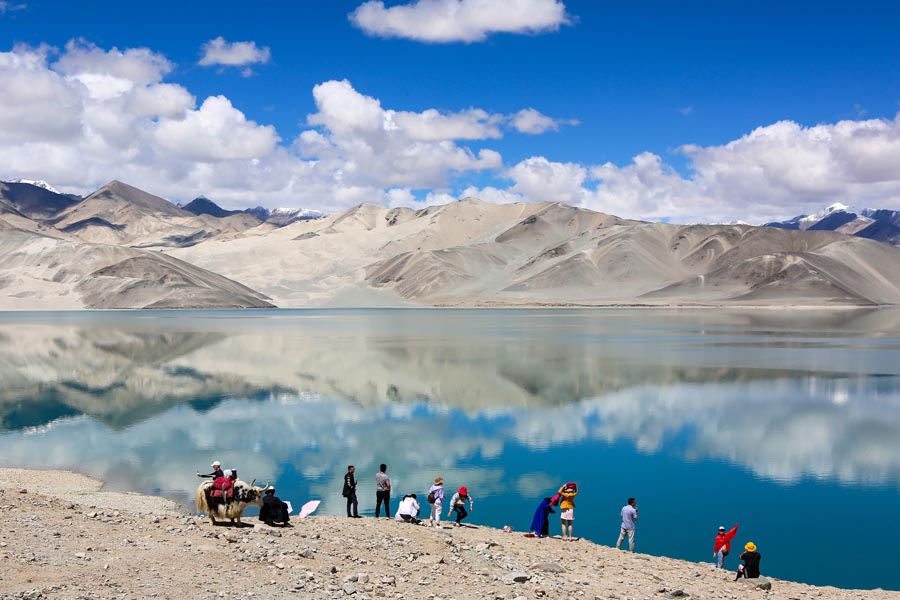
Much better security, the rapid development of tourism and the development of local economy much faster than the national average as well as obvious improvement of local people's livelihoods are what China's policy has brought about in Xinjiang.
If those Westerners turn a blind eye to such fact, it can only be said that they must have a motive for doing so.





