


Ancient site stands the test of time










Deity and kingship
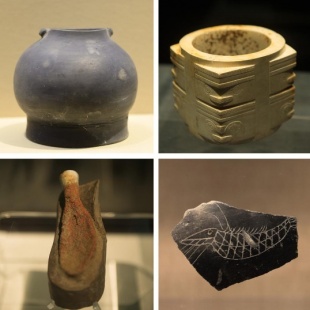
In 1936, during an archaeological investigation at Liangzhu, in Yuhang, more than 10 Neolithic sites were excavated, resulting in the discovery of black pottery. Some similar sites were found in the 1950s in nearby Jiangsu province and Shanghai around Taihu Lake, with archaeologists creating the term "Liangzhu Culture" to describe them.
Despite discoveries elsewhere, no high-level burial objects such as jade items had been unearthed in Zhejiang for a long time.
In 1986, a symposium marking the 50th anniversary of the discovery of Liangzhu Culture was held in Hangzhou. As hosts, Liu and his colleagues needed something important to say at that meeting. After all, they come from the "home" of Liangzhu Culture.
During construction of a factory on a site at Fanshan, a suspected archaeological ruin was reported underground. Liu went there to put the discovery to the test.
"I never expected to uncover such a tremendous hoard of jade," he said.
"King of Cong" was unearthed there. In Fanshan cemetery, 11 tombs were found containing 1,200 artifacts, 90 percent of them jade. In 1987, another 12 tombs were found on a site at Yaoshan, thought to be the ruins of an altar, where more than 700 jade artifacts were excavated.
"These findings launched a new era," Liu said. "The emblem on the artifacts helped us greatly to know the cultural meaning of jade at that time."
The emblem-a human-shaped deity riding on an animal mask motif-is ubiquitous on jade items buried in the Liangzhu Culture tombs. Worship of this deity never ceased in its 1,000-year history.
"Unlike most early-stage totems, which were merely animals or natural signs, those from Liangzhu show that people intended to conquer nature," Liu said.
Comparing emblems found over time at sites related to Liangzhu Culture, archaeologists discovered that those with human features eventually replaced animal motifs.
"Jade is an indicator of people's social status, and not only used for decoration," Liu said. "It portrays a realm with a combined authority of deity and kingship."
He thinks that "King of Cong" belonged to a top-level ruler, who was probably also a religious chief.
In addition to cong, hollow discshaped artifacts called bi that represented women's elegance, along with ax-shaped artifacts called yue-symbols of power-are also typical items from Liangzhu. They later proved to be key items from rituals in ancient China.