



All ethnic groups in Xinjiang fully enjoy human rights









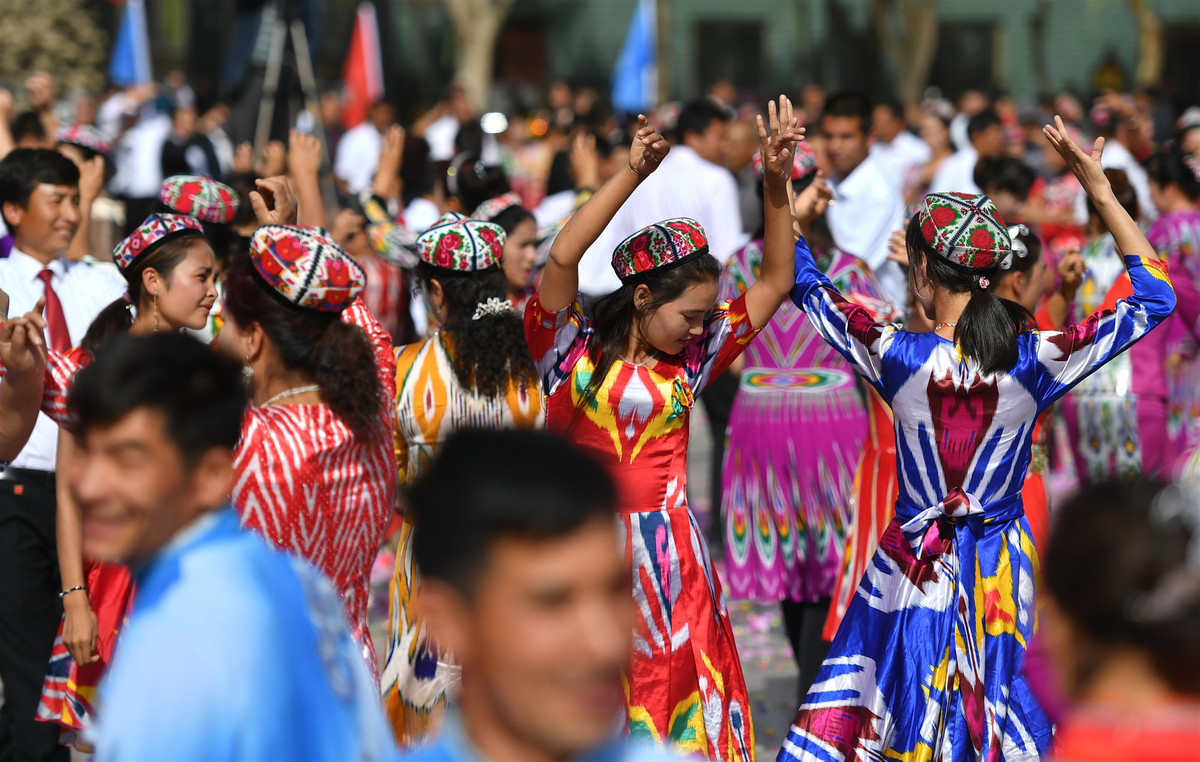
China has taken comprehensive measures to protect and promote human rights across the country including the Xinjiang Uygur autonomous region. Yet some Western politicians keep making outrageous remarks. The Chinese government has condemned such comments.
First, China values the basic rights of members of all ethnic groups in Xinjiang. It has introduced a series of laws and regulations to protect their basic rights, including the Guideline on Women's Development in Xinjiang (2011-20), Guideline on Children's Development in Xinjiang (2011-20), Measures to Implement the Law of the People's Republic of China on the Protection of Women's Rights and Interests in Xinjiang and the Regulation on the Protection of Minors of Xinjiang.
Second, both the central and Xinjiang regional governments have significantly increased investments in education, which reached 81.03 billion yuan ($11.77 billion) in 2018, a year-on-year increase of 14 percent, to promote the right to education of students from all ethnic groups. The 15-year free education plan implemented in Xinjiang makes the region the first in the country to provide free preschool, primary school, and junior and senior high school education for students.
Besides, Xinjiang has received 15.96 billion yuan of aid from other provinces and introduced economic cooperation programs worth 256.05 billion yuan to attract teachers and graduates to teach students in Xinjiang. And the fact that about 65,000 senior high school and secondary vocational school students have enrolled in colleges outside of Xinjiang in the past five years shows the Chinese government is creating more opportunities for Xinjiang students in other places in the country.
Third, people of all ethnic groups enjoy the right to use their mother tongue and characters or alphabet in school even though they have to study standard Chinese, as it is conducive to communication among people of different ethnic groups and promotes the development of all ethnicities. The government has also implemented regulations and policies to strictly protect the languages used by different ethnic groups.
For instance, the Constitution and the Law of the People's Republic of China on the Standard Spoken and Written Chinese Language stipulates that all ethnic groups have the freedom to use and develop their own spoken and written languages. People in Xinjiang mainly use 10 languages, which are widely used in legislation, administration, education, publishing, broadcasting and television, internet and public affairs. Also, committees and research institutes for minority ethic groups' languages have been established to promote their standardization.
Fourth, people in Xinjiang enjoy freedom of religion according to law, and the Xinjiang government has constantly strengthened the regulation of religious affairs, by applying the principle of protecting the legal, preventing the illegal, curbing extremism and fighting crimes.
The introduction and revision of the Regulations on Religious Affairs in Xinjiang, and China's Policy and Practice to Safeguard Religious Freedom and the Fight Against Terrorism and Extremism and Human Rights Protection have further regulated the management of religious affairs and safeguarded people's freedom of religion and right to normal religious activities.
Xinjiang has not seen any terrorist activity in 29 months, and tourists made more than 150 million trips to Xinjiang in 2018, up more than 40 percent year-on-year. By providing people greater security and the region greater stability, the regulations and policies have strengthened human rights in Xinjiang.
China has consistently upheld development-oriented values and vowed to help build a community with a shared future for mankind to promote human rights through peace and common development. And its notable achievements in protecting human rights in Xinjiang have promoted the global human rights cause.
Ignoring these facts, some countries have been trying repeatedly to interfere in China's internal matters, although their own human rights records are terrible.
The double-standard will do no good to anybody, so some Western politicians should abandon their Cold War mentality, and view China's human rights record objectively, not through the prism of ideological bias.
The author is a professor at the School of Political Science and Public Administration, Xinjiang University. The views don't necessarily represent those of China Daily.





