Growth of pet cloning means love never dies










'Rebirth'
Dogs' barks could clearly be heard in the corridors outside Sinogene's lab at a science and technology park in a northern suburb of Beijing earlier this month.
On the monitors, three plump cloned puppies could be seen sleeping next to their surrogate mothers. In about two months, they will see their owners.
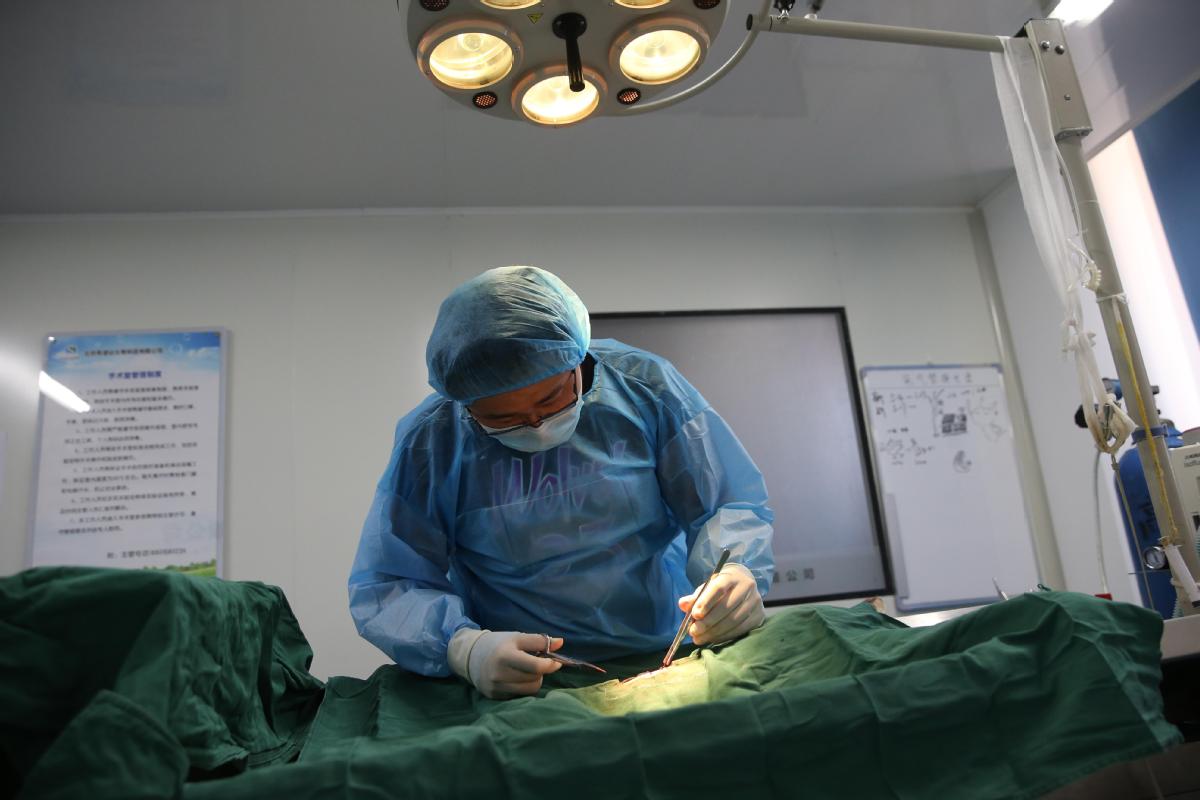
The lab is where the miracle of Guai Guai's "rebirth" will happen. Once the cloning procedure starts, a veterinarian will harvest eggs from a healthy female dog and Guai Guai's DNA will be inserted into them, fusing with the cells to produce embryos genetically identical to the dead pet.
Unlike the assisted reproductive technique for humans in which two to four embryos are usually implanted, only one or two dog embryos out of every 15 created can be successfully grown and then born.
The process usually lasts six to 10 months. The client only takes possession of their cloned pet when it is about 2 months old, an age at which it is less likely to die as a result of rejecting artificial nutrients after being removed from its breastfeeding surrogate mother.
The clone is tested by an independent company, which provides a certificate confirming its genetic connection with the original pet.
Since Sinogene started cloning pets, it has produced about 30 dogs, ranging from Chihuahuas to Tibetan mastiffs, and if all goes well, the lab will see its first cloned cat by the end of the month.
"The scientific community has always considered dog cloning to be the most difficult procedure, because poor egg quality and the asynchronous (unsynchronized) reproduction cycle of the surrogate mother both pose great challenges to the cloning process," said Zhao Jianping, Sinogene's vice-president.