



Cultural tolerance key to social harmony









During his just concluded visit to Russia, President Xi Jinping once again refuted the hypothesis of "clash of civilizations", according to which people's cultural and religious identities will be the primary source of conflict in the post-Cold War era. Instead, Xi reiterated that the global trend is one of cultural inclusiveness and diversity, which he had emphasized at the Conference on Dialogue of Asian Civilizations in May.
By contrast, some US scholars have been claiming that the tensions and conflicts across the world-among people of different faiths, customs and cultures-can be attributed to "cultural conflicts" and "clash of civilizations".
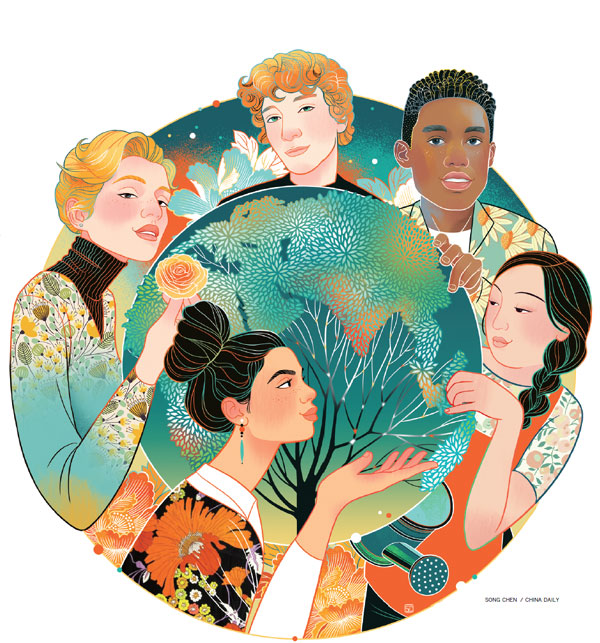
Culture and nature are related. As UNESCO's Universal Declaration on Cultural Diversity says, "Cultural diversity is as necessary for humankind as biodiversity is for nature." Cultural diversity is fundamental to humans.
Diverse cultures not only make societies more robust and creative but also help humans to better cope with changes.
Cultural pluralism promotes mutual cooperation and mutual respect among people of different countries, which are crucial for establishing peace and facilitating development across the world.
To strengthen social cohesion and promote greater solidarity in the international community, there is a need for people to adhere to the principle of cultural tolerance. Being culturally tolerant means not discriminating against people of other cultures.
In reality, however, not all people practice cultural tolerance. Some people are culturally intolerant, perhaps because they suffer from a sense of cultural superiority. Such people are often arrogant, and discriminate against people of other cultures, which create communication barriers and animosity. Cultural intolerance is the root cause of xenophobia, racism and unilateralism, and thus often lead to regional and global tensions and conflicts.
Ignorance and/or the fear of unfamiliar things lead to cultural intolerance. And ignorant and prejudiced people don't believe in mutual learning, and see the world in black and white. Therefore, they hate alien things that they are unfamiliar and uncomfortable with.
Given that intolerance is a breeding ground for populism and ultra-nationalism, we as members of the international community should strengthen dialogue and increase exchanges between people of different cultures and civilizations to disseminate the idea of cultural tolerance and inclusiveness. In this regard, religious leaders should play a leading role in removing religious prejudices and promoting the idea of peaceful coexistence among people of different faiths.
The practice of cultural inclusiveness is conducive to deepening mutual understanding and trust, as well as stimulating cultural exchanges among people of different countries, which in turn can strengthen global peace and security.
Cultural attitudes, to some extent, influence a country's foreign policy. Take China for example. Since Chinese culture is deeply influenced by Confucianism, which advocates "harmony without uniformity", its foreign policy attaches great importance to inclusiveness and tolerance, and supports multilateralism and consultation in global affairs.
Cultural inclusiveness and tolerance can play a crucial role in bringing closer people who speak different languages, practice different religions, follow different customs, and believe in different values, and therefore promote harmony. Which means cultural inclusiveness and tolerance are crucial for hastening the integration of the international community and building a community with a shared future for humankind.
And since China is a strong advocate of cultural pluralism, it has always underlined the importance of dialogue and exchanges between different cultures and civilizations by adhering to the principles of diversity, inclusiveness and tolerance.
The author is director of the Center for Global Governance and Law, Xiamen University of Technology. The views don't necessarily represent those of China Daily.





