



Resolute Zhejiang enterprises brace for the long road ahead









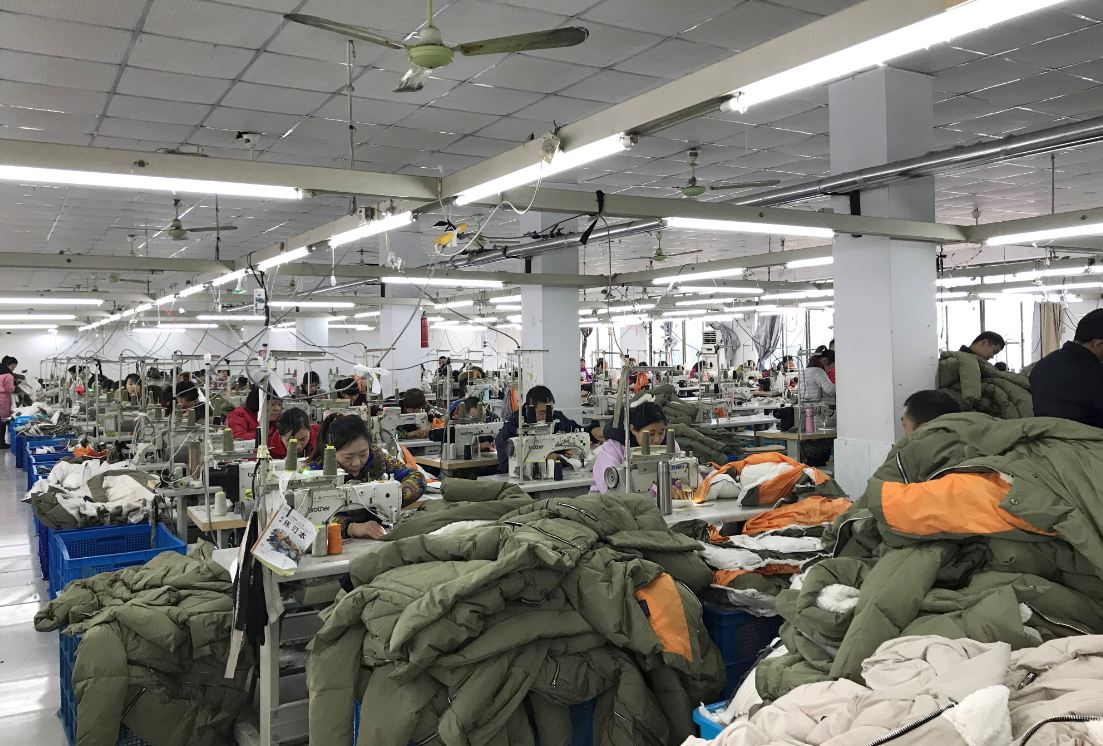
Enterprises in Zhejiang province are looking to mitigate the fallout from rising trade friction between China and the United States through cross-border e-commerce, alternative markets and industrial upgrades.
The move comes after US authorities decided to impose an additional 25 percent tariff on Chinese exports worth $200 billion and plans to target another $300 billion worth of products from China. The US was one of the most important trade partners for Zhejiang. According to customs data, Zhejiang's trade with the US accounted for 13.7 percent of its total trade in April this year.
"Companies that have business relations with the US have already felt the shock," said Li Jianwei, chairman of Hangzhou Euroluck Import and Export Co, a cloth and textile trader. Li said orders started falling from the second half of 2018 on fears of punitive tariffs, though textile was not included in the additional tariff list then.
"As it is, our profit margins are being squeezed due to supplies for US companies such as Walmart, Costco and Macy's, the additional tariffs will hardly leave us with any room for profits," he said.
However, all is not lost for the Zhejiang enterprises. The local government, which has been trying its best to ease the woes of manufacturers, is expected to cut taxes and fees of companies in the province by 200 billion yuan ($29 billion) this year.
Zhu Qiucheng, general manager of Ningbo New Oriental Manufacturing and Trading Co, a company that makes and sells wooden craft products, said though the 25 percent tariffs were a cause for concern, it was not something that really makes a dent in the long run.
"Our major business lies in cross-border e-commerce, and our profits have been quite high from the same, ranging from couple hundreds of yuan to a thousand yuan per product," Zhu said. "We are not a low-end manufacturer, but an enterprise with considerable brand presence in the European and US markets."
He said unlike others, his company will be able to pass on the additional costs to US consumers.
"The key objective for us is to promote export upgrade and switch the major competitiveness from low labor costs to strong quality and branding," he said.
Zhu said the US market is still dependent on certain categories of products from China, and it was not easy for them to find an alternative for at least five years.
Ren Lianggang, general manager of P&T Medical Equipment Co Ltd, a dental sterilization autoclave and ultrasonic cleaner maker in Ningbo, also said the tariffs are yet to impact the company's order flow.
"The labor-intensive factories are the ones that will suffer as they cannot afford to retrench the employees due to trade friction," he said, adding that although the company's exports - mainly dental sterilization machines - remained stable, it was a warning to constantly improve. Ren said the company has been recruiting several talented industrial designers to further improve the quality of its products.
Shi Guoping, director of Ningbo Robots Industry Association, said that robotic machine makers in Ningbo have significant advantages in cost, quality and technology, and expect the US buyers to incur the burden of additional tariffs. He added that the domestic market for robotic machines was big enough to support manufacturers.
Finding alternative markets is another way to reduce the trade risk, companies said. In Ningbo, a city that accounted for 3.38 percent of China's foreign trade volume in 2018, there were over 17,000 companies specializing in trade and over 80 percent of them are exporting products to the US, according to the city's bureau of commerce.
The bureau encouraged these companies to actively find alternative markets to reduce risks as trade volume to the US dropped to 20 percent during the first quarter, from 25 percent during the same period a year ago.
According to the bureau, apart from the US, the trade volume with other partners, especially the emerging economies, saw a strong spike in the first quarter. The trade volume with ASEAN countries, Russia and Brazil has climbed 22.3 percent, 51.7 percent and 23.9 percent year-on-year.











