Building a brighter, greener future









Editor's Note: The Second Belt and Road Forum for International Cooperation was held in Beijing from April 25 to 27. China Daily interviewed top business executives from well-known multinational companies for their views and suggestions on the initiative.
Q1: What is your view of the Belt and Road Initiative proposed by China six years ago? Will the initiative be beneficial to your country or region?
Q2: Do you think the initiative will help fuel global economic growth and free trade and investment? Are there any new industries in your country or region made possible by the BRI?
Q3: How does the BRI benefit your business in China and worldwide? How does your company plan to further participate in the initiative?
Q4: What suggestions do you have for improving the implementation of the BRI?
Q5: Are there infrastructure projects that your country or region would not be able to implement without the BRI? Can you give examples of how these help the economy of your country or region?
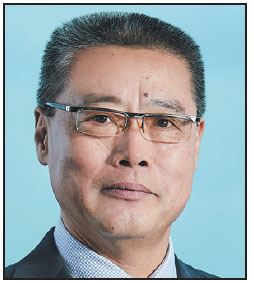
Wang Yuekui, president of BHP China
A1 I am pleased to see the Belt and Road Initiative has gathered steam since it was first conceived six years ago. The BRI has now shifted from concept to reality and made significant progress including a number of landmark early results. From the scale standpoint, the BRI has expanded from Asia and Europe to include more new participants in Africa, Latin America and the South Pacific. They are home to more than half the world's population and comprise around one third of the global economy.
A2 Underinvestment in infrastructure, shortage of funds, and obstacles to economic growth are common challenges faced by many countries. BHP believes that the BRI can revitalize the ancient trade corridor and achieve greater cross-border cooperation despite the protectionist forces that currently threaten the free flow of trade and investment, and the BRI has the potential to make a direct and indirect economic contribution, which will be a huge facilitator of trade connection and economic ties.
Although the BRI now encompasses policy cooperation on a wide range of fronts spanning education, tourism, healthcare, numerous other sectors and what professional diplomats call "people-to-people ties", at its core, the BRI is about infrastructure development. With its focus on infrastructure, the initiative is a model for not only developing countries, but also industrialized ones in Europe and North America, where aging infrastructure needs to be replaced. It also adapts to local, national or regional conditions and needs.
A3 BHP expects that investment projects along the BRI will drive significant demand for construction materials and equipment, leading to an increase in direct and indirect demand for steel. BRI projects could result in up to 150 million metric tons of incremental steel demand.
There are currently a dozen Chinese steel projects under construction or at the feasibility study stage in the BRI regions. These projects, once developed, will bring new employment and prosperity to local communities as well as new business opportunities to BHP as a leading steel raw materials supplier.
A4 I'd like to say that "one flaw cannot obscure the splendor of the jade". There's always room for improvement no matter what. For a large and complex project like the BRI, there are potential challenges as well, such us project governance, loan defaults, debt issues and environmental conservation.
While lots of these arguments have their valid points, they should not be reasons to reject China, as the second-largest economy in the world now, from providing public goods like the BRI. Rather, as our group CEO Andrew Mackenzie said in March while joining the China Development Forum 2019, we should downplay some of the geopolitical issues associated with this initiative, raise the economic importance of this agenda, and work together to make a more inclusive and brighter future for mankind.