



Onus on countries to treat their own waste, not dump it on others









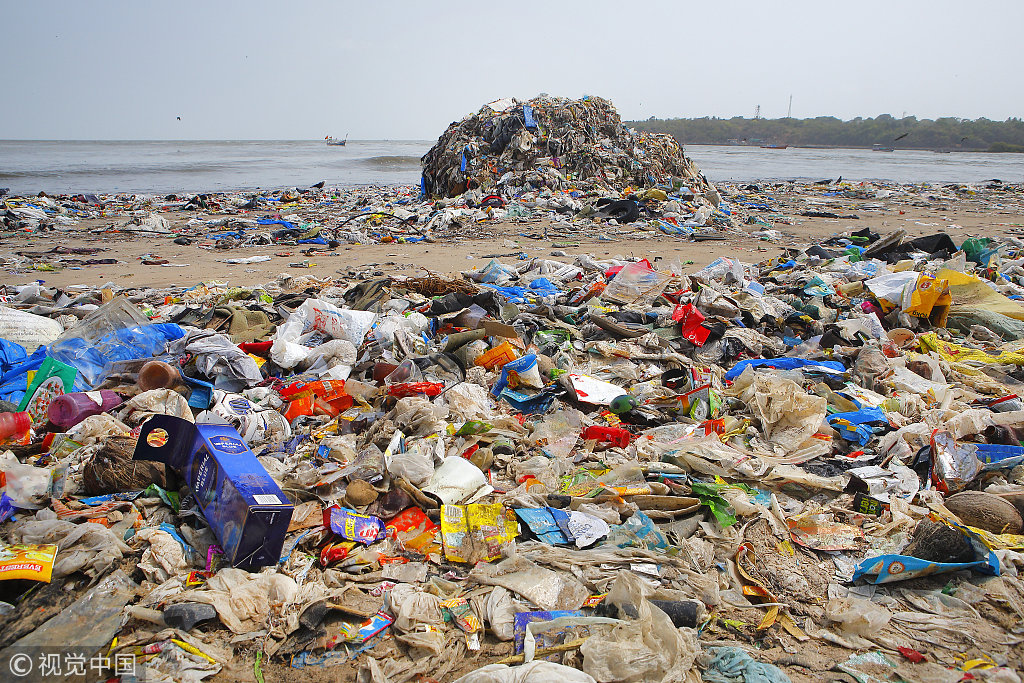
AN AUSTRALIAN TV PROGRAM recently reported that the country had been suffering a "recycling crisis" since China banned imports of solid waste. China Daily writer Zhang Zhouxiang comments:
Thanks to the program and other Australian news reports, some data that were not so widely known before have been made public.
Every year, Australia consumes about 3.3 billion plastic bags, 2.6 billion plastic coffee cups, as well as 1.3 billion plastic bottles.
Yet the whole country has only a few dozen garbage processing stations. The country managed to cope with its solid waste because 30 percent of it was exported to China, and about 10 percent to India.
Now, 16 months after China implemented a total ban on imports of solid waste from overseas, Australia faces a "recycling crisis", with huge quantities of waste stockpiled at garbage sites. There is little hope of finding a substitute because Southeast Asian countries have also been introducing restrictions on solid waste imports.
Australia is not the only country that faces such a crisis. According to the Japanese news agency Nikkei, the total amount of solid waste exports of the United States, Japan and 28 European Union countries dropped from more than 3 million tons every half year to 2.31 million tons in the first six months of 2018 after China's total ban came into effect.
However, while the Australian media have called on the country to act to treat the waste it produces, some media in other countries have simply chosen to criticize China for its ban.
China is not, and should never be considered a natural importer of solid wastes from developed countries. Those countries cannot expect China to help solve their waste problem. Striving for higher quality development, China has been eliminating industries that are major polluters, the processing of imported solid waste being one of them.
China has the right to refuse to import solid waste. Facing the recycling crisis, the developed countries should persuade their residents to change habits and upgrade their own garbage recycling systems, instead of just trying to find new receivers of their waste.
Actually, it is rather an irresponsible and foolish move to try and offload one's garbage on someone else and pretend it no longer exists. Wherever the solid waste goes, it is still on this planet and ruining the environment.
It is time for developed countries to figure out true solutions to the problem.





