



Crash puts question mark on Japanese manufacturing and F-35A performance









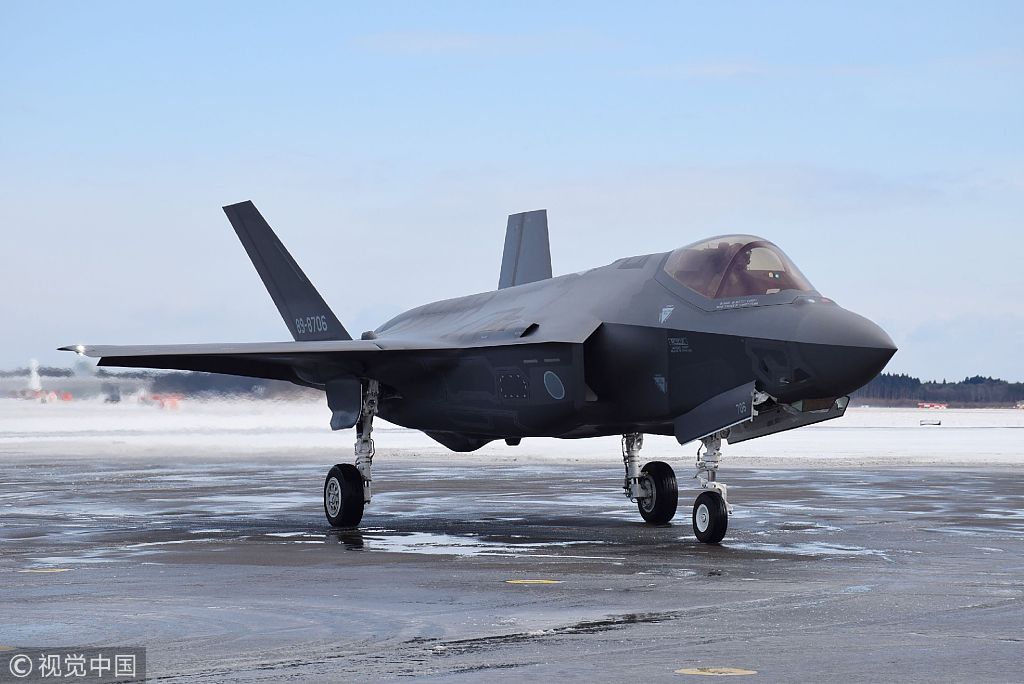
A Japanese Air Self-Defense Force F-35A stealth fighter jet crashed into the Pacific Ocean off the northern coast of Japan on Tuesday. Japan and the United States have mobilized a large number of aircraft and ships to search for the plane and the pilot around the crash site. Until now, they have only found the wreckage of the aircraft without any trace of the pilot.
The crashed jet was the first F-35A assembled in Japan-at Mitsubishi Heavy Industries in Aichi-ken prefecture. Technical factors related to assembly and manufacturing of the aircraft cannot be blamed until the cause of the crash is determined, but they cannot be ruled out either. There has been much speculation over the cause of the crash, including possible pilot error, a bird hit, technical problems with the aircraft, and problems with Japan's assembly and manufacturing sectors.
It is possible that the pilot committed an operational error. Since the jet was on a night mission, the pilot could have mistaken the sea for the sky. Once a pilot flying a high-speed plane at low altitude makes such a misjudgment, he could crash into the sea without having time to send any emergency signals.
The possibility of the jet hitting a bird, however, is very slim. In many bird hit cases, the bird is sucked into one of the engines, causing the engine to either catch fire or explode. In either case, however, the pilot will likely have enough time to send an SOS to the ground command. The possibility of a bird hitting the cockpit windscreen, and the force of the impact causing the pilot to lose consciousness is also very slim. One can therefore assume the jet did not suffer a bird hit.
As for technical problems, the US has flown F-35A stealth fighter jets cumulatively for about 100,000 hours without any major glitches, let alone a crash. So if Japan's F-35A fighter jet crashed due to a technical problem, the fault has to lie with either Japanese assembly technology or with some of the Japanese accessories used in the assembly of the aircraft. And if that is indeed the case, it would deal a blow to Japanese manufacturing.
According to the agreement between Japan and the US and the Japanese defense ministry's plan, Mitsubishi Heavy Industries was contracted to assemble 30 F-35A fighter jets in Japan, mainly using US parts. The crashed F-35A jet was the first that was assembled by Mitsubishi, and the air squadron was formed on March 29, just 10 days before the crash, so neither the aircraft was over-used nor was the pilot suffering from fatigue. Which again suggests the problem could lie in either the assembly process or the use of Japanese accessories.
Japan has been known for its high-end, high-precision manufacturing prowess. But in recent years, Japanese media have revealed that in order to cope with the fierce competition in the market, some Japanese enterprises have used substandard materials in their products, relaxed their quality control measures, employed unqualified personnel to conduct quality inspection, or pretended to have their products examined and accepted by qualified inspectors. No wonder some Japanese companies have encountered a series of manufacturing problems.
If the jet crashed due to an error in the assembly process or the use of substandard Japanese parts, the Japanese manufacturing sector will suffer another massive blow and further lose the trust of consumers.
The product quality problem is not restricted to a few sectors but has become a common institutional and decision-making problem across a wide range of Japanese companies. F-35As are considered the best fighter jets, which Japan has purchased from the US in large numbers as a means to counter Chinese and Russian fifth-generation fighters. But the crash could raise questions on the F-35A stealth jet's performance and effectiveness as well as the Japanese manufacturing sector.
The author is a professor at and deputy director of Japanese Studies Center, China Foreign Affairs University.
The views don't necessarily represent those of China Daily.





