



Nobel economists call for rules-based global trading system









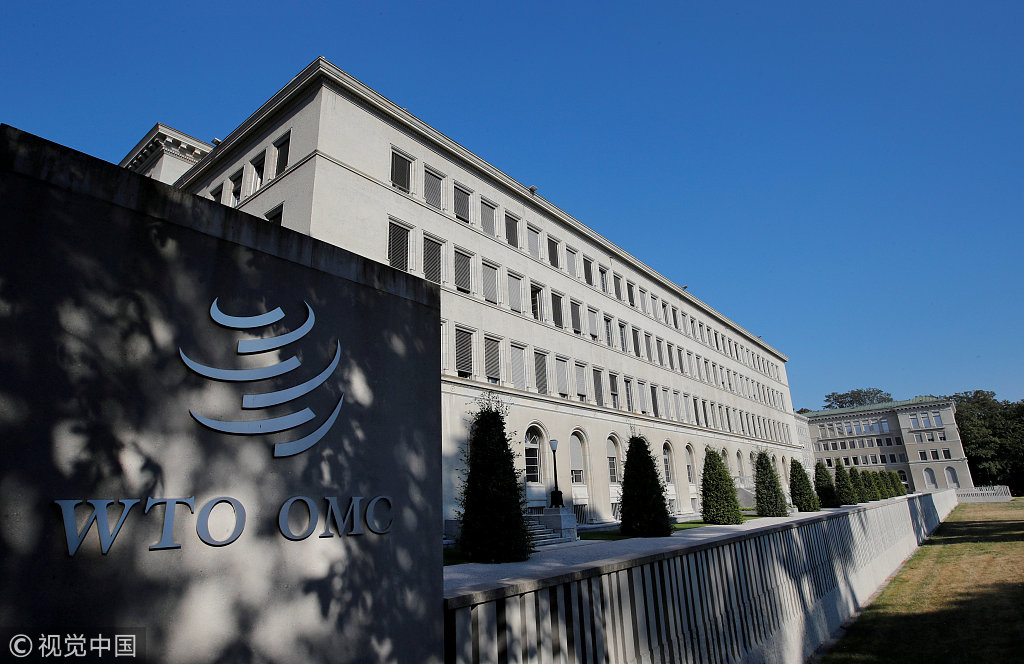
Four Nobel Prize-winning economists called for strengthening the rules-based system of international trade recently. They also argued that fundamental changes in the World Trade Organization are needed to deal with large changes in the world economy over the past 25 years.
The Development Research Center of the State Council kicked off its new DRC Chair program of discussions with world-renowned scholars by inviting Michael Spence of Stanford University, Christoforos Pissarides of the London School of Economics, and Edmund Phelps and Joseph Stiglitz, both of Columbia University, to discuss the "Multilateral Trading System and WTO Reform".
In an interview with China Daily, Spence said that improvements in foreign investment rules announced as part of the Government Work Report will be effective and could be a significant change in policy.
"Part of the problem in the relationship has been that developing countries, more or less as a routine part of the world financial architecture, viewed some of the (WTO) rules as suggestions - for good reason because they need some policy flexibility. And, China did that, too," he said. "It looks to me like these are real reforms in a positive direction."
Similarly, Stiglitz said: "There is a broad consensus - at least among economists - about the need for a rules-based international trade regime. Just like domestically we need a rule of law to make any economy work. There needs to be an international rule of law, and that is what we mean by a rules-based international trade system.
"The multilateral trade system has had enormous benefits. It has played a role in reducing poverty and promoting growth in emerging markets and in developing countries. I don't think China would have succeeded to the extent that it has in the absence of a multilateral trading regime, and China's success alone has moved some 780 million people out of poverty," he added.
Spence also argued that weakening the WTO to move to a trade regime based on regional or bilateral negotiations would be particularly bad for small developing countries. "The real problem going down the road is that the smaller, poorer countries will not have their interests looked after and they are not going to be able to successfully negotiate on their own behalf. In terms of inclusiveness, there is something tremendously important about maintaining a multilateral system. And China is in the forefront of this," he said.
"The WTO retains a very important function in arbitrating trade disputes so I get very worried when I hear something that sounds like an attempt to undercut their authority in that area, because implementation and enforcement is an important part of this," Spence added.
- Boao Forum to unite nations for sustainable economic development
- WTO reform and improving market access essential
- China's commerce ministry comments on WTO report on US complaint about agricultural subsidies
- China, WTO will start talks on e-commerce rules
- Wang: WTO should play bigger role in global governance











