Easing likely with slowing of economies









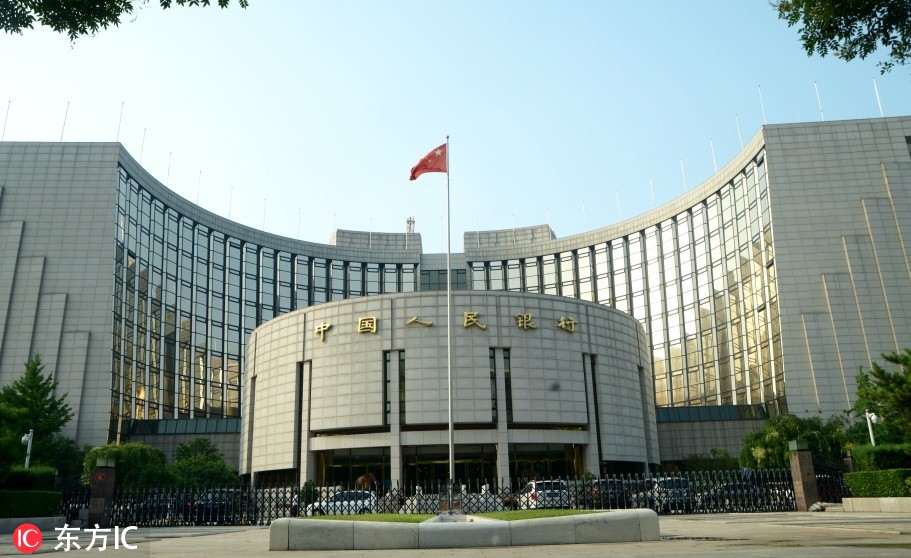
China expected to move toward dovish monetary policies along with others
China may move more toward monetary easing, joining a group of other major economies prone to dovish policy typified by more accommodative measures that stimulate growth, analysts said.
This comes at a time when global central bank governors have become more concerned about an economic slowdown and put tightening measures on hold.
Central bankers in the United States, European Union, Japan and Oceania have had a change in mood in the past month, given worries that a too tight monetary environment may not cushion their economies from shocks from trade tensions, Brexit and financial vulnerabilities. They sounded the alarm over global uncertainties after the International Monetary Fund downgraded its forecast of the world’s economic growth in January.
With bank governors delivering dovish speeches one after another, the Chinese monetary authority is considering an adjustment to financial institutions’ “actual” lending rate for companies in order to remove the “obstacle” that constrains credit flowing into the country’s production sector, according to Sun Guofeng, head of the PBOC Monetary Policy Department.
Market expectations for interest rate cuts have been rising in China after Spring Festival. Before embarking on their next move in interest rate reform, however, policymakers need to assess domestic macroeconomic conditions in order to reduce financing costs. It is more urgent to let the financial market determine the lending rate, Sun said.
“We hope (policy fine-tuning) will not surprise the market when it is introduced,” Sun said.
Communication with other countries is also needed before launching new policies or introducing creative monetary policy tools, and “the PBOC has good communication mechanisms with other central banks including the US Federal Reserve and the European Central Bank”, Sun said.
Last year, the PBOC removed some constraints on credit, including liquidity injection through cutting the reserve requirement ratio four times and capital replenishment by allowing commercial banks to issue perpetual bonds, which have no maturity rate, he said.
Chinese commercial banks, however, are still using the one-year lending rate of 4.35 percent — the rate commercial banks charge businesses — set by the central bank in 2015. It is higher than interbank market rates or the interest rates banks have been paying to the central bank of 3.05 to 3.30 percent.
The central bank will eliminate that interest rate margin, sooner or later, and guide commercial banks to lower lending rates closer to a market-determined level, Sun said.
“Theoretically, there is room for rate cuts of 1 percentage point,” said Zhang Tao, an analyst in the financial market department of China Construction Bank.
China has enacted both monetary and fiscal policies to offset downward pressure on economic growth this year. Some economists have predicted the growth rate may slip in the first quarter below the 6.4 percent of the past three months of 2018 because of factors such as trade tensions.
US Federal Reserve Chairman Jay Powell decided on Jan 30 to shelve a plan to keep raising interest rates because of possible risks to US growth. The European Central Bank stopped expanding quantitative easing and warned about the negative results of Brexit.
Forward-looking measures have already been taken by the Chinese monetary authority, earlier than other major central banks, based on the evaluation on macroeconomic conditions and the external environment. Policy fine-tuning will send positive signals to the market and support financial resilience, Zhang said.
This year, the remarkable change in tone from the world’s major central banks is shifting into a monetary easing cycle, and policies from the Chinese central bank are headed in the same direction, Zhang added.
A recent research note from Goldman Sachs forecast China’s credit growth to rise in January as commercial banks may be “significantly more aggressive than before” with encouragement from the easing policy. With the PBOC scheduled to release more data this week, the trend may be reflected in faster growth of new yuan loans and the broad money supply.