


Cutting remarks: The hidden meanings of festive decorations









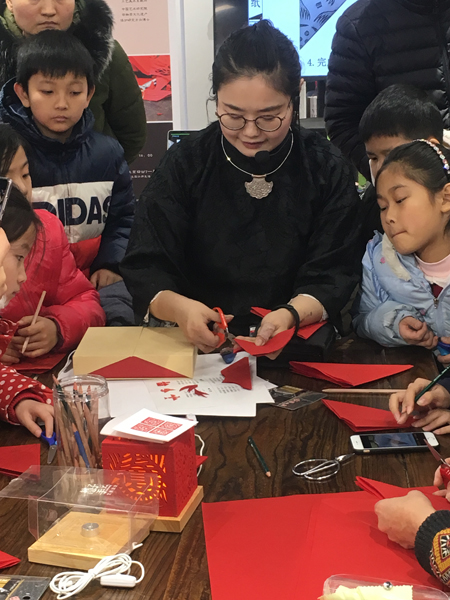
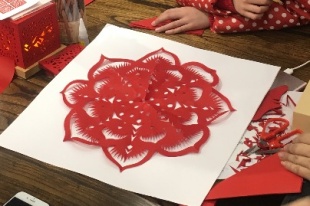
A tradition of the upcoming Spring Festival is to stick paper-cut decorations on windows and doors, and hang lanterns to usher in blessings and good luck for the coming year. The all-red effect in the house creates a joyful atmosphere for family gatherings.
Paper-cutting was recognized as a national intangible cultural heritage in 2006 and made UNESCO's Representative List of the Intangible Cultural Heritage of Humanity in 2009.
The simple combination of scissors and paper, after folding, drawing and cutting, can create sophisticated pictures in mere minutes in the hands of craftspeople-a skill passed down from generation to generation for more than 1,500 years.
There is a saying that "culture has no national boundaries", and, according to experts, paper-cutting conveys the culture shared between China and the West to wish for family reunions and maintain links with loved ones, alive or dead.
In the movie Coco, for instance, the 12-year-old Miguel and his family dance and sing to celebrate the Day of the Dead, a traditional festival in Mexico, when colorful paper-cuts are hung on the street.
Human skeletons made of paper are said to build connectivity with and pray for the dead. Chinese people also cut images of small figures hand in hand to call back the spirits of the dead. The film resonated in many ways with Chinese audiences and took in 1.2 billion yuan ($190 million) in box-office earnings.
Fairy tale writer Hans Christian Andersen liked to cut characters, such as princesses, witches and angels, out of paper while telling stories to children.
In China, close female companions and family members used to chat and make paper-cuts together.
The difference is that most Chinese paper-cuts are red, while those in other countries are often made in many other colors.
"Though the patterns and colors may be different, paper-cuts share the same function of maintaining emotional ties among people," says Yang Huizi, an art teacher at Beijing Union University.