



Old Beijing - a personal journey of discovery









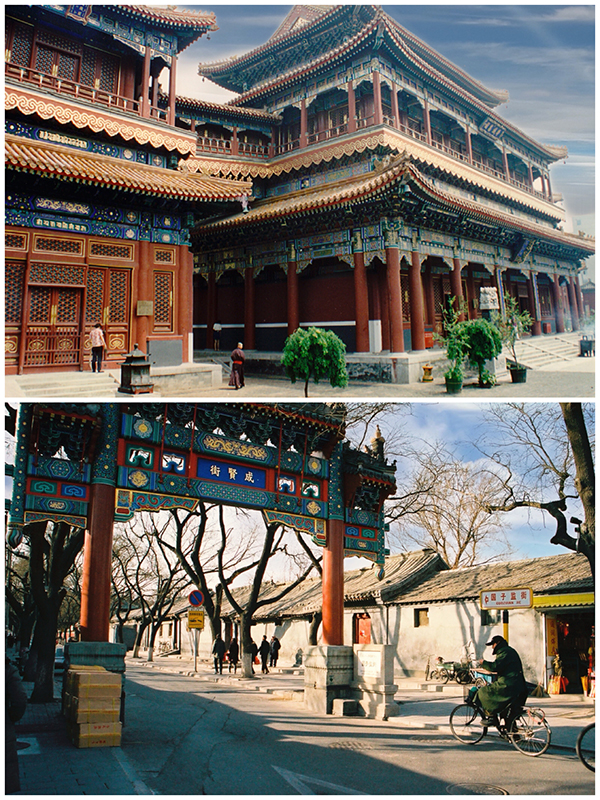
Long before the Airport Metro opened, I would often alight from airport transit coaches at Dongzhimen. Wanting to quickly re-engage myself with the older city and having become increasingly familiar with the area's many alleys I would walk the last 30 minutes to my hotel. Along Dongyanguan Hutong, for example, a small kindergarten opened onto a courtyard. However, locals seeing a Westerner carrying luggage would automatically assume where I wanted to go and would point to which hutong to follow!
I was residing in an excellent location to explore the city. Yonghegong Metro Station was within convenient walking distance of the hotel. It could have been simple to just go west along to Yonghegong Dajie before turning north toward the metro. However I preferred to wander, at times losing myself, through the narrow lanes such as Houyangkang Hutong that led past a myriad of local scenes, sights and aromas toward the crimson walls of Bailin Temple. Westwards from its gates ran Xilou Hutong where compact food markets looked out on small units preparing noodles and fresh breads. Spicy lamb chunks skewered on wooden sticks were a favorite local snack. Circular coal blocks, used at times with "cookers" created from discarded oil drums were piled along the grey walls of the alley. Children headed to and from school passing older people sitting outside wooden entrances into hidden courtyards. This was set amid a background of incessant calls from hawkers and vendors on bicycle carts either looking to buy discarded household items or sell produce. Such scenes could easily go back to the late Qing Dynasty when few markets or shops, if any, existed in the alleys and most commerce was by direct trading from the carts. This still continues today with, for example, knife sharpeners or recyclers looking for custom although a distinctive sound still heard is of carts filled with crates of glass beer bottles rattling along the alleys to the accompanying cry of pijou (beer). Indeed many folk songs still recall earlier hutong life including the distinctive call of the "haws" seller. In winter I was fascinated by large piles of cabbages and leeks, ingredients within staple diets, distributed at very cheap prices to the ordinary people. In summer, great mounds of melons were thrust quenchers during the searing Beijing heat. Sometimes horses would pull carts laden with fruit or vegetables but their presence was becoming increasingly restricted. Shops had many domestic essentials such as warm winter quilts, long aluminum smoke pipes for the coal stoves and thermos flasks. Every restaurant, every hotel room, every train carriage had its ubiquitous hot water flask.





