



Free trade pacts will drive economic growth









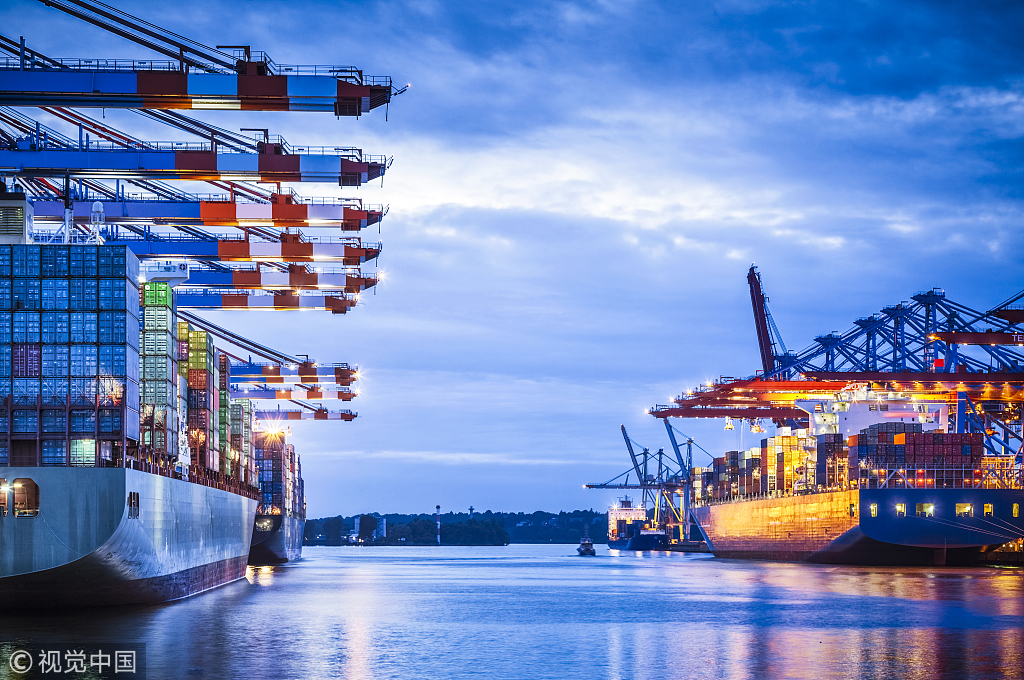
Despite the rising trend of protectionism and unilateralism in 2018, China supported and participated in various free trade agreements in East Asia. At the 20th ASEAN Plus Three summit in 2017, all the parties supported Premier Li Keqiang's proposal to build an East Asian Economic Community and said they would deepen cooperation to achieve that goal as early as possible.
Accordingly, the countries in the region are focusing on the dual pillars of trade and development-the 10+3 cooperation mechanism and the Regional Comprehensive Economic Partnership.
The 10+3(the 10 member states of the Association of Southeast Asian Nations plus China, Japan and the Republic of Korea) cooperation mechanism doesn't have an official name, but it has boosted trade between ASEAN and the three countries to such an extent that it now accounts for nearly 50 of their total. It has also helped increase investment dramatically.
The 13 countries agreed to the Chiang Mai Initiative, a currency swap arrangement, in the aftermath of the 1997-98 Asian financial crisis to manage regional short-term liquidity problems. The initiative connects various bilateral mechanisms to a multilateral mechanism, and has the potential of becoming a primary source of funds. Thanks to the 10+3 mechanism, a micro-economic research office has been set up in Singapore. Efforts are also being made to establish an international body aimed at strengthening economic supervision, and improving the regional financial risk prevention and assistance system.
As for the RCEP, it includes the 10+3 states and Australia, New Zealand and India, and is aimed at establishing free trade among the 16 member states. Although RCEP negotiations have been delayed due to the 16 countries' complicated interests, the talks gathered momentum last year. In fact, the member states are likely to sign a free trade agreement this year, which would cover nearly half of world's population and one-third of global trade, and boost regional economic integration on the basis of World Trade Organization rules.
The signing of the Comprehensive and Progressive Agreement for Trans-Pacific Partnership, which doesn't include China, last year is another significant trade agreement. The CPTPP is a successor to the Trans-Pacific Partnership agreement that former US president Barack Obama promoted as part of his "rebalance to Asia" strategy. But incumbent US President Donald Trump withdrew Washington from it within days of assuming office in January 2017, thereby undermining the US' credibility as a responsible global power.
In March 2018, the remaining 11 members of the original TPP signed the CPTPP, and since then Mexico, Japan, Singapore, New Zealand, Canada, Australia and Vietnam have ratified the agreement. The CPTPP came into force on Dec 30, but only those states that have ratified it can enjoy its benefits. As the CPTPP will allow its members to benefit more from trade by further reducing tariffs, it is an anti-protectionist trade deal.
And since China is determined to further deepen reform and opening-up, vowed to never close its door to the outside world, and shares the trade policies adopted by the CPTPP, it has an open mind on joining the free trade agreement.
The author is a professor at and director of the Center for the Study of Chinese Foreign Policy, Fudan University, Shanghai.





