



From commonplace items to revered cultural icons









Honeycomb briquettes

People in North China are not fearful of the winter cold because most homes are equipped with radiators, underfloor heating systems or central air-conditioning.
However, in the 1980s, honeycomb briquettes provided the main fuel for heating and cooking in China.
Distributed by the government, the honeycombed coals were sold at coal stations in cities. People could buy 300 to 400 briquettes a month at a neighborhood station for use at home.
The briquettes were burned in stoves to heat homes and provide fuel for cooking, with the smoke being carried outside via a long chimney.
However, transporting and using the briquettes was arduous and not environmentally friendly, so they were gradually replaced by central heating and gas-powered appliances after the "coal-togas switch" project was launched in 2016.
Manual sewing machines
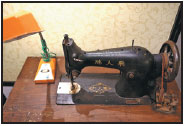
Many people born in the 1980s will remember their mother sitting in front of a noisy manual sewing machine. At the time, most clothing, curtains and inner soles for shoes were homemade.
In the 1970s, household sewing machines were regarded as luxury items, and companies often held draws in which a lucky employee could win one of the coveted machines, according to Song Lanli, 57, a librarian in Beijing's Dongcheng district who used to be employed in the clothing industry.
"I used to work at a garment factory, sewing 23 suits of children's clothes every day, and I also made most of my son's clothes when he was little," she said.
As ready-to-wear items flowed into the market in the 1990s, it became cheaper to buy clothes at stores. As a result, household sewing machines either became decorations in homes or were discarded when people moved.
Enameled cups
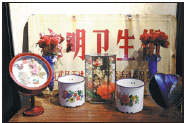
People visiting stores in Nanluoguxiang, a popular haunt for tourists and young hipsters in Beijing, can buy imitation enamel cups bearing the characters wei renmin fuwu "serve the people" or xi, "joy" as souvenirs.
Decades ago, the cups were not regarded as quaint or kitsch. Instead, they were daily necessities and common in every home.
The porcelain glaze wrapping prevented the underlying metal from rusting and, at the same time, gave the cups a smooth, colorful look.
In addition to the cups, other utensils such as washing basins, plates and lunchboxes were made from enamel.
As plastic, aluminum alloys and stainless steel were increasingly used to make commodities, enameled products fell out of fashion, but in recent years they have gained status as highly collectable cultural items that hold memories for an entire generation.


- Xi urges major provincial economies to gain experience in solving new problems
- Professional managers key to rural vitalization, expert says
- Chinese clinical trial shows breakthrough in liver cancer survival
- Alibaba committed to AI advancement amid leadership shake up
- Rapeseed flowers bloom in Guizhou, heralding spring visitors
- Chengdu High-tech Zone celebrates Lantern Festival with AI, talent showcase





