



Arctic sea ice not enough to reverse melting trend









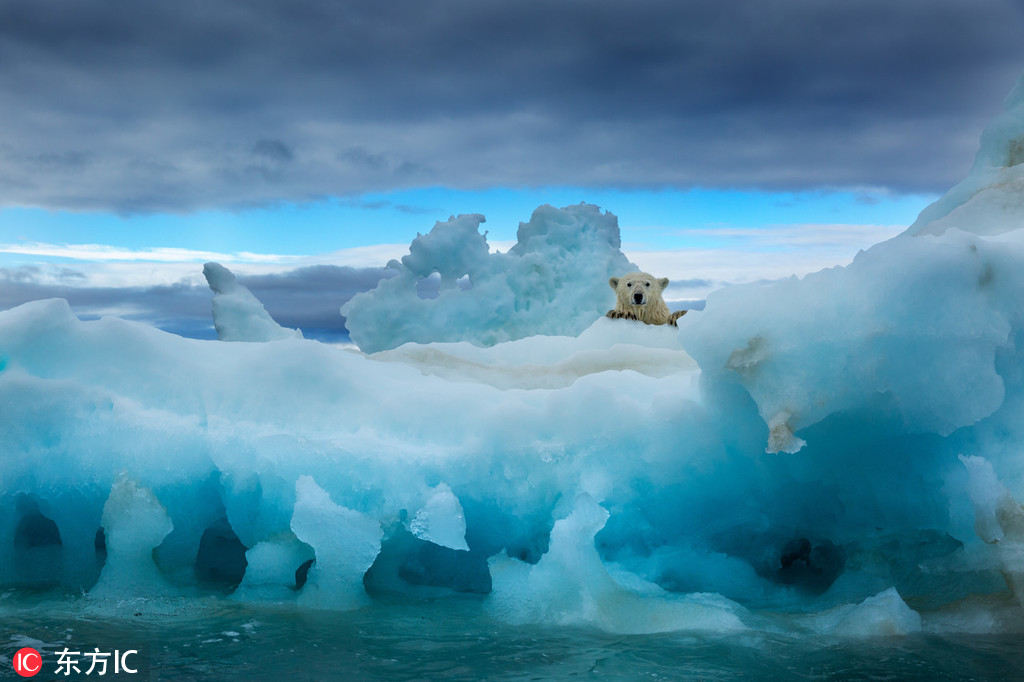
WASHINGTON -- Findings of a study by the United States space agency NASA might be a silver lining: wintertime increases of Arctic sea ice may have partially slowed down the sea ice cover decline.
The study released on Thursday has shown that the Arctic sea ice is thickening at a faster rate during winter although it is vanishing quicker than it has ever been observed since 1958.
However, this is not an antidote. The ice cover is not recovering. Only its demise delayed, according to the study.
The Arctic sea ice cover has lost on average around two-thirds of its thickness since 1958 and now 70 percent of the sea ice cap is made of seasonal ice, or ice that forms and melts within a single year, according to NASA.
"This increase in the amount of sea ice growing in winter doesn' t overcome the large increase in melting we've observed in recent decades," said Alek Petty, a sea ice scientist at NASA's Goddard Space Flight Center and lead author of the study.
"Our findings highlight some resilience of the Arctic sea ice cover," Petty said. "If we didn't have this negative feedback, the ice would be declining even faster than it currently is."
The strong ice thickening in winter is not all good news, the researchers said.
As ice forms at the ocean surface, it releases a lot of salty, dense water, increasing the mixing of water in the upper ocean. It will mitigate the strong freshening of the Arctic Ocean's surface waters and alter the seasonal balance and the salinity distribution of the upper ocean.
"Local micro-organisms and ecosystems have to adapt to these rapidly evolving conditions," said Petty.
The researchers predicted that by the middle of this century, the further increases in atmospheric and oceanic temperatures will outweigh the mechanism that allows ice to regrow faster.
When the sea ice is less than 49 centimeters thick at the beginning of winter, the switch will happen, according to Petty.










