



Talks and disputes to mark future Sino-US ties









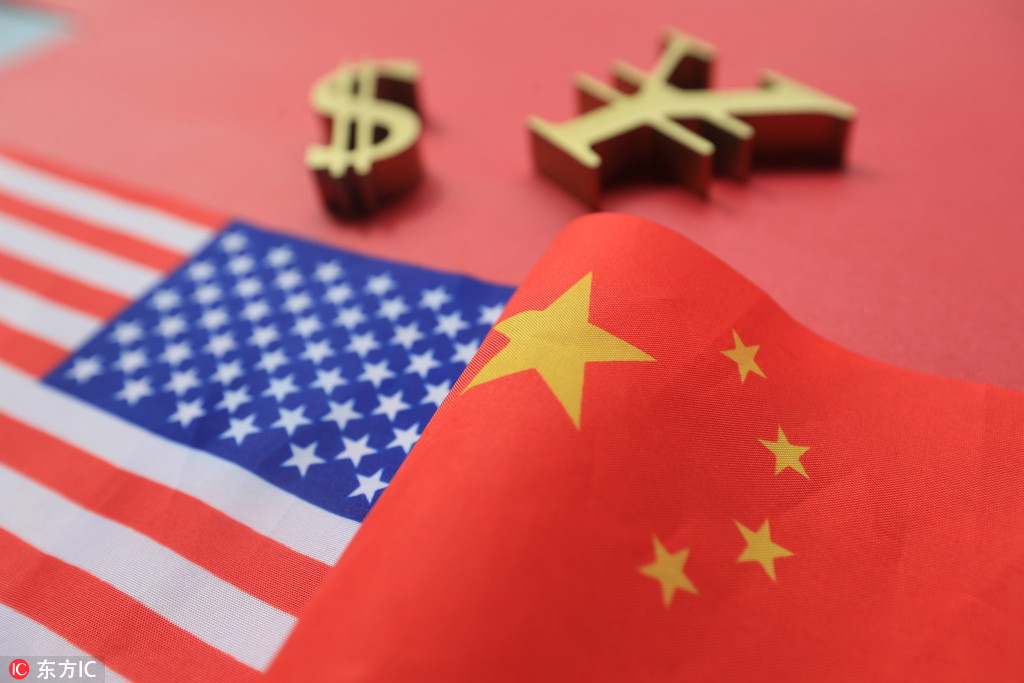
China and the United States agreed to suspend any increase in trade tariffs after a meeting between President Xi Jinping and President Donald Trump on the sidelines of the G20 Summit in Buenos Aires, Argentina, on Saturday. The two sides also agreed to discuss issues of common concern, including market access, intellectual property rights protection, technology transfer, and fighting cyber theft.
The US agreed to leave the tariffs on $200 billion of Chinese imports at 10 percent instead of raising them to 25 percent on Jan 1, saying it would raise the tariff to 25 percent if no agreement is reached with China within 90 days. Apart from reaching a consensus on economic and trade issues, the two heads of state also prevented the trade conflict from spiraling into a full-blown confrontation.
China has always attached great importance to maintaining and strengthening bilateral relations with the US. Less than three months after Trump became US president, Xi made it clear Beijing will make concerted efforts to not only maintain but also further improve Sino-US ties. China even took concrete actions to this end: Xi visited the US in April 2017 and held extensive talks with Trump at Mar-a-Lago in Florida. And during Trump's visit to China in late 2017, the two sides signed bilateral economic and trade cooperation deals worth $250 billion, showing China's sincerity in reducing its trade surplus with the US.
Still, the US triggered a trade conflict with China on an unprecedented scale, raising grave concerns that the two sides were headed toward a confrontation.
Financial markets across the world were worried that a headon clash between the world's two largest economies could create a serious systemic risk for global trade. That's why the successful Xi-Trump talks in Buenos Aires have made people breathe a sigh of relief. "The two presidents agreed that the two sides can and must get bilateral relations right", as State Councilor and Foreign Minister Wang Yi said. Wang added that the two sides also agreed to advance Sino-US relations in a coordinated, cooperative and stable way.
China has long advocated the use of talks to resolve trade disputes with the US, but it is also confident of tackling any challenges in the event of the disputes not being amicably settled. The Xi-Trump talks not only helped defuse tensions in the monthslong China-US trade conflict, but also saw China pushing for a settlement of the economic and trade row with the US on the principle of expanding imports rather than reducing exports.
The "truce" in the trade conflict is good for China and the US, as well as the global economy. It is also expected to boost stock markets across the world, even though we cannot say for sure the Sino-US trade conflict is over. So Beijing should be psychologically prepared to deal with a protracted trade dispute with the US-even the worst-case scenario, that is, imposition of extra tariffs on all Chinese goods by the US.
The US raises claims that are against accepted economic laws, and attempts to resolve the trade disputes by "falling sick itself but forcing other countries to take medicines". For example, the US blames China for its colossal trade deficit when the fact is that it is a result of its long-time low savings rate-which makes it impossible for the US to completely eliminate its trade deficit in the foreseeable future no matter to what extent China expands its imports from the US. On the contrary, the problem may exacerbate because of the US' excessive increase in military and social security budgets.
The shadow of an economic depression and financial crisis looming over the US is likely to prompt the Washington to resort to more trade protectionist measures, which will make it even more difficult for it to agree to a final deal between China and the US in the coming 90 days. In the future, therefore, China should prepare to negotiate trade deals as well as deal with "trade conflicts" with the US.
The author is a researcher at the International Trade and Economic Cooperation Institute of the Ministry of Commerce.





