
国产热热热精品,亚洲视频久久】日韩,三级婷婷在线久久,99人妻精品视频,精品九热人人肉肉在线,AV东京热一区二区,91po在线视频观看,久久激情宗合,青青草黄色手机视频

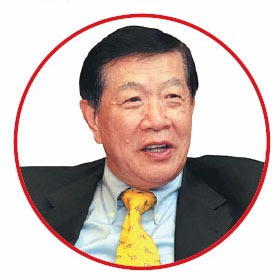
Henry Chang-yu Lee
World-leading forensic scientist
BORN:

Nov 22, 1938 in Rugao, Jiangsu province

EDUCATION:

? 1959: Graduates from Central Police College, Taiwan

? 1972: BSc in forensic sciences, City University of New York

? 1974: MSc in biochemistry, New York University

? 1975: PhD in biochemistry, NYU

CAREER:

? 1960-65: Officer in the Taipei Police Department, rising to the rank of captain

? 1979-98: Director and chief criminalist, Connecticut State Police Forensic Laboratory

? 1998-2000: Commissioner of the Connecticut Department of Public Safety

? 2001-10: Commissioner emeritus of the Connecticut State Police Forensic Laboratory

? 2006: Establishes the Henry C. Lee Institute of Forensic Science at University of New Haven, Connecticut, where he serves as director of forensic research and training

? September 2013: Accepts consultancy role at China's Procuratorate Technology Information Research Center, part of the Supreme People's Procuratorate

? 2016-present: Chairman of the Silk Road Forensic Consortium

Top forensic scientist finds evidence of great progress
Henry Chang-yu Lee say China has become a leading player in high-tech systems for catching criminals
Cao Yin
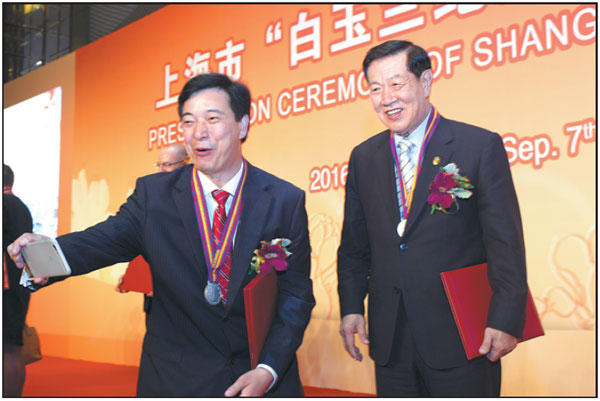
An award winner tries to pose with Lee after the 2016 Shanghai Magnolia Award ceremony, on Sept 7, 2016. Lee was one of 50 foreign winners of the award. Gao Erqiang / China Daily

Q&A

What were your impressions of China when you returned for the first time in 1985?

When I was invited by the Ministry of Public Security and Ministry of Education to provide training for judicial workers, it was my first trip back after many years of living and studying overseas. Beijing had changed a lot, although the change could not be compared with nowadays. I still remember many foreigners stayed at the Beijing Friendship Hotel, which at that time was the city's only large hotel.

What are the biggest changes you have witnessed over the years?

Since the launch of reform and opening-up, China has developed in many aspects. The country has more cities, more job opportunities, and it has become more civilized and brought fast development to the global economy. As for my industry, I'm happy to see the growing number of Chinese willing to work in forensic science, and I'm glad to see that the country's forensic devices and capability, such as those for identifying fingerprints, have become more powerful.

How do you view China's efforts during the past four decades of reform and opening-up? And what role have you played?

Take forensic science for example. More students, teachers and employees engaged in or working in science-related industries have gone overseas to learn more advanced knowledge and receive forensic training. Thousands of Chinese have also come to me to listen to my speeches - and these people have made great contributions to the industry in China. What I have done is share my experience, provide education and offer advice in criminal investigations.

What would be your advice to China on further reform and opening-up?

What is important for China during its fast development is to uphold the country's traditions and cultures, such as respecting elders and taking care of your family, and passing these traditions on. As the world becomes more prosperous, Chinese shouldn't blindly focus on catching up with Western countries and forget what we already have.

What does an open China mean for the world?

The world has become a big family since we entered the 21st century. I don't want to see us argue or fight over economic gaps, and I don't want the world to move away from peace and openness. Openness improves our lives and beautifies the world. An open China means to be friendly to others as well as to join hands in the face of challenges or difficulties caused by disease or threats to the environment, security and the economy.


|<< Previous 1 2 3   
Henry Chang-yu Lee
World-leading forensic scientist
BORN:

Nov 22, 1938 in Rugao, Jiangsu province

EDUCATION:

? 1959: Graduates from Central Police College, Taiwan

? 1972: BSc in forensic sciences, City University of New York

? 1974: MSc in biochemistry, New York University

? 1975: PhD in biochemistry, NYU

CAREER:

? 1960-65: Officer in the Taipei Police Department, rising to the rank of captain

? 1979-98: Director and chief criminalist, Connecticut State Police Forensic Laboratory

? 1998-2000: Commissioner of the Connecticut Department of Public Safety

? 2001-10: Commissioner emeritus of the Connecticut State Police Forensic Laboratory

? 2006: Establishes the Henry C. Lee Institute of Forensic Science at University of New Haven, Connecticut, where he serves as director of forensic research and training

? September 2013: Accepts consultancy role at China's Procuratorate Technology Information Research Center, part of the Supreme People's Procuratorate

? 2016-present: Chairman of the Silk Road Forensic Consortium

Top forensic scientist finds evidence of great progress

Henry Chang-yu Lee say China has become a leading player in high-tech systems for catching criminals
Cao Yin
An award winner tries to pose with Lee after the 2016 Shanghai Magnolia Award ceremony, on Sept 7, 2016. Lee was one of 50 foreign winners of the award. Gao Erqiang / China Daily

Q&A

What were your impressions of China when you returned for the first time in 1985?

When I was invited by the Ministry of Public Security and Ministry of Education to provide training for judicial workers, it was my first trip back after many years of living and studying overseas. Beijing had changed a lot, although the change could not be compared with nowadays. I still remember many foreigners stayed at the Beijing Friendship Hotel, which at that time was the city's only large hotel.

What are the biggest changes you have witnessed over the years?

Since the launch of reform and opening-up, China has developed in many aspects. The country has more cities, more job opportunities, and it has become more civilized and brought fast development to the global economy. As for my industry, I'm happy to see the growing number of Chinese willing to work in forensic science, and I'm glad to see that the country's forensic devices and capability, such as those for identifying fingerprints, have become more powerful.

How do you view China's efforts during the past four decades of reform and opening-up? And what role have you played?

Take forensic science for example. More students, teachers and employees engaged in or working in science-related industries have gone overseas to learn more advanced knowledge and receive forensic training. Thousands of Chinese have also come to me to listen to my speeches - and these people have made great contributions to the industry in China. What I have done is share my experience, provide education and offer advice in criminal investigations.

What would be your advice to China on further reform and opening-up?

What is important for China during its fast development is to uphold the country's traditions and cultures, such as respecting elders and taking care of your family, and passing these traditions on. As the world becomes more prosperous, Chinese shouldn't blindly focus on catching up with Western countries and forget what we already have.

What does an open China mean for the world?

The world has become a big family since we entered the 21st century. I don't want to see us argue or fight over economic gaps, and I don't want the world to move away from peace and openness. Openness improves our lives and beautifies the world. An open China means to be friendly to others as well as to join hands in the face of challenges or difficulties caused by disease or threats to the environment, security and the economy.

密云县| 城步| 温泉县| 杭锦后旗| 尚志市| 馆陶县| 柯坪县| 犍为县| 漯河市| 嘉荫县| 伽师县| 平塘县| 栾川县| 洪洞县| 景洪市| 福安市| 大同县| 浦县| 泰来县| 永德县| 泰和县| 卓尼县| 宁陵县| 图片| 兴山县| 克拉玛依市| 中西区| 尤溪县| 班戈县| 巴彦淖尔市| 达孜县| 大石桥市| 剑阁县| 凉山| 金门县| 道孚县| 观塘区| 吉林省| 金乡县| 白玉县| 措美县|