



DPP playing mainland card to win local polls









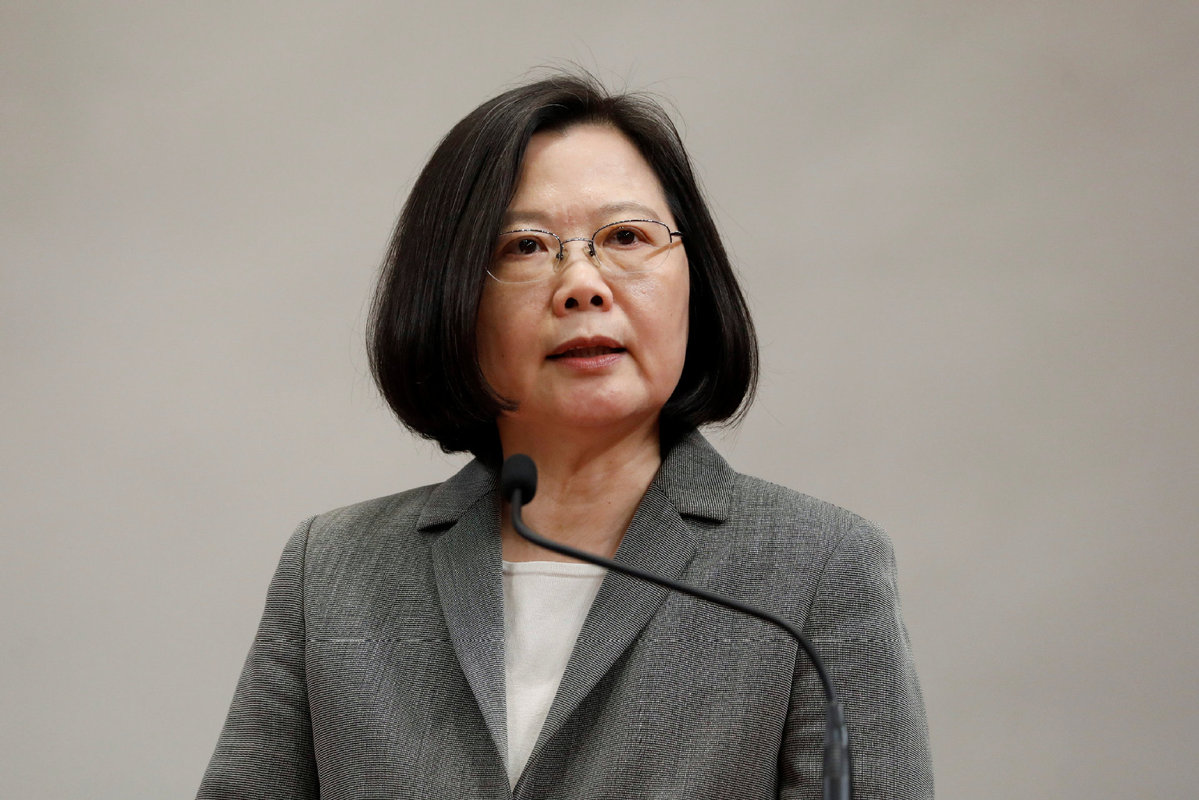
Taiwan will hold local elections, or nine-in-one elections, on Nov 24 to elect representatives to nine levels of government including mayors and councilors. Therefore, the elections can be seen as a midterm test for the Tsai Ing-wen administration and her chances of being re-elected the island's leader in 2020.
Not surprisingly, some Tsai administration officials have alleged the Chinese mainland is trying to interfere with and spread fake news online to disrupt the local elections. And "pro-independent" forces on the island are spreading rumors against rival candidates who could give serious competition to Democratic Progressive Party nominees.
The Tsai administration and her DPP have been playing political games to create chaos in order to win the elections. The ruling DPP is notorious for its goal of seeking "independence" from the motherland. No wonder it demonizes the mainland as an enemy of the island to garner votes every time its candidates are at a disadvantage against their counterparts in elections or to gain Taiwan residents' support during cross-Straits disputes.
Cross-Straits relations have deteriorated since Tsai took office in 2016, because she refuses to recognize the 1992 Consensus that there is only one China.
Besides, the DPP's restrictions on cross-Straits exchanges in all fields including trade have affected the livelihoods of the island's residents. But despite the multiple difficulties faced by the residents, some island officials brand anyone, be it an official or a civilian, that complains about the island's worsening conditions as a mainland lobbyist. Which shifts the focus from the DPP's bad governance to political struggle.
It is the DPP, not the mainland, that has been disseminating fake news-to gain advantage against opposition candidates. The truth is, the DPP has done a terrible job in governance. And aside from bringing cross-Straits ties to almost a halt, Tsai has also implemented poorly thought-out policies that have led to a turmoil on the island. For example, her aggressive pension reform has sparked angry protests by retired civil servants and teachers.
Sensing a possible loss in the local elections, Tsai has directed her officials to shift the blame for her terrible performance in areas such as the economy and talent cultivation on some scapegoats. Without any achievement to show, the DPP is using its "political card"-intensifying confrontations between political rivals and the DPP, or dividing voters over Taiwan's reunification with the motherland-with the aim of getting more votes and win the elections.
That the DPP will face a lot of pressure from many political rivals and independent candidates is certain. Without allying with the DPP this time, Ko Wenje, the current Taipei mayor, is seeking re-election. But extreme "pro-independence" forces and close allies of the DPP have described Ko as "the best chief executive" nominated by the mainland to give him a bad name and reduce his chances of winning the election. Also, to prevent the popular Han Kuo-yu from winning the mayoral polls in Kaohsiung, the DPP claims he has a mainland connection.
Some Tsai administration officials have even used a so-called intelligence agency's report to launch an investigation into the mainland's alleged interference in the elections. And it is likely that the DPP will use judicial means to influence the outcome of the elections. In February, DPP secretary general Hung Yao-fu said he would "make Kuomintang a loser again" and" leave no chance for the mainland's manipulation". The DPP, it seems, has developed its election "strategy" based on this claim.
It is therefore clear the DPP's basic plan is to trigger hostilities across the Straits to get more votes and make political gains. But the DPP has underestimated the wisdom and judgment of Taiwan compatriots, who have a dislike for liars and dishonest politicians.
The author is a professor at the Institute of Taiwan Studies at Beijing Union University.





