



For stable growth, we need to release demand potential









China's drive toward high-quality development is facing new problems and challenges, including drastic changes in the internal and external environment.
Looking back over the past 40 years of reform and opening-up therefore is not to revel in past achievements, but rather to explore how to make breakthroughs in comprehensively deepening reform and opening-up in the new stage. In this way, we will gain initiatives for international competitive cooperation and for domestic stability and development.
Since China is now entering the postindustrial period, the key to upgrading its manufacturing sector lies in improving the macro-environment for the real economy's development. To this end, the government should strengthen the legal guarantee, especially for property rights, for the private economy, the backbone of manufacturing upgrading. It should also cut institutional transaction costs to retain the competitiveness of "Made in China".
As for the mid-to high-end manufacturing, the innovation factors should be fully invigorated, including high-tech applications and incentive mechanism innovation.
China is also entering a new-consumption era. To release the huge potential of domestic demands and facilitate deeper supply-side structural reform, the government should further open up the service sectors.
In view of the rapid growth of service consumption, urban and rural residents' cumulative consumption demand is estimated to increase from 37 trillion yuan ($5.3 trillion) in 2017 to 50 trillion yuan by 2020. To meet this market demand, the government has to break up administrative monopoly and market monopoly in the service sector and open the door to all social capital. It should also open up the public service sectors to the market and introduce competition, while still providing the most basic services.
The period from 2020 to 2035 will be critical to the march from the middle-to-upper-income stage to the high-income stage, when the proportion of the middle-income group is projected to rise from the current 30 percent to 50 percent or even higher.
And given the new changes in globalization, China should promote all-round opening-up, with free trade as the core. The most important thing is to establish institutional and policy systems that are conducive to expanding imports. For example, consumer goods account for less than 10 percent of the total imports. If their share increased to 20 percent, it would expedite domestic consumption structural upgrading, and create a market of about $400 billion for other countries.
Besides, financial cooperation, along with other service sectors such as education, healthcare, tourism, culture and exhibition, should be promoted within the framework of the Belt and Road Initiative.
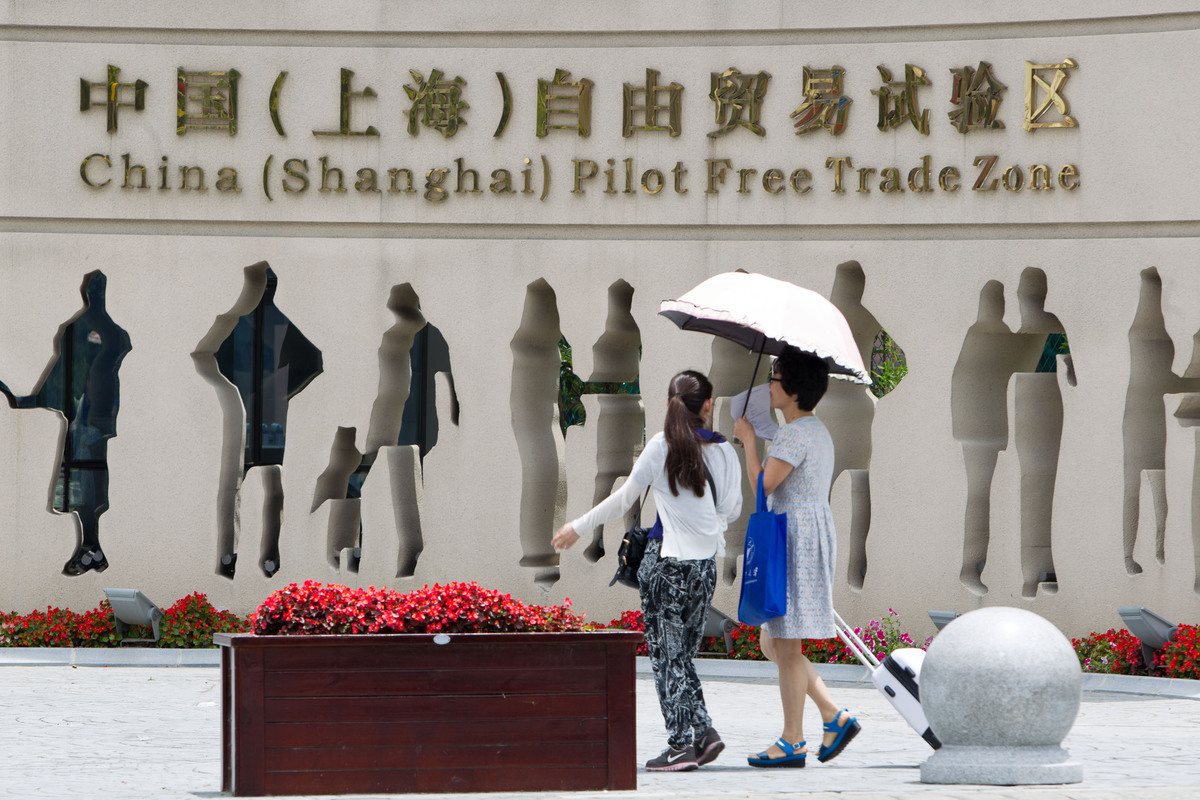
Free trade zones, too, need upgrading and transformation. For example, it is vital to promote Guangdong-Hong Kong-Macao integration in service trade, and create the Hainan international tourism consumption center.
China's reform and opening-up have reached a new historical juncture. Deepening reform is no less arduous and complex as was the launching of reform 40 years ago. Amid domestic economic transformation and profound changes in the external environment, deepening reform requires emancipation of minds, real action and higher efficiency. Releasing the huge potential of the demand of more than 1.3 billion people will ensure stable economic growth in next 10 years or longer, while bringing more benefits to the whole world.
The author is president of China Institute for Reform and Development. He contributed this article to China Watch Institute, a new think tank platform powered by China Daily.





