An industry study says more than 16 million works are circulated on the internet, Fang Aiqing reports.
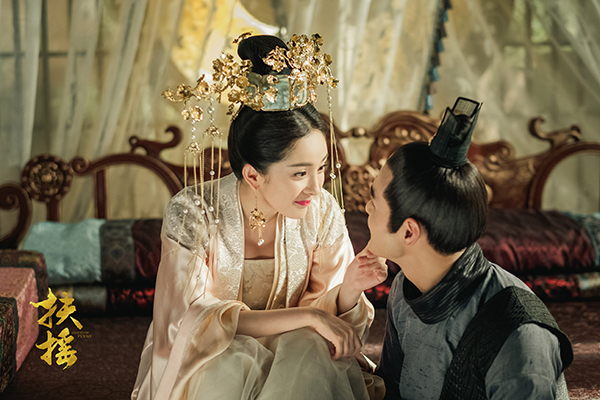
There was a time when online literature-full of elements such as time-travel, harem intrigues, tormented love and killings-was largely seen as "vulgar" in China.
Yet, with more than 400 million readers and around 14 million author accounts created by the end of 2017, any snap judgement has diminished.
Instead, diverse voices offer a much fuller picture of a land where more than 16 million literary works are circulated online.
The statistics come from an industry report released by the China Audio-Video and Digital Publishing Association in September.
Online literature emerged at a time when paper books were still the dominant medium for reading.
The internet era, however, has blurred some of the differences between online literature and printed literature, especially since the latter can be put online, too.
The major difference, in the view of Shao Yanjun, an associate professor at Peking University, lies in production rather than the medium.
"Online literature well conveys the wisdom of collective works," Shao says.
Online authors nowadays pay close attention to readers' feedback and are more willing to interact with them, which casts an influence on subscription numbers and, in turn, on their incomes.
In the early 2000s, such authors as Tsai Chih-heng, Guo Jingming and Wang Yang (known as Cang Yue) serialized their works online at first for free and then published in print after getting noticed on the internet. In this way, they realized the financial benefits and gained wider recognition.
The turning point came when qidian.com, one of China's earliest and biggest online-literature websites, started a charging system in 2003 that later become the fundamental business model for the industry.
Readers can read the first chapters for free and then pay for subscriptions. Part of the revenue will be paid to the authors by the month, applying a revenue-sharing model, minimum guarantee or buyout model.
With a year-on-year growth of 35 percent, the industry's revenue soared to 12.92 billion yuan ($1.9 billion) in 2017, the majority of which came from subscriptions, according to the CADPA.
Moreover, Chinese online literature has made its way to the world market.
Over 500 such works have been translated into a dozen languages, including English, Japanese and Thai. The CADPA says they average 5 million clicks daily.
Shao says it was the charging system that helped the industry survive.
Reader-turned-writer Zuo Lei, 36, who has the screen name Niyaokayan, says the financial incentives have cultivated a large group of online authors and created a relatively fair atmosphere where the authors are able to compete with their own imagination and skills.
The CADPA report shows that 47 percent of the more than 14 million authors write full time. More than half have been writing for over three years.
Wu Wenhui, China Literature's co-CEO and founder of qidian.com (a part of China Literature), says the company spent 1.3 billion yuan on remuneration in 2017.