



Fungus and factories forge stable incomes and raise living standards









In addition to growing fungus, the main method of poverty reduction is to help people find full-time employment, stable incomes and valuable skills, she added.
According to the poverty alleviation office in Aksu city, the local government has arranged for 7,900 people to work in factories outside the county.
A new start
In August, Abudushukur Karem, his wife, son and daughter, from Wushi's Ahya village, started working in a textile mill in Aksu city, making a combined monthly income of 11,800 yuan.
"In the past, farm work was arduous but paid little. Our lives are much better now, and we are considering settling down in the city," Abudushukur said.
The family is an exception, according to Liu, who said many people from ethnic groups who cannot speak Mandarin or are poorly educated are unwilling to leave their hometowns. Moreover, some people are unable to work outside the county as they have to care for aging parents or young children.
In response, the Aksu poverty alleviation office is encouraging factories to relocate to Wushi to provide opportunities for people who cannot leave the county, she added.
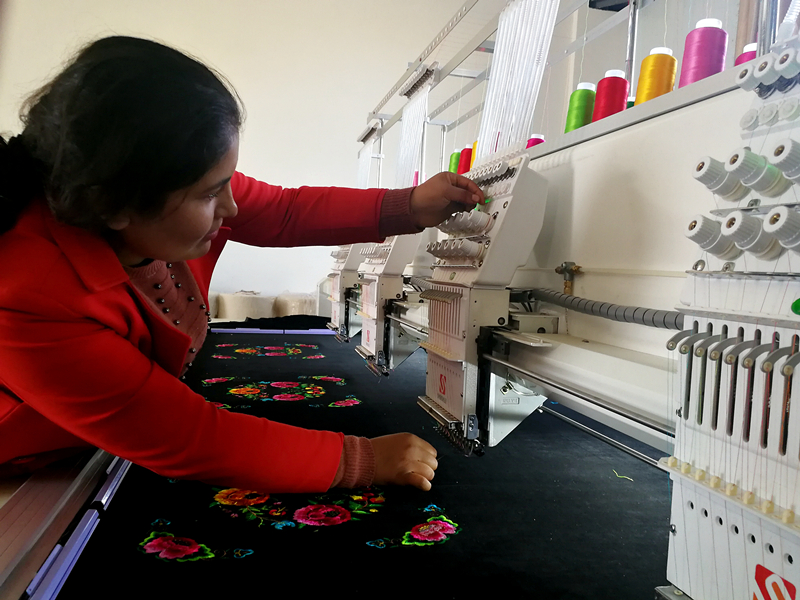
In August, a man named Burhan, who owns an embroidery factory in Hami city in eastern Xinjiang, opened a similar facility in Wushi. "There are many young people who are quick to learn and eager for a job here," he said.
Before opening his new venture, Burhan selected a number of women from Wushi to work as instructors. On June 8, Atkam Mamat, 24, and seven other women from Yakhrik village in Wushi traveled to Hami. It was the first time she had left Wushi.
Having spent two months in Burhan's factory in Hami learning how to operate the embroidery machines, they started work in the plant in Wushi.
Now, 50 women work in the new factory, all being taught by the eight original employees, Burhan said.
"I always wanted a job, but I couldn't leave the village because of my young child and elderly parents," said Atkam Mamat, who earns 2,000 yuan a month.





- Xinjiang reports highest foreign trade growth in China
- Harbin authorities demand return of pensions paid out to deceased
- Global research project on AI guardrails launched in Beijing
- Partnering with China, embracing opportunities
- China's cyberspace regulators announce measures for protection of minors
- Beijing's 'Rocket Street' promoted at aerospace conference













