



Currency manipulation claims 'total rubbish'









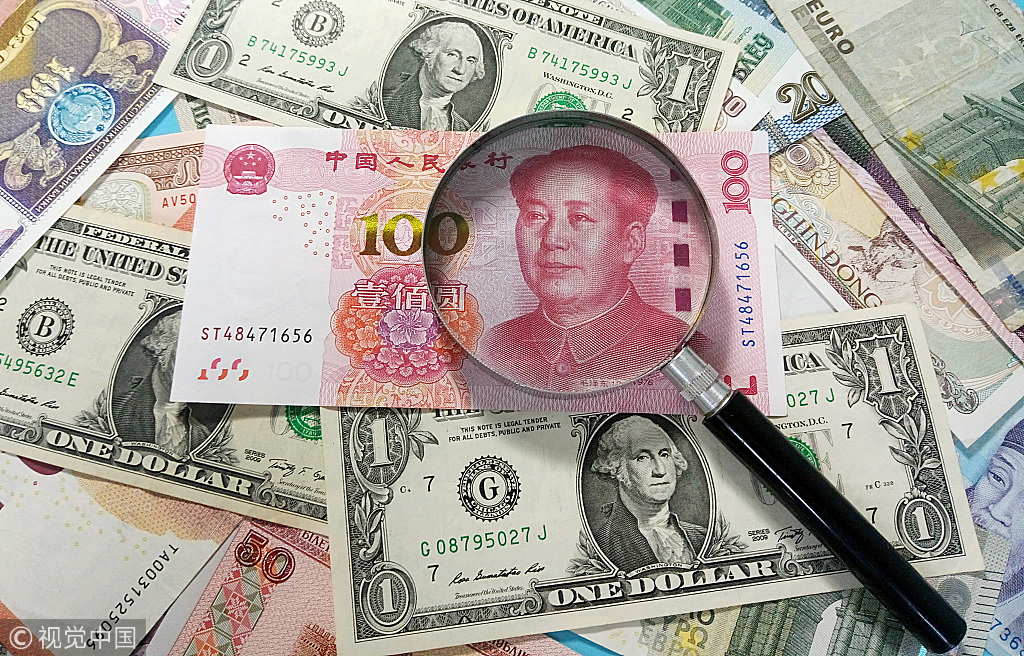
China does not manipulate the exchange rate of the yuan and such an accusation is totally unfounded, said an economist and former central bank monetary policy adviser ahead of the US Treasury's decision this week on whether to designate China as a "currency manipulator".
"If China manipulates it, the country should have tried to have its currency depreciated, which is not the fact," said Yu Yongding, a senior economist of the Institute of World Economics and Politics of the Chinese Academy of Social Sciences.
What China has done, instead, has actually helped prevent the yuan's exchange rate from falling, Yu told a financial forum organized by the institute on Monday. China has taken measures to prevent irregular capital outflows in recent years to reduce their impact on economic stability, which also helped to keep the yuan from weakening.
The US government has repeatedly accused China of trying to depreciate the yuan to facilitate its exports. Such an accusation is a "total rubbish", Yu said.
The US Treasury is set to decide in its semi-annual foreign exchange report this week whether to name China a "currency manipulator". US Treasury staff have recommended to Secretary Steven Mnuchin that China does not meet the criteria to be labeled like that, Bloomberg reported, citing two insiders.
Yu also warned that China should be well prepared for the worst scenario if China-US trade tensions continue to worsen.
Commenting on China's domestic economic situation, Yu said China has made initial headway in cutting its leverage levels.
Adair Turner, chair of the Institute for New Economic Thinking, said that China's deleveraging initiative was the "right" move.
But participants in the institute's forum warned that the world's major economies have faced the harsh challenge of high-level debt in the post-crisis era, which will drag on growth, if not trigger any large-scale financial crisis.
"After the global financial crisis (in 2008-09), people generally thought that the world would undergo a comprehensive and deep deleveraging process," said Xie Fuzhan, president of the CASS.
"However, 10 years after the crisis, although some headway has been made in cutting the leverage levels of financial institutions, those of government, corporate bodies and households have hit new highs."




















