Policies to curb real estate demand are bearing fruit









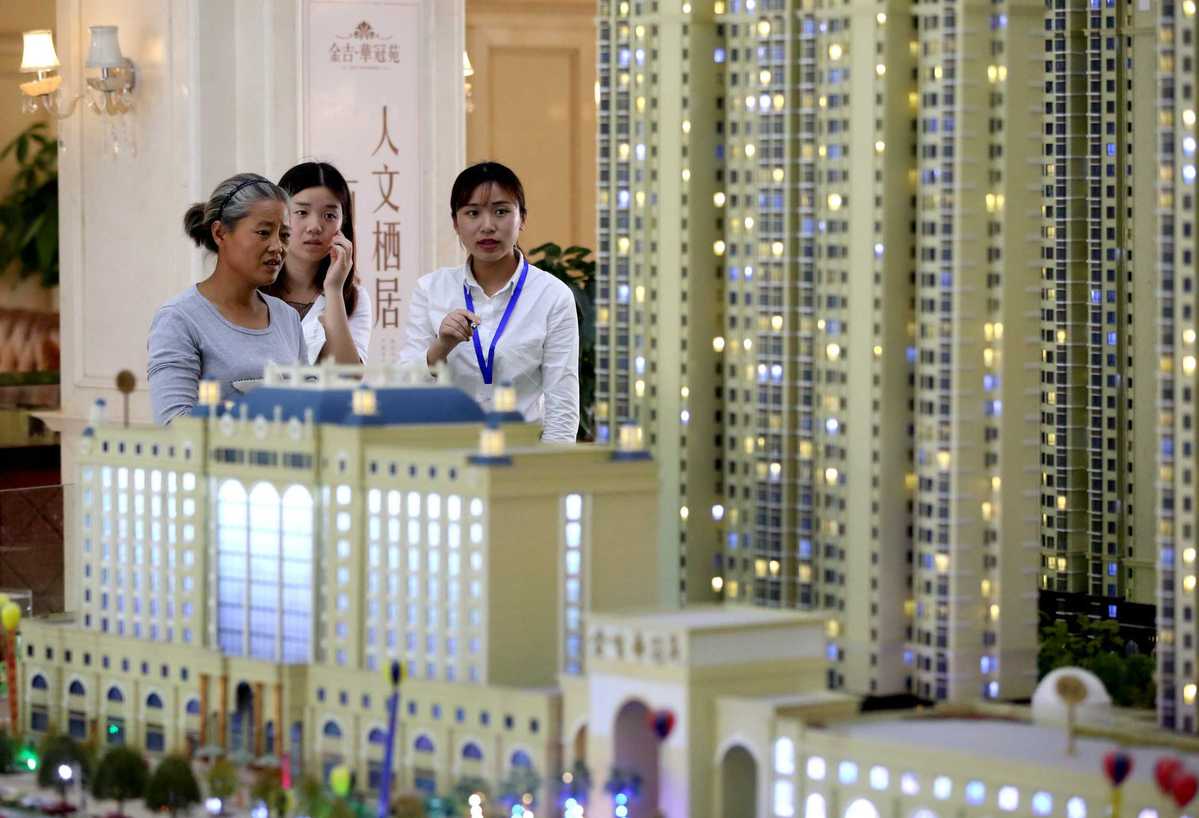
China's real estate market has entered a new stage this year. In the first seven months, the authorities adopted policies to curb the unreasonable real estate demand. Till the end of July, more than 50 prefecture-and higher-level cities and 10 county level-cities had issued real estate policies to curb demand. But on the other hand, the authorities have emphasized the importance of adequate supply to stabilize the supply-demand relationship.
In May, the Ministry of Housing and Urban-Rural Development required first-and second-tier cities to devise their respective housing development plans for the 2018-22 period before the end of this year, for which they have to increase the supply of middle-and low-priced housing, and land for rental and joint-property housing.
Metropolises such as Beijing, Shanghai and Shenzhen have already issued their housing development plans.
In the meantime, a new round of institutional reform to promote innovation in the real estate market, including the establishment of a national network for real estate registration, has been propelled.
With the financing channels for rental housing progressing well, the authorities have issued regulations on rental housing asset securitization and allowed insurance funds to enter the long-term rental apartment market to facilitate the establishment of a long-term real estate mechanism.
On the demand side, the growth rate of sales for commercial housing area from January to July was low at 4.2 percent year-on-year, whereas that of office building area shrunk sharply by 6.1 percent, indicating the national real estate control policy has curbed part of the unreasonable demand.
By the end of July, the sales of commercial housing area had declined by 6.56 million sqm, indicating the effects of destocking in the real estate sector.
These data show a differential real estate market pattern. In the first-and second-tier cities, the real estate control policy has changed from controlling demand to increasing supply. And in the third-and fourth-tier cities, effective market demand will fall thanks to the policy aimed at reducing the ratio of monetized resettlement in shantytown transformation projects, which ultimately will lead to a decline in the volume of housing sales.
On the supply side, investment in the real estate market has been rapidly growing. From January to July, investment in national real estate development projects increased 10.2 percent year-on-year.
Local governments have increased land supply by 30 percent in the first half of the year, especially in the third-and fourth-tier cities, and registered good housing sales.
Since the beginning of this year, policies to control financing in the real estate sector have been further tightened, which, along with the tightened industrial credit and loan policies, has increased the financing pressure on realty developers. This in turn has made realty enterprises realize they have to improve efficiency to increase turnover.
From January to July, real estate developers' paid-in capital increased 4.1 percent year-on-year.
Still, given the all-round deleveraging in the real estate sector, the ever-tightening industrial financing policy will make it more difficult for real estate developers to access financing sources.
In other words, due to the improving supply-demand balance, real estate developers' investment and new constructions will further increase. But due to financing pressure, the growth rate will not be very high. In the second half of the year, it is expected that new constructions of and investment into commercial housing will grow at a medium to low rate, commercial housing sales nationwide will decline, and commercial housing prices will become stable.
The author is a researcher at the Institute for Urban and Environmental Studies, Chinese Academy of Social Sciences.