



Yasukuni Shrine tributes not conducive to bettering ties: China Daily editorial









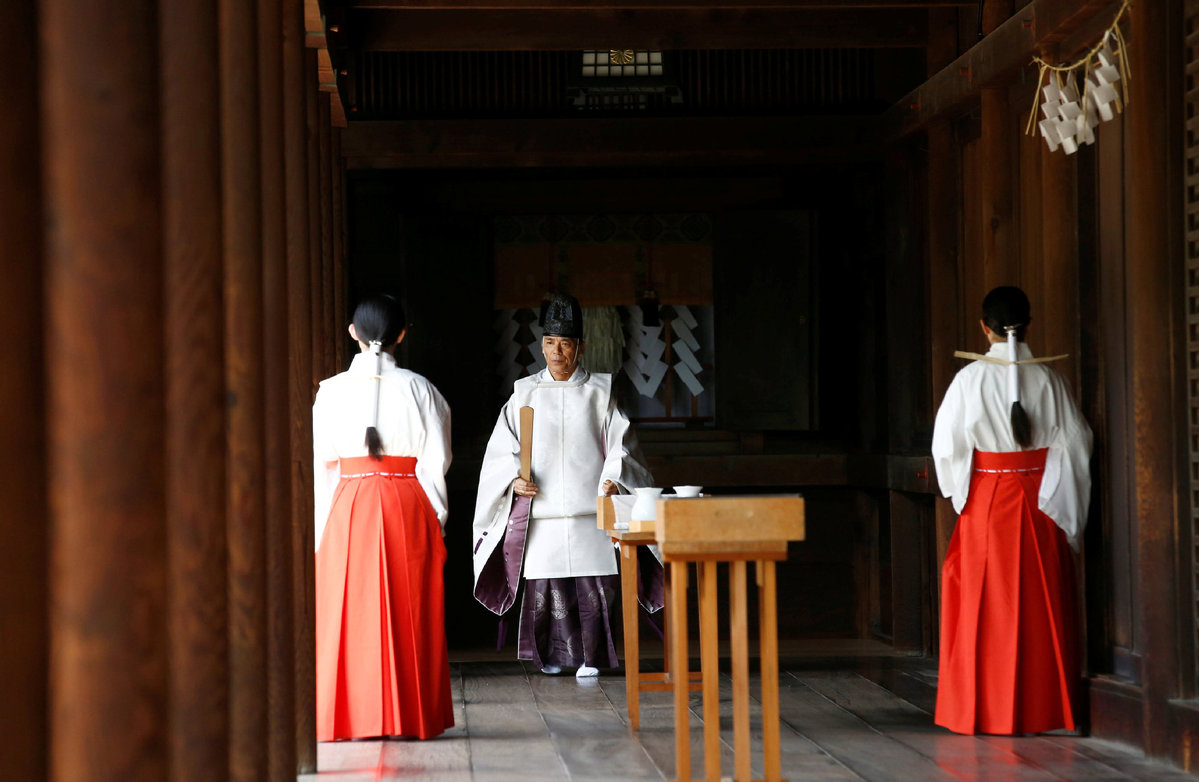
By choosing to send his customary donation to the Yasukuni Shrine in Tokyo on the anniversary of Japan’s surrender in World War II, Japanese Prime Minister Shinzo Abe proved that old habits die hard.
His stubbornness in persisting with the controversial practice does not help Japan and its neighbors put the past behind them.
No matter in what form, the Japanese leader’s commemorative activity is a bitter reminder of the brutality that Japan inflicted on its neighbors as it pursued its imperial ambitions.
The politics of remembrance are difficult for both Japan and Germany given the documented atrocities they committed as a result of perverted ideologies. While there is a natural desire to remember the dead, it is difficult for them to justify honoring them, given the crimes that stain the reputations of all who fell.
And it is in this regard that Abe and others who pay homage at the Yasukuni Shrine continue to add insult to injury, for among the 2.5 million Japanese war dead from that period are 14 Class-A war criminals, which is what Japan’s neighbors find particularly objectionable about Japanese politicians’ acts of obeisance to the shrine.
The shrine itself has become a potent symbol of militaristic nationalism. Japan’s politicians would do well to dissociate themselves from it, as its glorification of militarism and historical revisionism does not instill faith they are sincere about improving ties with neighboring countries. Especially since they find some facts slippery and difficult to hold on to.
If Japan really wants to improve mutual trust with neighboring countries and realize reconciliation over the contentious historical issues, it should do more to convince its neighbors that it has truly faced up to its past.
The 40th anniversary of the signing of the China-Japan Treaty of Peace and Friendship was marked a few days ago, and both Beijing and Tokyo made efforts to improve relations in the run-up to that occasion — relations have been severely strained in recent years, partly because of Japan’s desire to obscure historical issues.
Premier Li Keqiang’s visit to Japan in May was widely perceived as an important step forward in this regard. Both sides should continue to build on the desirable momentum in bilateral ties that was fostered during his trip as a rapprochement would not only cater to the interests of both countries but also serve to promote stability and development in the region as a whole.





