



Diversify asset and debt to avoid a crisis









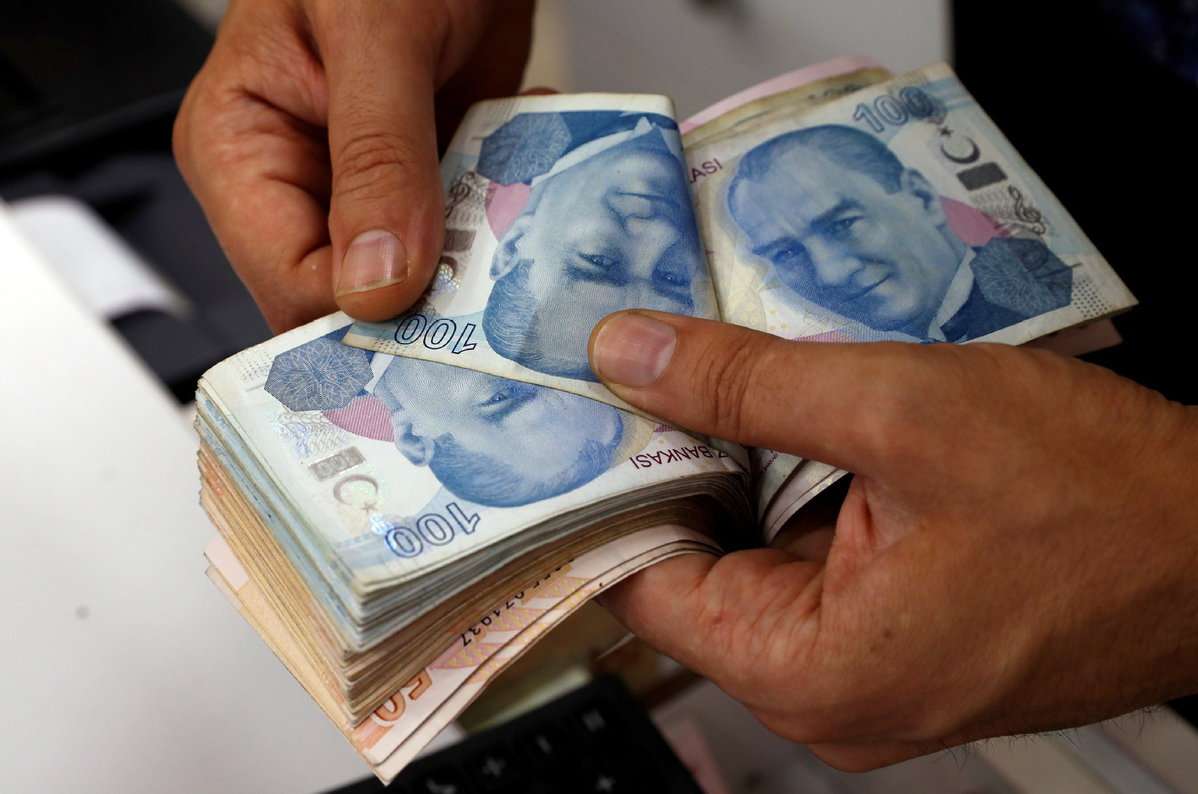
The recent appreciation of the US dollar and the uneven pace of monetary policy normalization in many countries have become a headwind for emerging economies. This month, the Turkish lira has sharply depreciated against the US dollar, followed by a jump in Turkish bond yield for fear of high inflation. Earlier this year, after failing to stabilize its currency, Argentina sought the International Monetary Fund's support to stabilize the peso. The IMF agreed to give a $50 billion standby line of credit but on conditions that required necessary domestic fiscal and structural adjustment.
These developments reaffirmed the eminent risks facing the emerging economies. A strong dollar and tightened monetary policy in the US are prompting capital flight from countries that have high domestic public debt, huge external liability, and a weak current account balance and relatively open capital account.
In addition, the ongoing tariff war has created more uncertainties in the financial market. The dollar is seen as a safe haven. The US' improved economic performance and favorable interest rate also attract capital seeking higher returns.
So, how do the emerging economies protect their economies and avoid another financial crisis?
First, continuous growth is the strongest cushion against external financial shocks. The IMF has forecast emerging and developing economies will grow at 4.9 percent, compared with the 3.9 percent average global growth this year. But while most countries have maintained stable growth, some are struggling between deleveraging and injecting more stimulus into their economies due to high debt.
Second, diversification of asset and debt allocation can mitigate the risk posed by changing financial conditions, such as currency fluctuation and shifting of the yield curve. Since the IMF's Special Drawing Rights basket has five currencies-the US dollar, euro, Chinese yuan, Japanese yen and the British pound-the countries, especially those that are heavily dependent on short-term external financing and have the majority of their liabilities denominated in US dollars, can better deal with uncertainties if they have external banks' loans and debt securities in different currencies.
Third, global and regional financial cooperation can help prevent a crisis from deepening. The global financial safety net has layers of options. At the center, the IMF programs provide broader coverage for member countries. The IMF has strengthened its position in the past few years, by adopting more flexible lending conditions and offering more facilities to meet the different needs of the members. For instance, some programs have been designed as precautionary moves to protect those economies that could encounter a crisis. More importantly, some special programs have been particularly designed for low-income countries by providing zero-interest loans.
At the regional level, the regional financial arrangement (RFA) is the most important guarantee for regional financial stability. In fact, the RFA has grown very fast in terms of size and actual use in the past few years.
Also, central banks can avail of a large number of bilateral currency swaps. For example, the People's Bank of China has signed 36 contracts (including renewed ones) with the central banks or monetary authorities of other countries and regions. Such swaps are easy to operate and designed to meet urgent needs. They are also supplementary to a country's foreign exchange reserves, especially for those countries that don't have enough foreign exchange reserves to fight against massive bank runs and currency crises.
And since an economy's financial problem could become contagious for other economies, collective actions are necessary, along with a strong national policy as the first defense line, to prevent it. In the face of uncertainty and instability, multiple approaches can help an emerging economy overcome risks and prevent a financial crisis.
The author is a senior fellow at the Institute of World Economics and Politics, Chinese Academy of Social Sciences.





