Qian later became the chief engineer at the Suzhou Silk Research Institute in Jiangsu province, one of the production hubs of Chinese silk, and it was here that she designed more than 50 new types of silks.
As China opened its doors to the world, modern products such as polyesters and synthetic fibers entered the market, giving merchants and consumers alternatives that could be produced faster and cheaper than silk. According to an archived report from the Suzhou Silk Research Institute, the varieties of silk in China had dropped by 50 percent to less than 100 types by the end of 1980.
"It's ok for consumers to opt for the more convenient alternatives, but the techniques of producing a variety of silk should be preserved," said Qian.
Determined to preserve the heritage and beauty of silk weaving, Qian set out to establish the Suzhou Silk Museum.
Preparations for the facility took about 10 years, during which she and her team of experts raised 3 million yuan ($450,000) in funding from local government bodies and various silk companies, as well as collected more than 22,000 pieces of antique silk garments and 80 weaving machines. The museum was officially opened in 1991.
According to Wang Hongjun, the former director of the National Museum of China, the establishment of this silk museum represents a significant milestone in the nation's history as China has always been known to be the "silk kingdom" of the world.
Machines then started to replace humans in the workforce and this led to a drop in the number of skilled brocade craftsmen as well as calligraphy artists and painters. Song brocade artisans were almost extinct by this point.
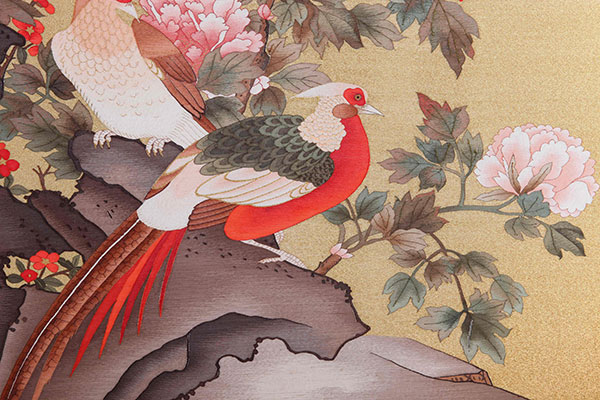
Eager to preserve the legacy of this exquisite fabric, Qian partnered the National Museum and the Xinjiang Uygur Autonomous Region Museum in 1995 to establish a facility that produced copies of Song brocade works.
In 1999, the last traditional Song brocade manufacturing plant in Suzhou closed down, leaving Qian as one of the last champions of this ancient art form.
In 2006, the Song brocade was listed as one of China's first national intangible cultural heritages, and Qian was named as the inheritor of this craft.
"Looking ahead, I hope to witness the day when Song brocade is no longer considered a heritage - because it would mean that this art form has finally made a comeback," she said.