Israel cuts over half of industrial air pollution in a decade










JERUSALEM -- Israel invested billions of dollars in reducing the exhaust gas emissions by more than a half, thanks to the Clean Air Law issued a decade ago.
Israeli companies have been investing in the last decade 38 billion new shekels ($10.45 billion) in using the best technology available to reduce air pollution, according to Israeli Ministry of Environment.
Last week, Israeli Minister of Environmental Protection Zeev Elkin said "the Clean Air Law is a milestone in our effort to protect the public and the environment, Israel has made a big leap in reducing air pollution in urban areas, and we will continue to invest in cutting-edge technologies to reduce air pollution."
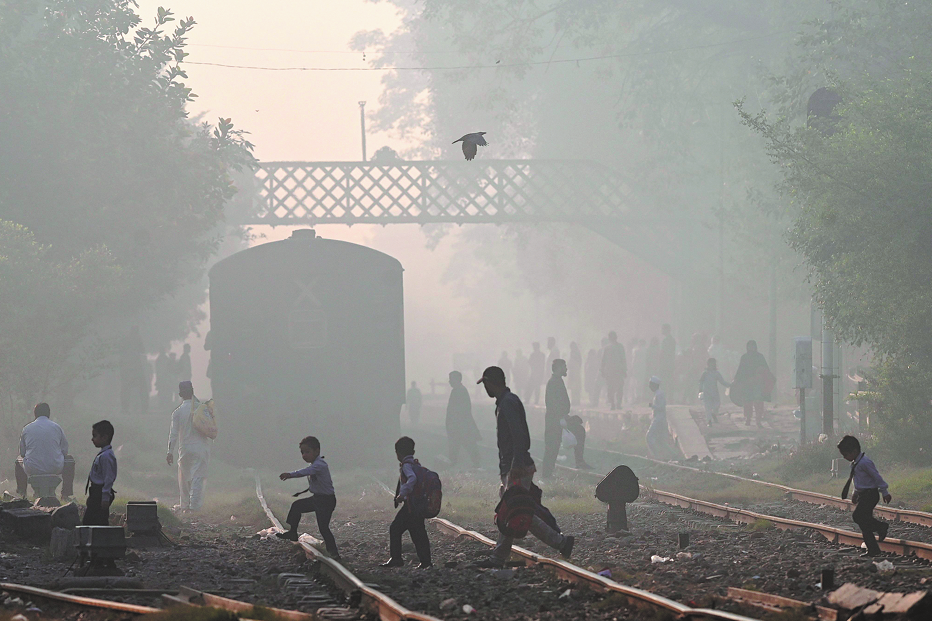
Around 2,200 people die in Israel every year due to air pollution, according to a report of the Organization for Economic Cooperation and Development (OECD), making the air pollution one of the most dangerous threats to Israelis' health.
The Clean Air Law included strict regulations to reduce pollution from companies, industrial plants and power stations. A total of 145 polluters have been continuously inspected in the last decade.
The regulation focused on emission of "critical pollutants" by the industry, which referred to a group of common contaminants that are sources of energy and transportation.
The critical pollutants included Sulfur Oxide, Particulate Matters, Nitrogen Oxides, Non-Methane Volatile Organic Compounds, Benzene and Ammonia.
The substances are among the major causes of deaths around the world and they put at risk the health of children, the elderly, asthma patients and those who often exercise outdoors, according to a report of the Ministry of Environment released last week.
Constant examination of air quality showed a decrease in all emissions of primary pollutants.
Dov Khenin, a member of parliament, told Xinhua that the current law are insufficient to regulate the emission of air pollutants.
"About 2,000 people still die here every year because of air pollution. It is not a figure you can accept. That is the future challenge for me," he said.
"The country's top priority should be to take care of people's lives and their health. Even if sometimes it costs money and involves a change in the industry. We will continue to reduce air pollution in Israel," said Khenin who also leads the environmental lobby in the parliament.
On the other hand, private companies argue that the current Clean Air Law is too strict for them.
"We have more strict regulation on emissions in Israel than in other countries. The businesses are required to invest enormous amounts of money to use the best technology available in the world to prevent air pollution", said Nir Kantor, director of the Manufacturers' Association of Israel, to Xinhua.
"But even if we use the best technology, after a few years, the Ministry of Environment could demand us to adopt better technology, the technological update cycle they set for us is too short to keep up with," complained Kantor.
"Today many companies prefer to move abroad than invest money in preventing air pollution. The money could have gone to develop and improve the companies' business in Israel," said Kantor.
Sinaia Netanyahu, a former chief scientist of the Israeli Ministry of Environment, told Xinhua that she is not concerned about the industry's outcry, because "public health should not be put at risk."
"Each state must set environmental rules that fit its local conditions to protect public health and local ecology," said Netanyahu.
Shuli Nezer, deputy director-general of Israeli Ministry of Environment, believed there is much more to do, "we must hurry up to issue similar bills as Clean Air Law regarding water and ground pollution."
"Another big challenge confronting us is pollution from traffic, we still don't have enough regulation or tools to deal with heavy pollution from cars, trucks or buses," Nezer said.