Measures will shunt subway plans onto sidings









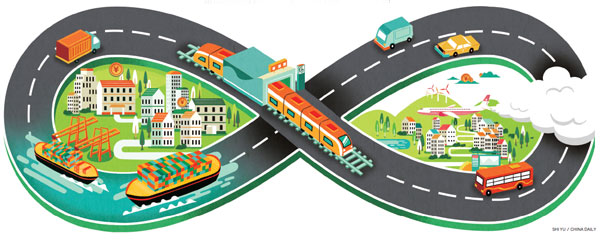
Cities must meet higher standards to keep metro development on track or ambitions might face the end of the line
Cities have to meet higher standards in fiscal revenue, permanent populations and economic size to get approvals from the central government to build subways, said a recent guideline released by the State Council, the Cabinet.
The guideline, disclosed on Friday, is expected to reduce the number of subways to be built by city governments and help control local debt in the campaign to guard against major risks, including rising financial leverage, experts said.
The most eye-catching section is that only cities with fiscal revenue of more than 30 billion yuan ($4.5 billion), GDP of more than 300 billion yuan and a permanent urban population of 3 million or more can apply for subway projects.
These numbers are three times that of previous standards decided 15 years ago, setting a much higher threshold for cities to build subways, especially those in less-developed areas.
The new standard means dozens of cities are excluded from consideration for such subway projects. According to the Top 100 Cities in 2017, released by the National Bureau of Statistics, China has 76 cities above the threshold of 300 billion yuan in GDP, of which 73 have more than 3 million residents.
Urban rail transit is of great significance to the transportation systems of modern cities, but some cities have problems in excessive construction and misuse of funds leading to heavier debt burdens for local governments, the guideline said.
The subway building craze started in 2012 when overall investment of nearly 1 trillion yuan was approved to be spent in this field. By the first half of last year, 31 cities started operating their subways, with a total length of about 4,000 kilometers, while more than 20 others were striving to get approvals.
There had been "a fever" to build subways, said Wu Yaping, a researcher at the Investment Research Institute of the National Development and Reform Commission. Since last year, the economy has stabilized and maintained a promising momentum and debt risk has become a key mission for the government, Wu said.
Last year, a number of subway projects were not approved by the central government, including those in Hohhot, capital of the Inner Mongolia autonomous region, and Xi'an, capital of Shaanxi province.
Though Baotou, a city in Inner Mongolia, had GDP of more than 300 billion yuan, its subway project was abolished three months after construction was started. The project was designed to cost more than 30 billion yuan but the local government only received fiscal revenue of about 13.7 billion yuan a year. The new regulation means it has to wait for several years for subways to allow the population and fiscal revenue to grow.
The National Development and Reform Commission has approved 43 cities to build subways. Now, some provincial capitals in western areas, including Lanzhou, capital of Gansu province, will not be allowed to build subways until they meet the new standards.
The new document required local governments to draw up scientific plans on urban rail transit projects and strengthen oversight to control debts and match the local economic development.
The guideline said the ratio for fiscal capital in a subway project's total investment should not be less than 40 percent and local governments are not allowed to use debts as project capitals.
While contributing to the increase in the local economy, running a subway is also costly and will probably put financial burdens on local governments, said Zhao Haijun, a Chinese economy observer.
For example, Beijing plans to run 1,000 kilometers of subway lines by 2020. However, the municipal government of Beijing subsidized subway operating companies by 22 billion yuan in six years from 2007 to 2013.
The guideline aims to exert more efforts to reduce risks for local debts and achieve an orderly development of subways around the country, said Huang Qunhui, a researcher of industrial economics at the Chinese Academy of Social Sciences.
The guideline is also in line with Premier Li Keqiang's pledge to prevent and defuse the risks of local debt in his Government Work Report delivered in March, he said.
These requirements should prevent local governments from having more debt via various channels, such as the public-private-partnership, Huang added.





- Chinese vice-premier urges efforts to consolidate poverty alleviation achievements
- Passengers of diverted flight transferred to hotels in Lanzhou
- Xi greets To Lam on election as Vietnam party leader
- Beijing West Railway Station marks 30th anniversary
- Taiwan compatriots will see more opportunities
- For some intrepid travelers, sky will not be limit