


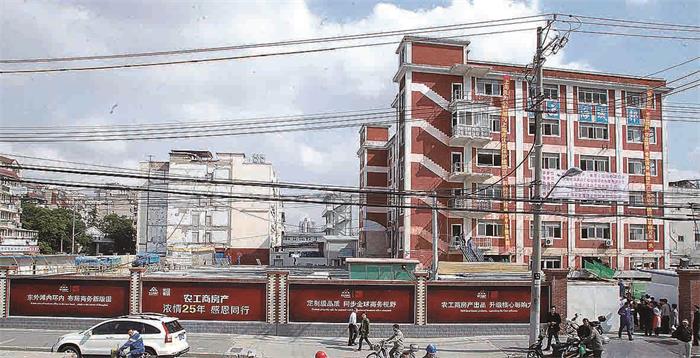
Tucked away in a quiet spot in downtown Shanghai, Sinan Mansions is commonly known as a hip area comprising a host of bars and cafes as well as some of the city's most luxurious residences.
What isn't apparent, however, is that this massive complex is also a one-of-its-kind museum in China.
The artifacts on display? Historical buildings, ancient street lights, trees and even cobblestone walls.
The area has since the start of 2017 been designated as "Sinan Open Air Museum" where visitors can learn about the various structures within by scanning QR codes on building facades and listening to audio clips. Unlike conventional museums, Sinan Mansions is accessible at any time and does not cost a cent to enter.
Zheng Yi, the brand director of Sinan Mansions, said the move to turn the area into a museum was aimed at driving greater levels of interaction between the public and the exhibits, in turn allowing the people to learn more about the history behind the complex.
Built in 1920, Sinan Mansions is today a 50,000-square-meter conservation zone with 51 garden houses located on Sinan Road and Fuxing Middle Road.
According to Lu Yongyi, a professor of architecture and urban planning school at Tongji University, Sinan Mansions is a unique conservation site because such a status was only given to individual structures in the early 21st century.
Zheng pointed out that the prominence of Sinan Mansions stems from its links with celebrities and politicians.
Some of the famous personalities who have resided in the area include distinguished Chinese diplomat Wei Daoming and his first wife, Zheng Yuxiu. Mei Lanfang, a legendary Peking Opera artist, used to live in the house situated at No 87 Sinan Road.
The area was also where contemporary writers and scholars such as Mo Yan, the first Chinese to win the Nobel Prize for Literature, and Svetlana Alexievich, a Belarusian non-fiction prose writer, interacted with their readers on Saturday afternoons.
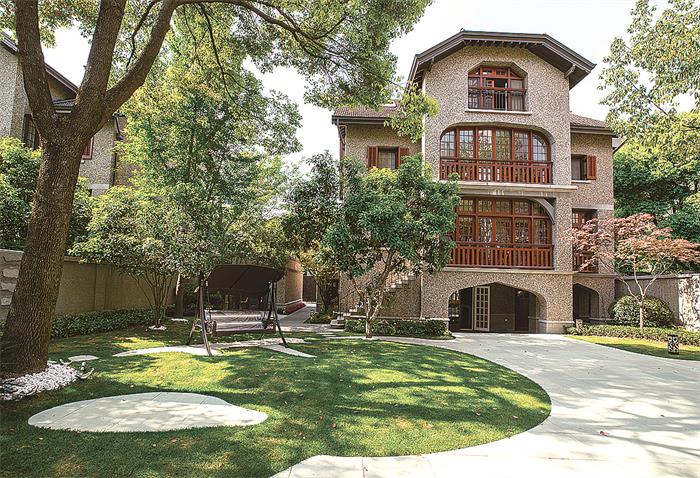
The building located at No 541 Fuxing Middle Road, which is also part of Sinan Mansions, was where Chinese and French undergraduates gathered to discuss international affairs or share gossip.
The Platane trees planted alongside the roads still stand as a symbol of how Sinan Mansions was once part of the former French Concession from 1849 to 1943.
The museum management prepares monthly walking tours around the complex that are conducted by amateur tour guides.
"For locals like me, the region around Sinan Mansions has always been a romantic and serene spot in the bustling city. I feel that its rich architectural history is worth sharing with other people," said Qian Xiaokun, the CEO of Chinese startup Ming'an Furniture, who became a guide last year.
In line with its status as a museum, Sinan Mansions has since last year been the host of the Festival of Arts. The festival is designated as the Shanghai StArt Festival 2018. The event, which takes place in May every year, features global artists putting up performances that are inspired by each of the 15 zones in the complex.
"We work in dialogue with the architecture there and try to translate the performance into different languages according to the various streets," said Francesco Suardi, the artistic director at an Italian theater research center that was involved in the festival.
"The performance is directly linked with people here and the place they live."
Another unique element of the festival is the proximity of the audience to the actors.
"All the shows take place on the streets, covering each corner of the public space," said Bertrand Dessane, the artistic director of this year's festival. "The audience will get to stand very close to performers. This allows people to feel as if they are having a party with the actors. This is something a traditional performance on the stage cannot offer."
Contact the writer at caochen@chinadaily.com.cn





