



Who's responsible for plastic waste?









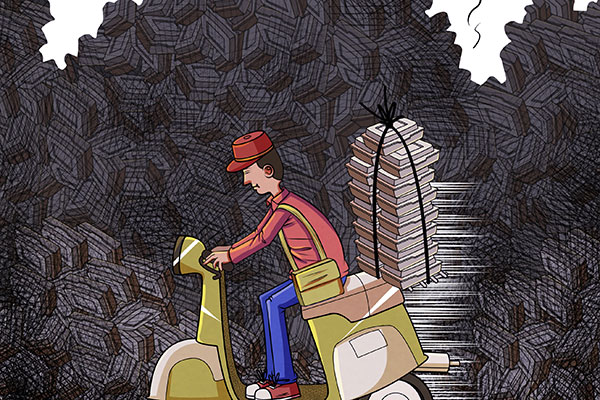
THIS YEAR MARKS the 10th anniversary of the ban on ultra-thin plastic bags, and it is embarrassing that despite the ban the consumption of plastic bags has continued to grow, and will continue do so in the foreseeable future with the development of e-commerce and online food deliveries. People's Daily comments:
Last year, the express delivery industry consumed 14.7 billion plastic bags and the take-out food industry used 7.3 billion plastic bags.
And while supermarkets began charging for plastic bags to dissuade consumers from using the bags that are not environmentally friendly, it is well-known that selling plastic bags has become a reliable source of revenue for the supermarkets.
Also, there are many small workshops in the countryside or suburban areas still producing the banned plastic bags that are thinner than 0.025 millimeters, and these plastic bags are universal in the countryside markets where the lack of law enforcement power makes it difficult to enforce the ban.
Reportedly, plastic bags were found at the bottom of the world's deepest Mariana Trench recently, and plastic materials are often found in the stomachs of dead wild animals, fish and birds.
It is urgent that China draws lessons from the failure of the policy. Restaurants, e-commerce companies, express delivery enterprises and supermarkets make profits from selling plastic bags while providing their services or commodities. Their responsibility has long been ignored.
The authorities should highlight enterprises have an obligation to protect the environment, and they should not try to avoid their responsibilities by trying to pass them on to consumers. At the same time, consumers must also raise their awareness of the contribution they can make to protect the environment and ecology.
The plastic bag restriction should be implemented throughout the production and consumption chain.





