



Initiative a project for all stakeholders









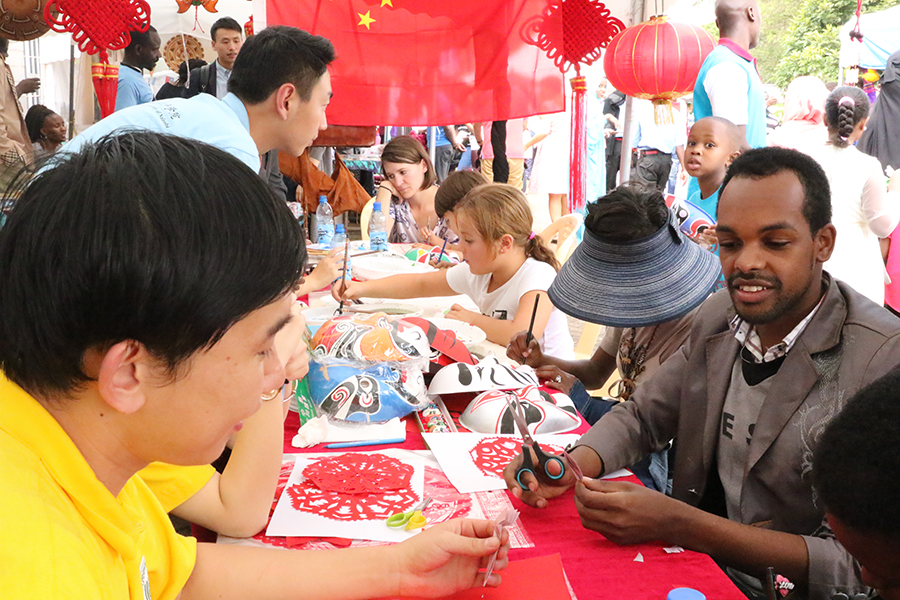
Since its launch in 2013, the Belt and Road Initiative has been subjected to two divergent discourses on its characteristics and aims. The discourse emanating from China-the internal discourse-presents the Belt and Road Initiative, at its most modest. It presents it as a trans-national infrastructure project to build interconnectivity (greater trade, infrastructure and people-to-people links) among Eurasian countries and promote the economic development and prosperity of Asian, African and European economies along the Belt and Road.
More recently, the initiative has been presented as an embodiment of the grand Chinese vision of, as well as a series of policy initiatives in, constructing a community of shared future for humankind and in promoting mutual learning and development among civilizations.
The discourse outside China-the external discourse-offers a sharply different representation and interpretation of the initiative's principal purposes and strategic intentions. It sometimes sees the initiative as "China's Marshall Plan", an economic project with strategic significance for "dictating terms" to the world. The initiative at times is also regarded as the 21st century Chinese attempt to reconstruct a Sino-centric economic order, a reincarnation of the traditional Chinese tributary system that entrenches China's economic dominance.
There are also claims that some policies associated with the Belt and Road Initiative demonstrate that China has become a new colonial power. It is also alleged that the initiative is aimed at geostrategic remapping of the Eurasian continent, replaying the historical "Great Game" of great power rivalry. The initiative, in other words, is China's "empire building along the Silk Road".
No one could and should deny the implementation of the Belt and Road Initiative has real geoeconomic and geopolitical implications for the future regional and global order. Like it or not, the initiative is changing conventional geopolitical thinking dominated by the US geostrategic mapping of East Asia in the post-World War II years. It also provides an alternative geopolitical narrative to the "Indo-Pacific" geostrategic mapping now actively promoted by some US strategic thinkers. This understandably evokes international concerns and anxieties.
However, such representations of the initiative are deeply problematic and troubling. Reading Chinese initiatives in the 21st century by harking back to colonialism and traditional great power rivalry is anachronistic at best.
These representations also flatly deny the indispensable role and agency of the countries involved in the Belt and Road Initiative in shaping the implementation and the outcome of the initiative. Also, they cannot account for why so many former colonial states in Asia and Africa have embraced the initiative, which has been endorsed by the International Monetary Fund and the World Bank; or explain the close cooperation between China and Russia in implementing the initiative; or shed light on why Western banks, including Citigroup and Deutsche Bank, should have raced to win deals related to Belt and Road projects.
It is true that the initiative started as an ambitious Chinese project and remains a China experiment in many important ways. Even at this early stage of development, it has involved not only China and the countries along the Belt and Road routes as state actors, but also multilateral institutions such as the World Bank and IMF as well as trans-national financial institutions from the private sector and civil society globally. It is the close cooperation among such a wide range of actors that can make or break the Belt and Road Initiative.
As in the case of the Asian Infrastructure Investment Bank, with participation comes the claim of ownership. Increasingly, the Belt and Road Initiative will no longer be just China's project. Instead, it will be a global project collectively owned and shaped by collective wisdom and will of all stakeholders. China cannot shape the initiative at will. This is a critical point that both the internal and the external discourses have regrettably missed.
For better or worse, five years after the launch of the initiative, it is no longer possible to imagine a world without it as a constituent reality in the emerging regional and global economic and political order.
The author is a professor of international politics at the University of Bristol.





