Medical imaging sector may become next 'gold mine'









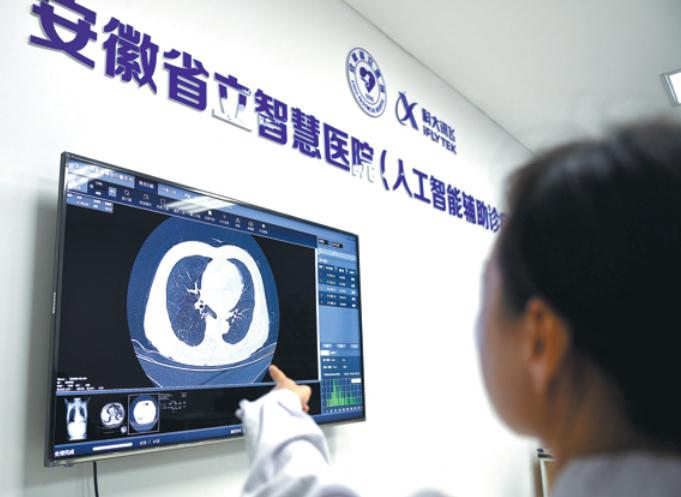
Investors are rushing to take part in China's booming artificial intelligence sector, and one area in that sector may be an especially lucrative "gold mine"-image-related technologies in the medical sector.
Huiyihuiying, a Beijing-based startup company that helps doctors read medical images using deep learning technology, is reported to have broken the fundraising record in the field in its financing late last year.
"Medical image is the most valuable part as it is a crucial indicator of diseases as well as an important reference for doctors to make an initial diagnosis," said Guo Na, co-founder of Huiyihuiying, which was established in 2012.
Currently, 70 percent of the medical procedures in China need images, including CT, X-ray and magnetic resonance imaging, according to Guo.
To embrace the trend, the company has scrambled to develop AI-enabled products to help doctors read medical images to speed up diagnosis and prevent misdiagnosis in diseases including lung, uterine, neck and breast cancers.
"While it usually takes three to five minutes for a doctor to read a CT sample-which usually consists of hundreds of images-to make an initial diagnosis, it only takes a few seconds for our AI product to do the same thing," Guo said.
The AI product can also learn from each case it reads, so that its performance keeps improving over time, she added.
"And finally, it will form a closed loop where medical data is gradually becoming more and more accurate," noted Guo, adding that the machine can lift the diagnosis accuracy rate to 90 percent.
The Beijing-based company has so far applied its technologies in more than 700 hospitals in eight provinces across China, including the well-known Peking University Third Hospital.
More than half of the AI startups in China are focused on medical images, with some Chinese tech giants including Tencent Holdings Ltd and iFlytek Co Ltd, all starting to explore the field, an industry report indicated.
Faced with such intense competition, Guo said her company's core competitiveness lies in its professionalism and diversity of talents.
"The competition of AI finally goes to talents and technologies. Our founder, Chai Xiangfei, has been in the field for more than 10 years while our chief scientist Xing Lei graduated from Stanford University and is a top expert in the AI medical field," she said.
The company said it will step up efforts in developing new technology, product, channel and ecosystem and will improve its AI-enabled products to cover more types of diseases in the coming years.