Net cast wider for corrupt civil servants









Supervision Law backed
In March, the National People's Congress, the top legislature, approved the Supervision Law, designed to lay a legal foundation for an upgraded anti-graft task force.
Under the law, a new supervisory network has been established, consisting of supervisory commissions at the national, provincial, city and county levels, all with legally defined duties, liabilities and protocols.
"The new Supervision Law and anti-graft system has laid a solid foundation for the country to achieve an overwhelming victory in the fight against corruption," said Ma Huaide, vice-president of China University of Political Science and Law.
In the report he delivered to the Party's 19th National Congress in October, Xi Jinping, general secretary of the CPC Central Committee, said new supervision commissions would be established nationwide at various levels to provide for the full inspection of all civil servants.
The new commissions integrate existing supervisory, corruption prevention and control agencies within governments and procuratorates, as well as the Party's discipline inspectors.
"As a unified anti-graft agency under the Party's leadership, the supervisory commission system is an institutional invention incorporating China's reality and international practice," said Gao Bo, a political researcher at the Chinese Academy of Social Sciences.
"The extensive network will expand inspection to all public servants, leave no loopholes and serve as a powerful deterrent to corruption."
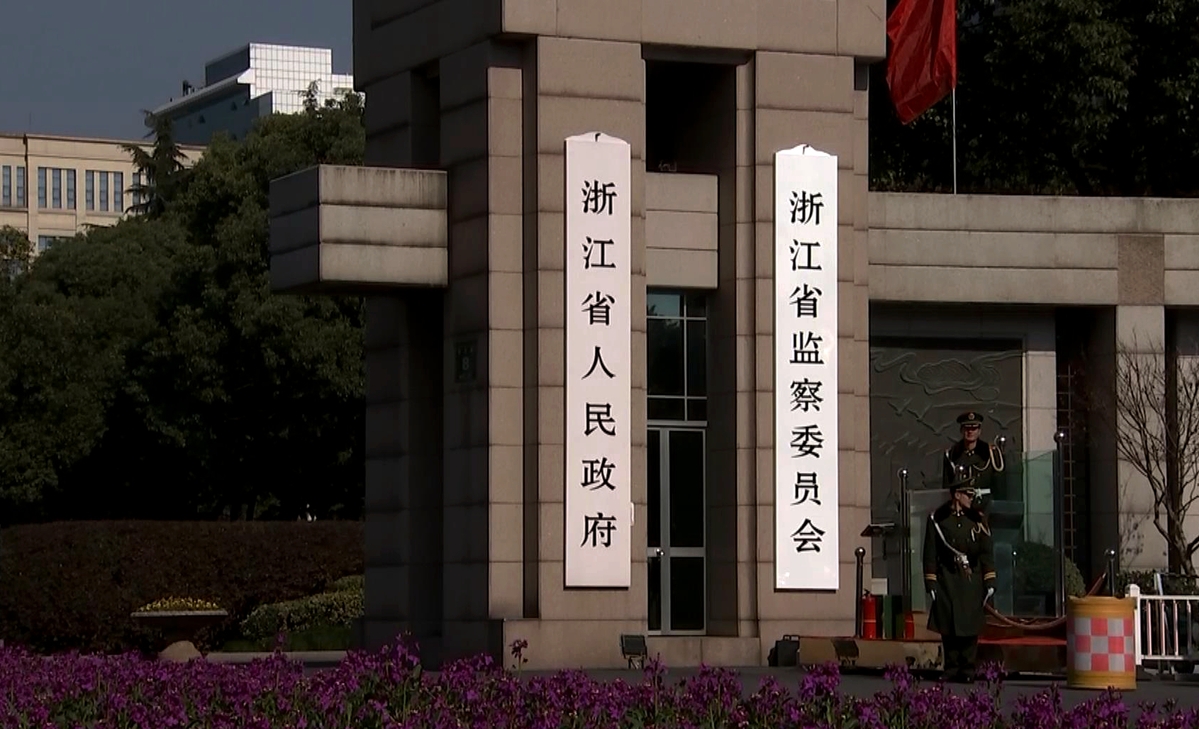
In late 2016, Beijing and Zhejiang and Shanxi provinces were chosen as supervisory commission pilot areas to better study how such a system would operate and then offer that experience to other regions.
By late February this year, directors of supervisory commissions had been appointed in 31 provinces, municipalities and autonomous regions.
In the three pilot areas, most of the anti-graft officers from disbanded procuratorate anti-corruption and bribery bureaus, as well as those tasked with stamping out dereliction of duty, were transferred to new posts in supervisory commissions at all levels. In China's other provinces and regions, the work is still in progress.
In Zhejiang, 1,645 officials from anti-corruption bureaus responsible to prosecuting departments have been sent to serve as supervisory commission inspectors since late 2016.
Liu Jianchao, head of the Zhejiang Commission for Discipline Inspection, said under the new commissions, the number of officials and civil servants under supervision had risen by December from 383,000 to 700,000. Between January and October last year, inspectors in Zhejiang received more than 500 tips related to graft, up by 77 percent from the same period in 2016.
In Beijing, more than 700 officials who worked for anti-corruption bureaus at the Beijing People's Procuratorate have transferred to a number of municipal supervisory commission departments, where they work with Party discipline inspectors, since the pilot program was launched in late 2016.
"They were sent to different positions based on their skills. We hope their experience in the judicial organs can complement the advantages of Party discipline inspectors," said Liu Yongqiang, a senior official with the Beijing Supervisory Commission.
Facing more challenges
Jin said compared with an anti-graft officer, "an inspector needs to be an all-rounder and faces more challenges".
"In the prosecuting department, I just dealt with individual corruption cases involving Party or government officials, but a supervision officer will also focus on cause and effect," he said.
Because they exercised supervision over all civil servants, if they discovered violations of Party rules or cases of graft, they would try to "collect and establish solid evidence, find the loopholes that allowed the corruption and prevent similar cases from occurring".
Jiang Laiyong, a senior researcher at the Chinese Academy of Social Sciences' China Anti-Corruption Research Center, said setting up the new supervisory commissions is considered "the ideal upper-level anti-graft design to cope with corruption crimes, and the supervisory system will be a powerful deterrent to corrupt officials".
Jiang said the different views and working methods of inspectors transferred from prosecuting departments needed to be integrated with those of Party discipline inspectors as soon as possible so they could talk effectively about the facts of cases, collect evidence and form a unified train of thought for handling corruption cases.
Moreover, the powerful supervisory commission inspectors need to be "more cautious and strictly follow the regulations when using inspection measures such as the detention and interrogation of suspects, border control and the freezing of illicit assets, before achieving the final victory in the fight against corruption", he said.




- 17 rescued Filipino crew members transferred
- Team of Chinese, US scientists identifies key tumor cell state driving cancer growth, drug resistance
- China successfully conducts first metal 3D printing experiment in space
- Debt-ridden children's hospital gains strong public support, but future still uncertain
- China hands over 17 Filipino sailors from shipwreck to Philippines
- Topography, extreme rainfall causes of Guizhou landslide, report says