



Trade wars are never won – Can one be averted now?









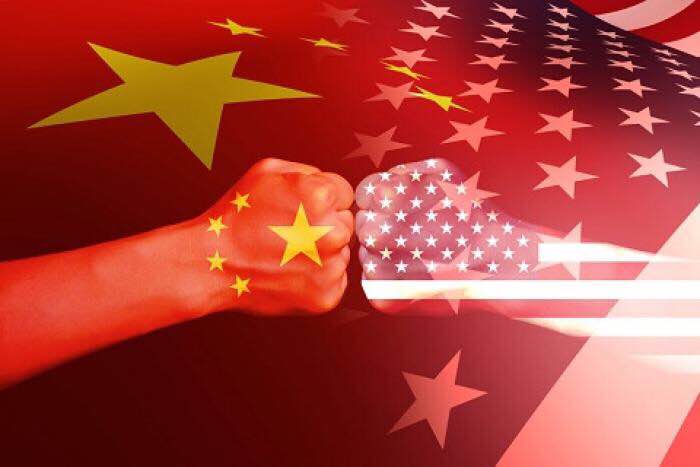
History indicates clearly that those starting trade wars never win. Trade Wars have mostly resulted in losses all round. The dictionary describes a trade war as “an economic conflict in which countries impose import restrictions on each other in order to harm each other’s trade”. In other words, countries attacking each other’s trade with taxes and quotas.
US President Donald Trump recently stated “Trade wars are easy to win”. Historical evidence tells a different story and also shows how a trade war between two main protagonists such as the US and China can quickly become “a world war” by impacting in numbers of ways in many other parts of the globe.
The World Trade Organisation (WTO) exists to encourage free trade between nations. Can it act as a firm enough arbiter to prevent a trade war escalating in 2018? It might be our only hope.
The reasons for Trump’s actions in seeking to start a trade war – essentially with China - run deeper than the rationale offered about by the USA that the US economy and its huge trade deficit are caused by China’s “unfair trade practices and Chinese theft of US intellectual property”. We are seeing the continuous rise of China as now the world’s largest trading nation – and headed to be the number one economy as it takes a lead in key areas of innovation – such as artificial intelligence, machine learning, robotics and financial technology / big data (“Fintech”) and digital technology developments in general. The US has for so long been “top dog” in size, scale and success, that being overtaken by a nation with very visionary leadership, a clear strategy for international development and such a strong sense of purpose – is very hard to contemplate. The reasons for America’s trade deficit relate more its own domestic policies and relative loss of competitiveness, than to misplaced policies of other nations.
In-depth analysis of the results of the US carrying out its threatened attacks by tariff impositions on China which lead to retaliation – which seems uncomfortably likely, is more likely to impact negatively on the US economy and its consumers than on its chosen adversary. When such actions were last taken, US jobs were lost in large numbers and the industries selected for protection declined faster. US consumer prices could rise again and key US exporting industries, notably agriculture could suffer through lost business in China. And negative impact on world economic growth would not be good news for anyone. The continuous recent downward movements in world stock markets, including the ones in the US and China, shows what a nervous atmosphere prevails. Europe and the UK have reacted with expressions of alarm and a war of words has begun between USA and its Western allies. The most serious impacts might however be on other Asian markets – there are clear signs already of investors positioning to counteract negative effects there.
If anywhere in the world, especially in nations which are members of the WTO, bad practices are suspected, provisions exist for enforcement of the clearly stated rules. Both China and the US are members of WTO and this might still be the channel through which a damaging trade war may be averted. China’s response to the initial US declaration of a trade war has been measured. The reasoning world knows that economies and indeed the security of nations are enhanced by free trade between allies. It seems that China at this moment is following the advice of the great philosopher Sun Tzu gave when he wrote – “To subdue the enemy without fighting is the supreme art of war.” Until recent declarations emanated from the White House, China had not regarded the US as “the enemy”. The rest of the world, notably Europe including UK with or without Brexit – is holding its breath in the hope that peace and reconciliation may prevail beyond the rhetoric and emotion. And for those of us who spend large slices of our lives working to build bridges of trust between the UK the West and China, making meaningful and practical trade agreements – our fingers are crossed that the good work can continue uninterrupted by war of any kind!
The author is entrepreneur in residence at the University of Cambridge's Judge Business School.





