Herbs are Yunnan village's prescription for a better life









Traditional Chinese medicines and cultures helping remedy endemic poverty
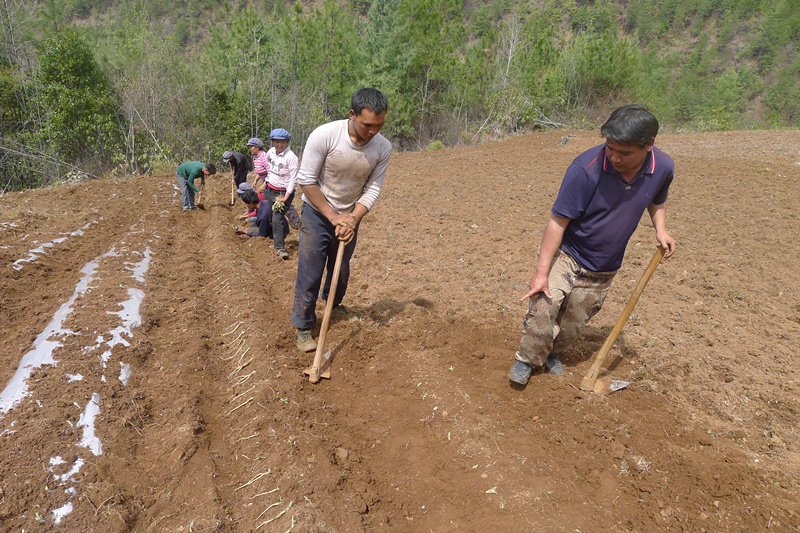
A once-struggling village in Yunnan province is improving its financial lot thanks to Chinese herbal medicines, and residents are also finding innovative ways of commercializing local traditions and culture.
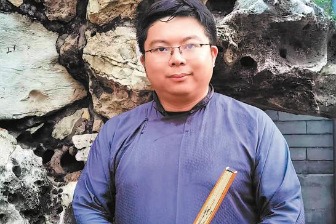
The transformation began germinating five years ago when an official from the Tibetan ethnic group was sent to work in the village.
He Zhengguo, 40, is the Party secretary of Tongle in Yunnan's Diqing Tibetan autonomous prefecture. When he arrived at the Lisu ethnic community in 2013, the village was in dire poverty and had been seeing an exodus of young people for years.
When he saw that villagers earned little by growing wheat, corn and buckwheat in fields 2,000 meters above sea level - barely making ends meet despite government assistance - He made up his mind to try and turn things around.
"When I saw the villagers stricken by dire poverty, I thought to myself that now that I have come, I must do my share to improve villagers' lives," he said.
Upon arrival, he found that many locals had fallen into old habits of heavy drinking and playing mahjong late into the night, and would often sleep until noon the next day. "Farm work would go unfinished if their lifestyles persisted," He said.
To rouse villagers from their unproductive ways, the Party chief stopped using the village public broadcast system so as not to disturb seniors and children. Instead, He decided to go door-to-door to wake young people up, which initially led to some complaints.
But the newcomer persisted, and after about six months he began to reap benefits - villagers began adopting better habits of getting up earlier, and He got to know more of the locals into the bargain.
After evaluating the village's natural endowments and geographic advantages, He decided to help locals switch from planting crops to medicinal herbs.
At first, villagers were concerned that herbal medicines would not have a sufficient market and they were reluctant to take the plunge. Therefore, He and five other Party members began sowing the herbal seeds themselves to illustrate to them that it was a sustainable, and even lucrative, business.
He also organized instructional sessions on how to plant herbs, and bought 20,000 yuan ($3,165) worth of seeds with his own money to distribute to farmers who couldn't afford them.
Tongle now boasts medicinal herb cultivation areas of more than 160 hectares with 13 varieties of plants being grown. The village has contracted several medicinal herb processing companies to purchase the farmers' output. The Party chief estimated that the herbs add 3,000 yuan a year to the villagers' average per capita income.
He also noticed that the village's rich cultural endowments and traditional crafts could be leveraged to boost the local economy.
He recalled that when he first arrived in the village, there were piles of cow dung and pig manure on nearly every road.
He organized several group visits to nearby villages that had better sanitation practices and organized a volunteer group to clean the village every month. Those who failed to keep their nearby areas clean would be censured at regular village meetings, while those who did well would be rewarded.
The village's environment witnessed tremendous progress following the cleanup movement. He later invited professionals to promote dance, dress, handicrafts and foods associated with the Lisu community to help bolster incomes via tourism and trade.
Yu Shilin, a villager in Tongle, said people used to make too little money if they stayed in the village, so most headed to big cities. "But now an increasing number of villagers have come back to plant medicinal herbs," he said.
Last year, the Yunnan government officially recognized He for his performance. But he is aiming even higher. He said he would continue his hard work so that no one is left behind by 2020 - the year by which China has pledged to eradicate extreme poverty nationwide.
Contact the writers at lilei@chinadaily.com.cn




- Over 7.3 million people recorded as registered organ donation volunteers in China
- China says Nipah outbreak poses limited risk
- PLA's aerobatic jets arrive in Singapore to take part in air show
- China's garbage sorting drive still has a long way to go in many cities
- Former Chengdu official Bao Hui under investigation
- Bouncy fish ball captures the attention of Guangdong deputies