



Good time for China, US to cooperate









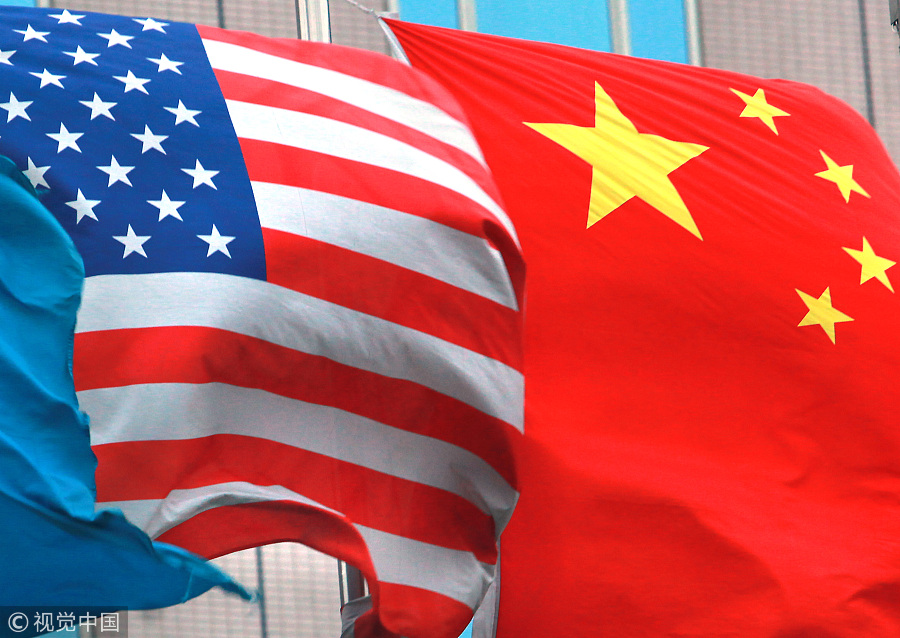
Belt and Road Initiative is example of engaging with other countries
Elizabeth Knup, China director for the Ford Foundation, believes it's not only a good time but an important one for the United States to engage China to work together on international governance norms and standards.
Based in Beijing, Knup said China is willing to engage with the world in thinking about what might be some global norms and standards if it is respected as a peer in the process.
Unlike some in the US, Knup does not think that US engagement with China has failed but rather that China has changed.
"We have to not think about China as a little brother that we are helping to develop, but rather a peer on the world stage," Knup said during a talk in Washington on March 7.
She cited the Belt and Road Initiative and the Asian Infrastructure Investment Bank as examples of China engaging with many other countries. Both the Belt and Road Initiative and the Asian Infrastructure Investment Bank are aimed at developing infrastructure and building connectivity among nations.
In his Government Work Report to the annual National People's Congress in Beijing, Premier Li Keqiang said that China will continue to reform and open up further to the world and expand international cooperation through the Belt and Road Initiative.
Li added that China will always maintain its course on a path of peaceful development and promote the building of new international relationships. He said China will actively participate in the reform and improvement of global governance and is committed to the building of an open global economy.
Knup said that on the policy level the US needs to get a clearer and more rational picture, and understand that China is a different country than it was 30 or 40 years ago.
"It is stronger economically. It has aspirations in the world that it did not have 30 or 40 years ago," said Knup, who first moved to China in 1998 as the American co-director of the Hopkins-Nanjing Center after working a decade at the New York-based National Committee on US-China Relations.
Knup admitted that there is going to be competition between China and the US. She said it's important for the two countries to engage each other about how to manage that. "China is a country that we are not able to disengage from and we are not able to ignore," she said.
Foreign Minister Wang Yi said on March 9 at a news conference during the NPC sessions that China and the US working together will benefit not just the two countries but also the whole world.
"If there is any competition between us, which is natural, it has to be healthy and positive. We may have competition, but we don't have to be rivals. Instead, we should strive to be partners," Wang said.
Based on her experience in China, Knup said China's first 30 years since reform and opening-up began in the late 1970s was to bring in ideas, money, management skills and technical assistance to develop domestically.
"And the next 30 years are going to be about going out," she said, recalling her many conversations with Chinese officials and others.
She expressed pride that the Ford Foundation, which celebrated its 30th anniversary in China this year, has contributed to that process over the past three decades.
Knup noted that China believes its story of successful development could be useful for other developing countries, saying that many countries also want to learn from its development model.
Knup, who began studying Chinese as an undergraduate at Middlebury College and later pursued a master's degree in Chinese studies at the University of Michigan, described engagement as just a tool to achieve a broader strategy, citing former US President Richard Nixon's visit to China in the early 1970s as not simply for engagement but also to balance the Soviet Union and other dimensions of US foreign policy.


- Visit to Eswatini in spite of earthquake at home criticized
- Xinjiang entrepreneur Li Jianhong killed in Albanian car crash
- Henan massage parlor fire claims six lives
- Hebei hosts unmanned flight contest
- Artisans from across Hebei gather for woodblock contest
- Intl influencers applaud Hefei's innovation prowess





