



Measures urged to protect vanishing ethnic languages









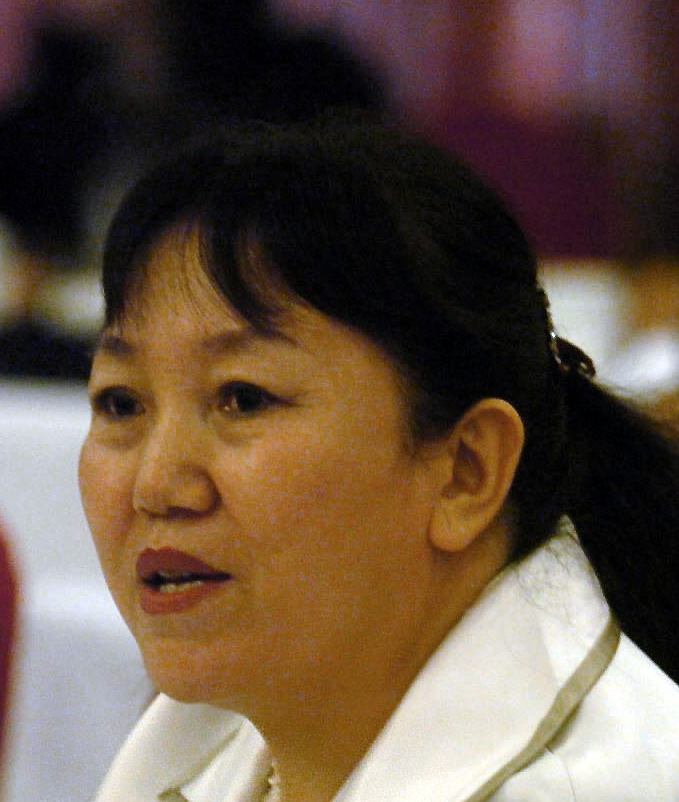
For ethnic groups in China, moving from remote villages in the mountains or grasslands to modern communities means better prospects. But it puts their native language at risk of extinction, according to political advisers.
To help preserve this unique culture, A Lihui and Du Mingyan, both members of the 13th National Committee of the Chinese People's Political Consultative Conference, have suggested using digital and mobile technology to create databases of ethnic languages.
"We must try every means possible to save these languages from extinction," said A Lihui, who is from the Oroqen ethnic group, which has fewer than 9,000 members, mainly living in the Inner Mongolia autonomous region and Heilongjiang province.
China has 56 ethnic groups, including around 20 with fewer than 100,000 members. Most have spoken languages but no written form.
No matter how small an ethnic group is, they are guaranteed at least one member of the CPPCC National Committee, the top political advisory body, and one deputy to the National People's Congress, the highest legislature.
A Lihui, who is from Inner Mongolia, represented her ethnic group at the CPPCC National Committee session, which ended on Thursday. She said almost 90 percent of Oroqen people have married members of other ethnic groups.
Many have also relocated to urban areas in search of greater education and employment opportunities, she said. While moving away from harsh conditions in mountains or grasslands means they enjoy an improved quality of life, it also means fewer opportunities to use their native languages.
She said the best way to preserve a language that lacks a written form is for members of that ethnic group to stay together and marry each other, so that the language can be handed down to the next generation by using it every day.
"But when being together is no longer possible, we should find another way," she said.
Du, from the Ewenki ethnic group, also expressed concern about the issue. Born in the 1970s, she left her village in Inner Mongolia to better her educational and employment prospects. Though she can still speak the Ewenki language, her children cannot.
A Lihui has set up a group on WeChat to aid efforts to preserve her native language. The group includes around 100 Oroqen people, but only around 20 of them can speak the Oroqen language, "and most are elderly now", she said.
Du and A Lihui have both called on the central government to invest in setting up digital databases for vulnerable ethnic languages.
"We need to save them before they die out, and fortunately digital and internet technologies offer us such a possibility," A Lihui said."These digital tools would not only benefit members of ethnic groups but also those interested in learning the languages and conducting research."
The political advisers also urged their local legislatures to promote the use of their native languages.


- Chinese leaders attend deliberations at annual legislative session
- China names flag bearers for Milano-Cortina 2026 Winter Paralympics
- NPC deputies from military, armed police review government work report
- Xi urges major provincial economies to gain experience in solving new problems
- Professional managers key to rural vitalization, expert says
- Chinese clinical trial shows breakthrough in liver cancer survival





