



Making poverty reduction inclusive









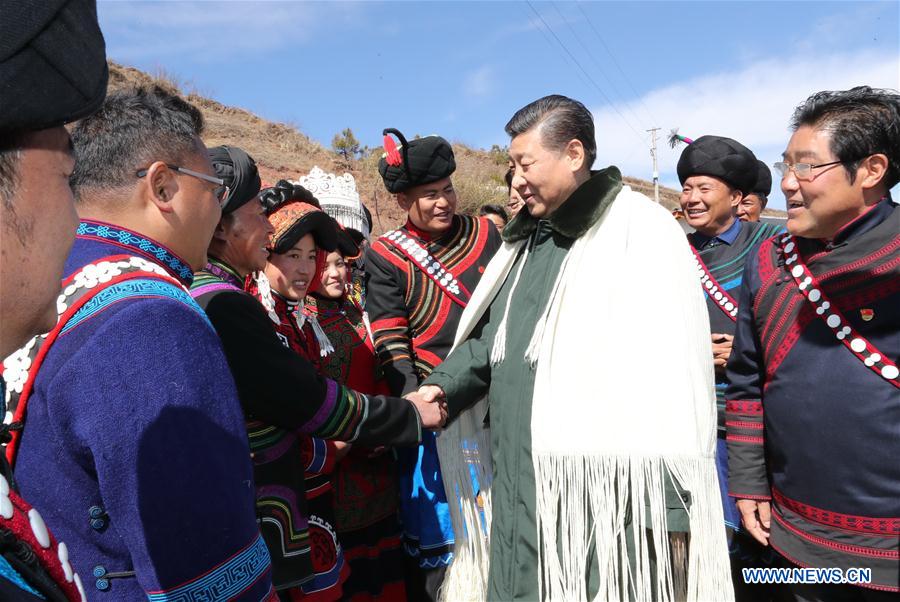
During his speech at the opening of the annual sessions of China's top legislature, Premier Li Keqiang said the government would lift 10 million people out of poverty this year alone. This is a tremendous task, yet one I am confident that China can succeed in.
Back in 1996, China's Human Development Index scored 0.56. However, by 2015, the number went up to 0.74, with China marching into the high human development group. The world has been amazed by China's success, and many have begged the question: What are the "secret" ingredients of China's achievement? I would like to emphasize three key words to shed some light: adaptation, innovation and leadership.
Adaptation: As social-economic and environmental contexts change, China has managed to evolve accordingly. China has been able to devise attainable development objectives during each phase and implement targeted policies. Poverty reduction provides a good example. As China advances, the nature of fighting against poverty is rapidly changing-efforts have been broad-based to address multidimensional causes of poverty and leverage comparative advantages, while being more concentrated on the poor.
Innovation: China has long been adopting a "trial and error" approach for development. Within the boundary of a top-level development blueprint, good ideas are allowed flexibility at the local level for potential scale-up. The State Council, China's Cabinet, recently approved three Chinese cities for Sustainable Development Goals Innovation Pilot Zones, aimed at providing a platform to test new development approaches.
Leadership: Being able to adapt to changing situations and innovate requires strong leadership and long-term strategic thinking. This is embedded in effective governance, shown by China's ability to put in place institutions that can leverage resources wisely to ensure a top-level development blueprint is properly translated into local contexts, and more importantly, execute concrete policies on the ground.
Because of this success the world is looking to China for development inspirations and China has a lot to offer. The country is well on track to lift the "last batch" of people out of poverty by 2020 using its targeted poverty alleviation strategy, which by providing needed access, capital and safeguards, can also contribute to the SDGs simultaneously.
However, there remains the challenge to make poverty reduction inclusive and long-term. Beyond 2020, diverse challenges will continue to emerge. As technology keeps advancing, cities keep expanding, climate keeps changing and people keep aging, much will need to be done to share development benefits more equitably across regions, rural and urban areas as well as across different segments of society, in order to make sure no one is left behind.
This is where the UN system can play a vital role in supporting China. First, the UN can help set up a systematic approach for implementing the SDGs at the sub-national level where actions are needed for results. This entails sectoral approaches and the convening of necessary partners and resources, for which the UN system is well built. It can also support tools for needs' assessments, financing and budgeting planning-all with an integrated view, which ultimately leads to mainstreaming the SDGs as a key development principle.
Second, the UN can continue to offer a global platform for exchange of human development perspectives and experiences. For example, through the Belt and Road Initiative, which provides a promising channel to expedite knowledge sharing, the UN can help convene expertise on infrastructure, education and health to promote economic transformation and inclusive growth.
And third, the UN can assist China in experimenting with innovative development instruments to promote inclusive growth. For instance, the digital revolution can be more effectively connected to transform agriculture through tools such as Big Data-an area where the UN could help China implement the "rural revitalization strategy".
The world is racing against the clock to eradicate extreme poverty by 2030 and the UN looks forward to supporting China in promoting equitable human development every step of the way.
The author is UN resident coordinator & UNDP resident representative.





