



Treasuring memories of southern Guangdong









Marriage was often joyful, noisy and communal, with weddings involving the whole village gathering in the courtyard house of the family that the bride would be married into. Firecrackers blasted into the air as she was transported there, sometimes by blue truck! Every April, Qingming Festival, including sweeping ancestral tombs hidden amidst forested slopes above the rice fields, was an important occasion with many overseas Chinese returning to pay respect. I saw cars bringing family members back from the cities. Their money and generosity allowing villagers to construct modern homes, just as with earlier generations whose money earned in the US led to the rise of iconic ‘diaolou’ towers.
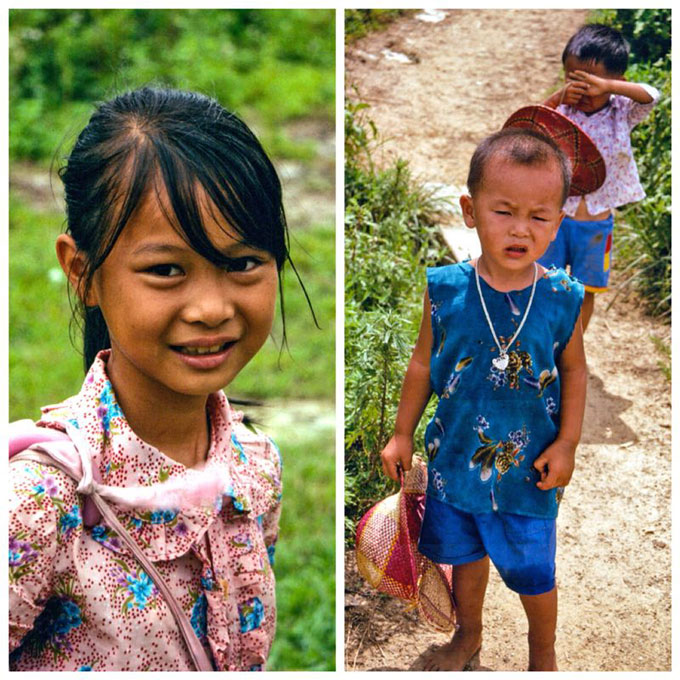
It was a joy to visit a rural elementary school, a lovely moment to come upon so many smiling, laughing children lining up to meet me as I went to their classrooms. Larger two-floor buildings had been constructed to serve clusters of villages replacing earlier, smaller and more localized structures. One such former school near Fengqi was being used as a day center for the elderly. The larger, better-equipped buildings, to which the children would walk every day, provided simple library, science, music and sports facilities.
Rural children would go on to a larger middle school, sometimes boarding. Increasingly through access to higher levels of education it would result in some children heading to Taicheng, Jiangmen or even Guangzhou. Exposed to ‘bright urban lights’ and a lifestyle quite different life to their parents, a reluctance to return to village life and a more conservative rural society, would inevitably set in. This movement away from the countryside consequently reduces the rural labor supply. In the early 1980s the Responsibility System, introduced by Deng Xiaoping as part of incentivizing agricultural production, was an important moment in both stimulating rural development while increasing food production. Before the relatively recent urban transformations, many village communities prospered. Today challenges facing the countryside are being partly met through consolidation agreements creating larger land units where mechanization and scientific farming methods can be applied.
Rural road construction is now a national priority to improve access for villagers to markets and services. I remember in 1993 there would be one main highway from where off-road communities would be accessed by concrete or gravel tracks. People mostly used bicycles or three-wheel carts, although later visits showed growing small motorcycle usage. China today increasingly is a car-owning society that loves to travel. Improved road access can encourage local tourism through home stays, guesthouses offering rural experiences, and more. Around Wenchuancun fashionable hot spring resorts have opened, creating employment while stimulating economic growth.





