



The search for another Li has to start with kids









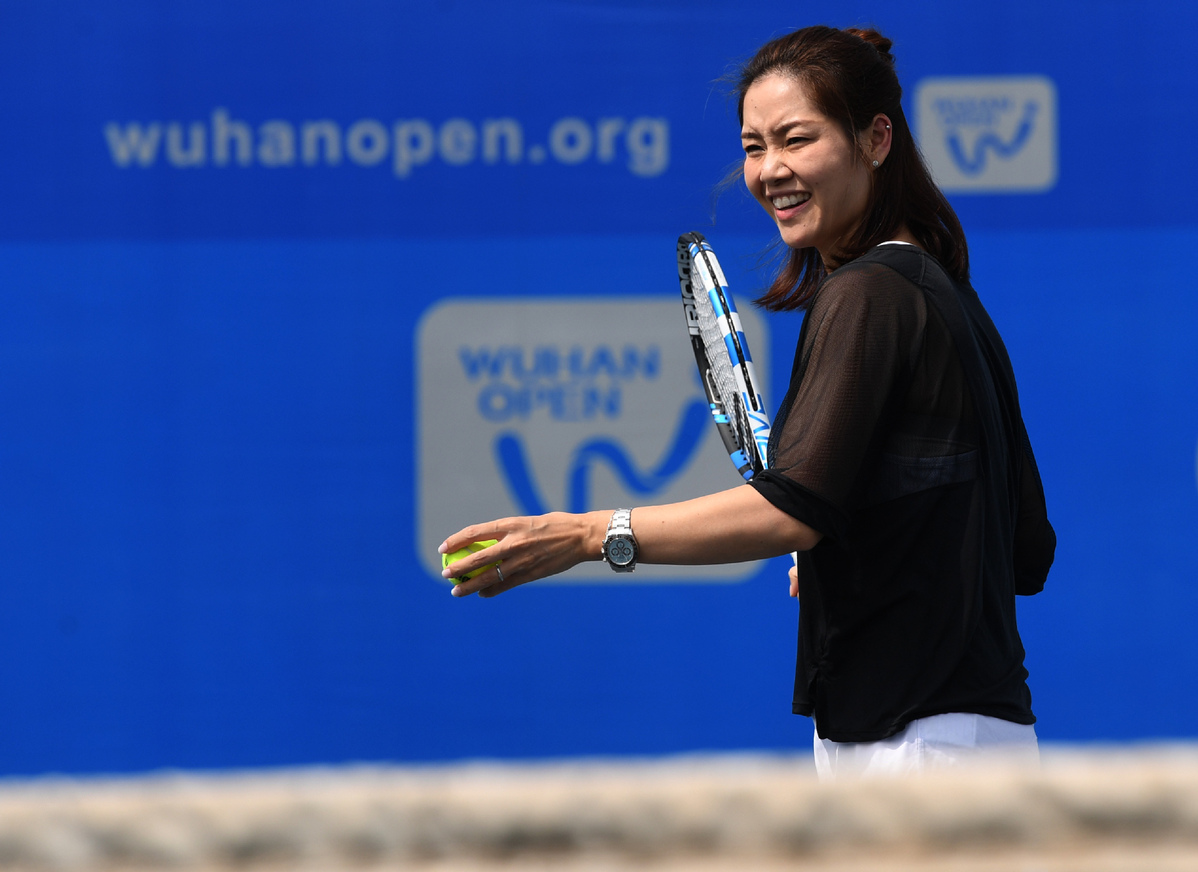
To nobody's surprise, China's female tennis players came up short at last month's Australian Open.
Peng Shuai showed promise in the doubles competition with her partner Hsieh Su-wei, but they were eliminated in the semifinals by Timea Babos and Kristina Mladenovic.
Peng's performance in the singles, however, was another story - she crashed out in the first round to 15-year-old Ukrainian qualifier Marta Kostuk.
That was a far cry from 2014, when Li Na, the greatest Chinese player of all time, captured the crown in Melbourne.
Although Peng, 32, is still one of strongest doubles players in the game and continues to show promise alongside her partner, she has not inspired anywhere near the level of enthusiasm from fans that Li did. Nor has she garnered the same level of international respect and attention.
The current lack of starpower in Chinese tennis is a direct result of mediocre training and talent-scouting resources. For another player of Li's caliber to emerge, his or her talent must be identified at a young age and continually honed against challenging competition.
Still, there are positives.
First and foremost, the blossoming of a grassroots tennis culture in China has made the sport more accessible to youngsters. Its combination of strategy and endurance makes it relatively easy for instructors to pair pupils of similar ability with one another, which in turn accelerates the development of superior skills.
Furthermore, it is clear the government and sports officials recognize that China has a huge pool of untapped talent. Tournaments like the Shanghai Masters, along with the China, Wuhan, Shenzhen and Tianjin Opens all receive considerable government support and have been enthusiastically received by the public.
Talent identification is the main stumbling block.
Chinese tennis officials need to redouble their efforts to scout promising male and female talent throughout the country, but temper their expectations in terms of male players because the women's game offers a far more welcoming environment to newcomers.
The women's pro circuit is generally much more unpredictable, with young, promising upstarts routinely upsetting established names in the WTA. That means there are many more opportunities for quick ascension.
This is not to say that it's impossible for a Chinese male to make a splash on the ATP tour, but he would certainly have a great deal more work cut out for him, given the plethora of talent.
On the men's side, China is almost certainly looking at a decade-long grind to tennis glory. But in the women's game, there is much more promise in the short term.
The question is not "if" a successor to Li Na will emerge - it's merely a matter of "when."
She might already be out there. China's tennis gurus just need to put a racket in her hand.
Xinhua




Most Popular
- Nation's soccer strength reboots for a new era
- Champions lead Winter Olympics quest
- China's U23 captain Xu Bin set to join Premier League club Wolves
- U23 near miss brings hope and lessons for Chinese soccer
- Short track skaters named flag bearers as Hungary unveils 2026 Winter Olympic squad
- China's historic run at AFC U23 Asian Cup sparks praise