



Enough capability to defend sovereignty









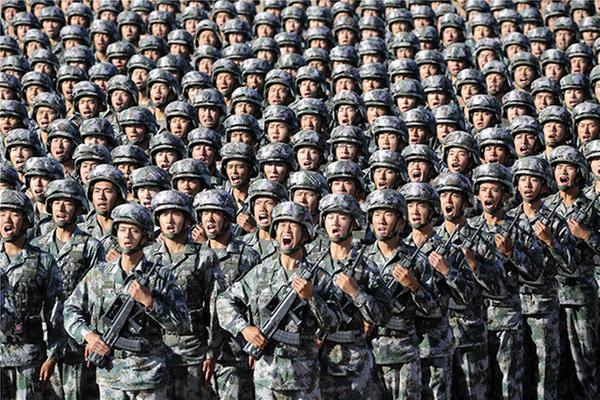 |
| Troops prepare for a military parade at Zhurihe training base in North China's Inner Mongolia autonomous region, July 30, 2017. The parade was held to celebrate the 90th anniversary of the founding of the Chinese People's Liberation Army. [Photo by Feng Yongbin/China Daily] |
Editor's note: The ongoing standoff between Chinese and Indian troops in China's Donglang area, arguably the biggest crisis facing the two countries since the 1962 war, started a month ago when Indian troops crossed into Chinese territory in the Sikkim section of the border, which was delimited in 1890 in the Convention Between Great Britain and China Relating to Sikkim and Tibet and has been recognized by both sides for decades. Two experts on international relations share their views on the issue with China Daily' Cui Shoufeng. Excerpts follow:
New Delhi's move bound to backfire
 |
| Ye Hailin [Photo/China Daily] |
It is becoming evident the orchestrated provocation has political implications for Beijing. India does not want war with China, because even a short military clash could neutralize its blackmailing tactics in the border dispute. Nor does China intend to use force, until diplomatic measures are exhausted. There is reason to believe, there-fore, that both sides are willing and have the capability to defuse a clash before it triggers a war.
India "craves" for talks as long as it means concessions from China rather than for making amends for trespassing into Chinese territory. The best outcome it desires is probably for China to acknowledge Donglang is disputed territory and, hence, China, India and Bhutan should renegotiate their borders. Which is also the most unlikely result, because historical and legal evidence, notably the 1890 convention, is on China's side.
India may consider it a victory even if China stalls its road construction in Donglang, especially because India will not stop building military facilities on its side of the Line of Actual Control.
Should both objectives go down the drain, it is possible that the trespassing Indian troops will stay in Donglang until a thick layer of snow covers the area, in a bid to "save face". And by the next spring, India could tighten its hold on Bhutan and orchestrate nationalistic sentiments at home. But New Delhi's diplomatic blackmailing is bound to backfire, as Beijing has enough reason and motive to defend its sovereign rights.
Ye Hailin, a researcher at the National Institute of International Strategy, affiliated to the Chinese Academy of Social Sciences





