



For the future of the country education needs further reform









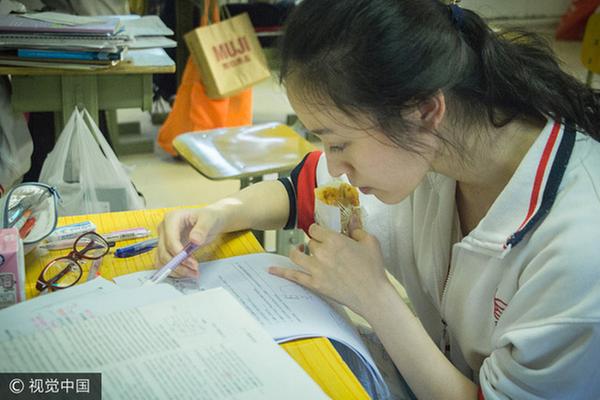 |
| A Beijing Chenjinglun High School student does exercises while she has breakfast in preparation for the national college entrance exam known as the gaokao, May 15, 2017. The gaokao starts on June 7. [Photo/VCG] |
With a mixed feeling of hope, excitement and anxiety, millions of students across the country will sit the national college entrance exams, or gaokao, on Wednesday. What makes this year's exams even more memorable is that it is 40th anniversary since they were resumed after the end of the "cultural revolution" (1966-76).
There is hardly any policy in China's modern history that has had such an effect on people's futures as the resumption of the exams. For 11 years before 1977, the institutions of higher learning, all caught up in the political chaos, enrolled students based on recommendations by working units or rural communes.
About 5.7 million candidates, most of them forced out of schools and sent to work in the countryside and factories, took part in the exams in 1977. Although only 270,000 were enrolled that year, the message was sent and received. For the first time in so many years, people started to realize that they could write their own destiny again with mastery of knowledge. The zeal to learn and make up for the lost time among tens of millions of young people started to change the country's landscape of education and usher in a new spring for science.
In the decades that have followed, the national college entrance exams have been acknowledged by the public as an open and fair platform to select talents, despite their acknowledged shortcomings. The role they have played is irreplaceable. It is probably no exaggeration to say that China would not have achieved its remarkable economic growth without the resumption of the exams, which laid the foundation for China's fast development in science and technology.
Compared with their counterparts 40 years ago, the examinees today face less intense competition thanks to a massive expansion in college enrollment since the late 1990s. Actually in major cities such as Beijing and Shanghai, nearly all students can go to college if they apply themselves to their studies.
But that should not breed complacency. Education fairness remains a major problem, as reflected in the unbalanced state education funding in developed and underdeveloped regions, which has hampered education fulfilling its role as an enabler of social mobility.
And further reform of the education system is needed to change the emphasis from students' scores to the cultivation of the creative, independent and critical thinking that will help the country to redefine its future. That includes the exams, which will make it possible for students to place enough emphasis on their well-rounded development.


Today's Top News
- Weather risk warnings to get high-tech boost
- Increased stability in Sino-US economic ties urged
- Forum highlights opening-up, innovation
- US threatens attacks on Iran's power plants
- Innovation drives nation's EV success
- Future industries a 'concerto', not a 'solo', minister says





