60 People, 60 Stories
Set of ongoing debates, diverse subcultures
By James Farrer (China Daily)
Updated: 2009-09-30 08:26
China has undergone not one, but a series of sexual revolutions, radically transforming Chinese sexual culture, marriage and love. The first during the period of 1915-1927, when "modern" ideas such as romantic love, scientific sexology, gender equality, eugenics, and homosexuality entered into popular Chinese debate. Even more significant for ordinary people, a "socialist sexual revolution" occurred when the new Marriage Law of 1950 overturned age-old Confucian traditions by legally establishing male-female equality, monogamy and marriage based on "feelings", making marriage a choice between young people rather than families, even in rural areas.
In the reform and opening-up period after 1979, Chinese youth embraced the ideal of romantic love, which they celebrated through popular songs from Taiwan and Hong Kong. This 1980s "romantic revolution" became the basis for the "premarital sexual revolution" of the 1990s. In a dramatic break with tradition, many Chinese young women began redefining feminine virtue not through premarital abstinence but through romantic feelings. "Sex with love (ganqing)" became a new moral standard. Late marriage, the family planning policy and high divorce rates further dissociated sex from marriage and childrearing.
The advent of the Internet has led to yet a new phase in China's ongoing sexual revolution, which I would describe as the "pluralization of Chinese sexualities". On the Internet we can find voices ranging from advocates of sexual liberation to advocates of premarital abstinence. We can no longer speak of a single sexual culture in China, but rather a set of ongoing debates and diverse subcultures, including gays and lesbians, and also young people interested in dating foreigners, or people looking for "one night love". China has now entered an era of globalized sexual subcultures, to which China, as the largest population of Internet users, will undoubtedly make important contributions.
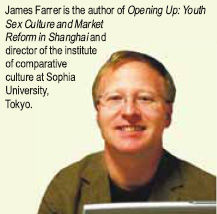
James Farrer is the author of Opening Up: Youth Sex Culture and Market Reform in Shanghai and director of the institute of comparative culture at Sophia University, Tokyo.